
Rural landscape — History & Facts
Can paint confess what words never could? In the soft embrace of colors and contours, nostalgia finds its voice, whispering secrets of a simpler time. Look to the horizon where lush greens merge into the sky, a tranquil expanse that invites the viewer to daydream about the pastoral scenes of yesteryears. Notice how the brush strokes convey movement, creating an undulating rhythm through the fields, while the playful interplay of light and shadow draws attention to the gentle curves of the land. Rich earthy tones dominate the foreground, grounding the scene, while lighter, more ethereal hues in the background evoke an almost otherworldly quality. Within this serene setting, contrasts emerge: the stability of the solid earth against the fleeting clouds that drift lazily above.
The vibrant greens breathe life into the landscape, yet there is an underlying melancholy in the fading light—a reminder that such moments are ephemeral. It speaks to the viewer's heart, igniting memories of pastoral bliss and the passage of time, where every blade of grass tells a story of what once was. In 1903, the artist captured this idyllic scene during a period marked by a growing interest in Impressionism, which emphasized the transient qualities of light and color. Living in Poland, Filipkiewicz was influenced by the romantic vision of the countryside, as industrialization began to reshape landscapes and lives.
This painting reflects his dedication to preserving the essence of rural life amidst the changes sweeping through society, offering a glimpse into both personal and collective memory.
More Artworks by Stefan Filipkiewicz
Browse all →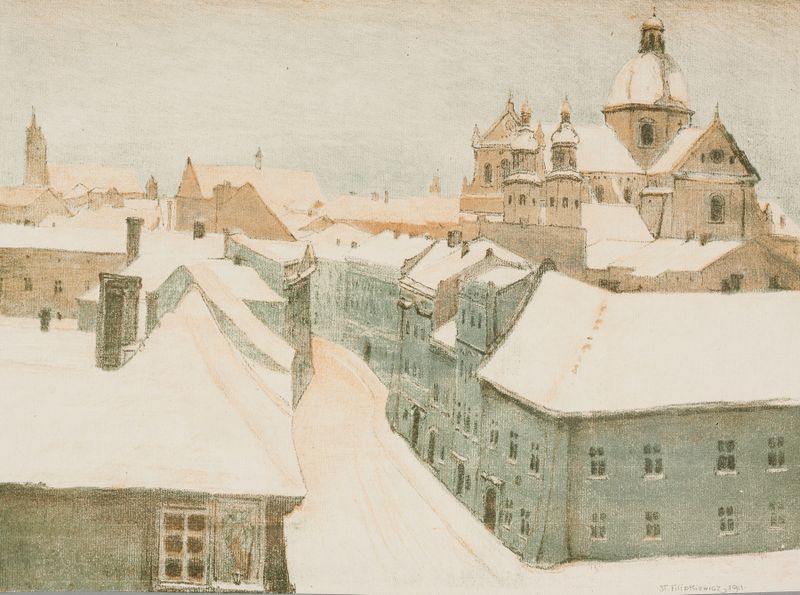
View of Krakow from Wawel
Stefan Filipkiewicz
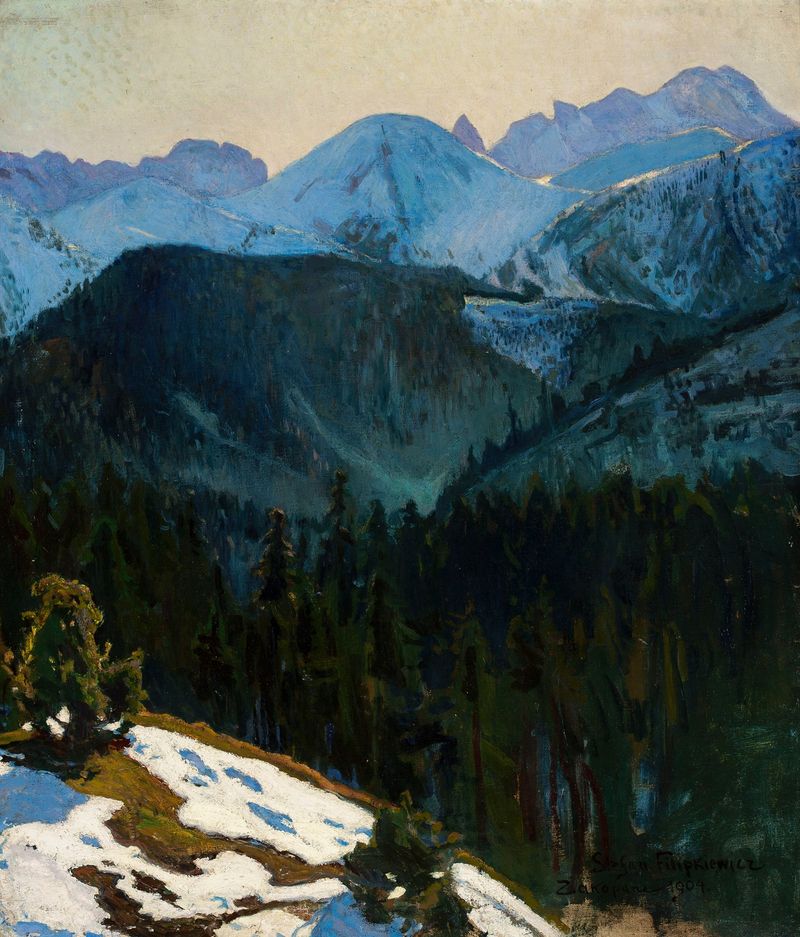
Tatra Mountain view
Stefan Filipkiewicz

Thaw in the Tatra Mountains
Stefan Filipkiewicz

Sad w cieniu
Stefan Filipkiewicz

Forest stream in winter
Stefan Filipkiewicz
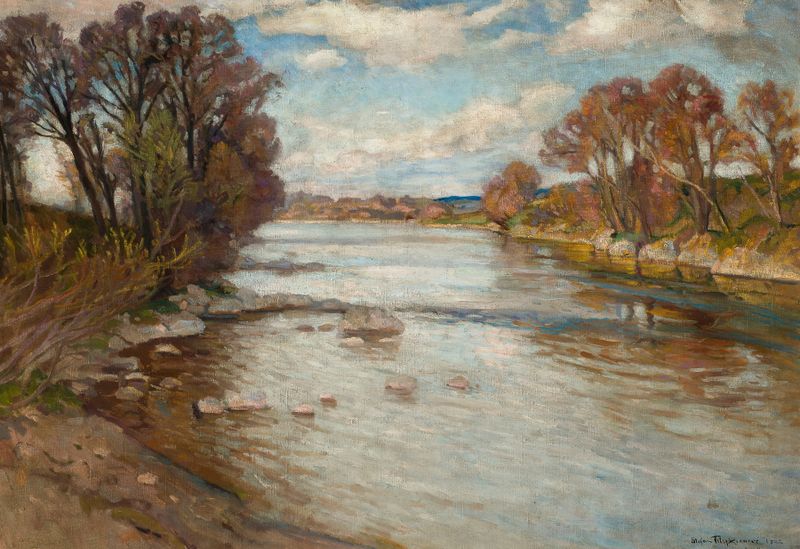
The Dunajec River at Szaflary
Stefan Filipkiewicz

Dorfkirche
Stefan Filipkiewicz

Forest Stream
Stefan Filipkiewicz

Tatra Mountain view
Stefan Filipkiewicz

Panorama of the Tatra Mountains
Stefan Filipkiewicz





