
Mountains of Auvergne — History & Facts
What if beauty was never meant to be finished? In the vast embrace of nature, the artist captures an endless horizon that teeters on the edge of ecstasy and tranquility. Look to the left at the rolling hills, their gentle slopes caressed by a delicate interplay of light and shadow. The brushwork is deft and fluid, evoking a sense of movement within the stillness. Notice how the cool blues and greens vibrate against the warm earth tones, creating a harmonious balance that invites the viewer to linger.
The foreground holds a few wildflowers, their vibrant colors punctuating the landscape and drawing your gaze deeper into the serene expanse. Beneath the surface, an emotional tension unfolds. The rising mountains suggest both majesty and solitude, hinting at a deeper yearning within the artist for connection with the sublime. The expansive sky, swirling with clouds, reflects an ever-changing spirit, perhaps symbolizing the tumultuous journey of life itself.
This juxtaposition of stillness and dynamism resonates with the viewer, evoking feelings of both wonder and introspection. Paul Huet painted this masterpiece between 1831 and 1833 while residing in France, during a period marked by Romanticism's embrace of nature. Emerging from the shadows of Neoclassicism, he sought to convey not just landscapes, but the emotions they evoke. At this time, artists were deeply exploring the relationship between humanity and the natural world, and Huet’s work exemplifies this profound and transformative vision, rooted firmly in his own experiences and the essence of 19th-century art.
More Artworks by Paul Huet
Browse all →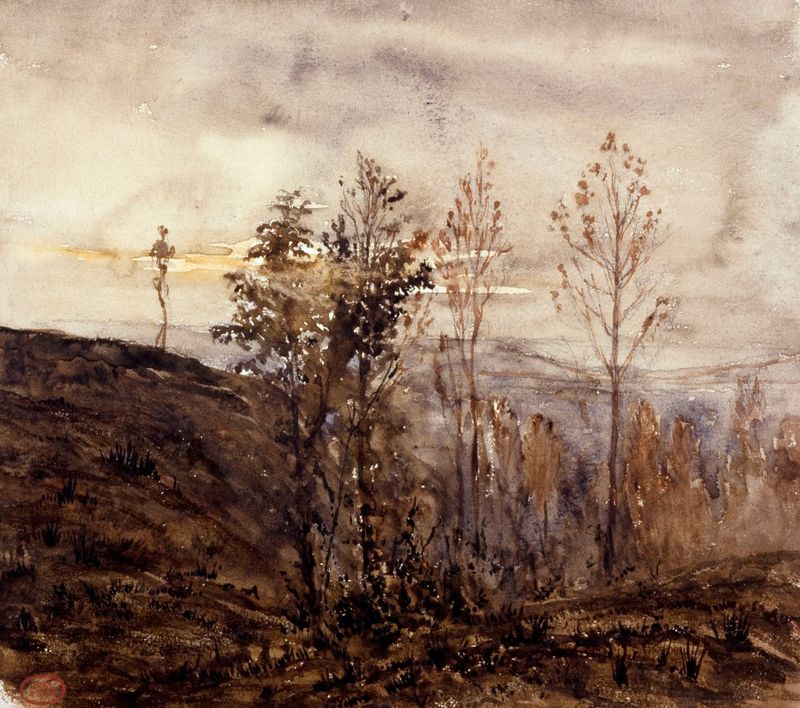
Les bois de Sèvres
Paul Huet

An Abbey by a Wooded Lake at Twilight
Paul Huet

Woodland Stream
Paul Huet
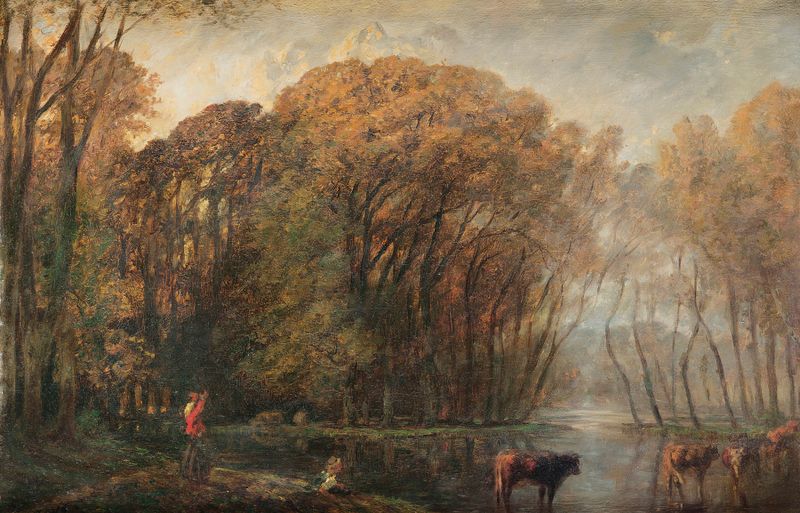
The Laïta in high tide, Brittany
Paul Huet

Sur la route de Nice
Paul Huet
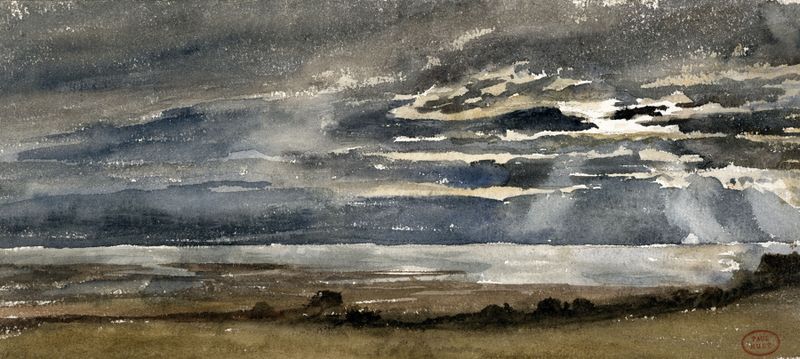
Soleil couchant
Paul Huet

A Wild Beech in Full Leaf
Paul Huet

Les Roches noirs, bij Villers
Paul Huet

Cannes
Paul Huet

Mountain View at Oisans (Isère)
Paul Huet





