Mountainous Landscape near Düsseldorf — History & Facts
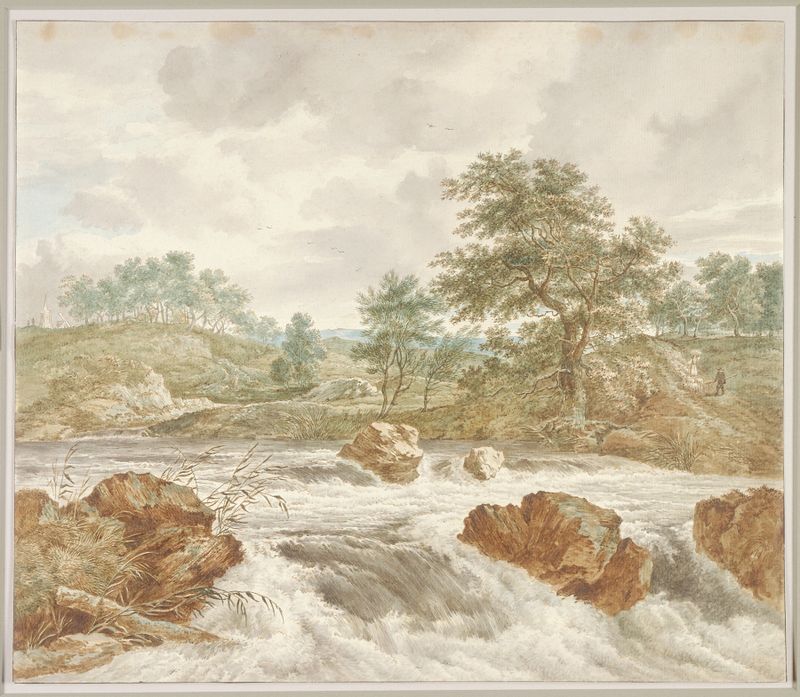
Who listens when art speaks of silence? In the tranquil embrace of Mountainous Landscape near Düsseldorf, chaos and stillness collide upon the canvas, whispering secrets of madness through the serene exterior. Look to the foreground where a solitary figure traverses the lush, undulating hills. The painter employs a palette of muted greens and grays, allowing the vibrant strokes of the trees and the subtle, undulating lines of the hills to breathe life into the landscape. Notice how the sky looms overhead, a swirling tempest of blues and whites, where the light plays delicately, bathing the scene in an ethereal glow.
Each brushstroke carries a weight, hinting at unseen narratives beneath the tranquil facade. As you explore deeper, the contrast between the calm hills and tumultuous sky reflects an emotional tension inherent in human experience—serenity disrupted by an undercurrent of madness. The solitary wanderer, seemingly lost in thought, embodies the fragility of the mind when faced with nature’s vastness. This duality of calm and chaos invites introspection, urging viewers to confront their own inner turmoils while immersed in the beauty surrounding them. Created in 1790, Gerard van Nijmegen painted this piece during a time of profound change in Europe, as the Enlightenment stirred thoughts of individualism and mental exploration.
Living in Düsseldorf, the artist immersed himself in the burgeoning Romantic movement, which sought to express emotions and the sublime aspects of nature. Straddling these transformative currents, his work encapsulates the complex relationship between man and the wild, hinting at the madness lurking beneath the tranquil beauty of the landscape.