Mountains in Asturias — History & Facts
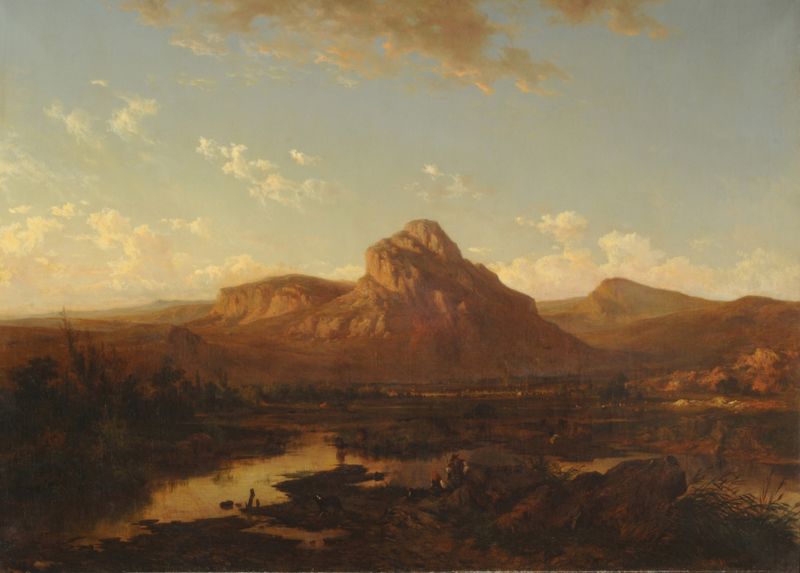
Where does light end, and longing begin? The delicate interplay of nature and emotion invites viewers to explore the boundaries between the physical and the ethereal. Look to the center of the canvas, where rugged peaks rise majestically against a softened sky. The palette is a tranquil blend of greens and blues, with sunlight breaking through clouds, casting vibrant highlights on the mountains' faces. Notice how the brushstrokes create a sense of movement in the clouds, mirroring the turbulent emotions that seem to stir beneath the surface.
The foreground, painted with meticulous detail, is lush with foliage, drawing the eye into the depths of this tranquil yet tumultuous landscape. Each brushstroke conveys not just the physicality of the mountains but also a deeper sense of yearning and solitude. The juxtaposition of the sturdy forms of the peaks against the fleeting softness of the sky evokes a powerful contrast between permanence and transience. This subtler narrative weaves through the viewer’s experience, suggesting that these mountains, though steadfast, hold the whispers of dreams and desires unfulfilled.
The ethereal quality of the light reflects a longing for connection and the beauty of the unattainable. Carlos de Haes painted this work in 1872, during a time when he was establishing himself as a significant figure in Spanish landscape painting. Living in Madrid after returning from study in France, he was influenced by the Romantic movement, which embraced nature’s majesty and humanity's emotional responses to it. His works from this period exemplify a shift towards capturing not just the literal beauty of the landscape but also the feelings it incites, marking an important evolution in Spanish art.