
Mouth Of The Platte River, 900 Miles Above St. Louis — History & Facts
What secret hides in the quiet of the canvas? In George Catlin's Mouth Of The Platte River, 900 Miles Above St. Louis, the stillness invites us to explore the fragile innocence of nature untouched by civilization. Focus first on the sweeping expanse of the river, where the gentle curves of the water guide your gaze. Notice how the artist captures the vibrant interplay between the deep blues and greens of the water and land, contrasting them against the pale sky.
The soft, diffused light bathes the scene, creating an ethereal quality that emphasizes both the beauty and the serenity of this remote frontier. Each brushstroke breathes life into the landscape, inviting contemplation. Yet beneath this tranquil surface lies a tension between innocence and impending change. The lush greenery and the flowing river represent a pristine world, vibrant and full of potential.
However, the very act of capturing this scene in 1832 hints at an era on the brink of transformation, where nature's integrity is vulnerable to encroaching development. The quietude of the moment belies the turmoil that would soon invade this untouched territory, reflecting a bittersweet farewell to a way of life. In 1832, when this piece was created, Catlin was deeply immersed in his mission to document Native American cultures and the American landscape. Traveling along the Missouri River, he witnessed both the splendor of the land and the challenges faced by its original inhabitants amid the broader context of westward expansion.
This painting emerged during a time when the Romantic movement shaped artistic perspectives, encouraging a reverence for the natural world and the profound connections between humanity and nature.
More Artworks by George Catlin
Browse all →
Wichita Lodge, Thatched With Prairie Grass
George Catlin

Ball-play of the Choctaw–Ball Up
George Catlin

Sioux Worshiping At The Red Boulders
George Catlin
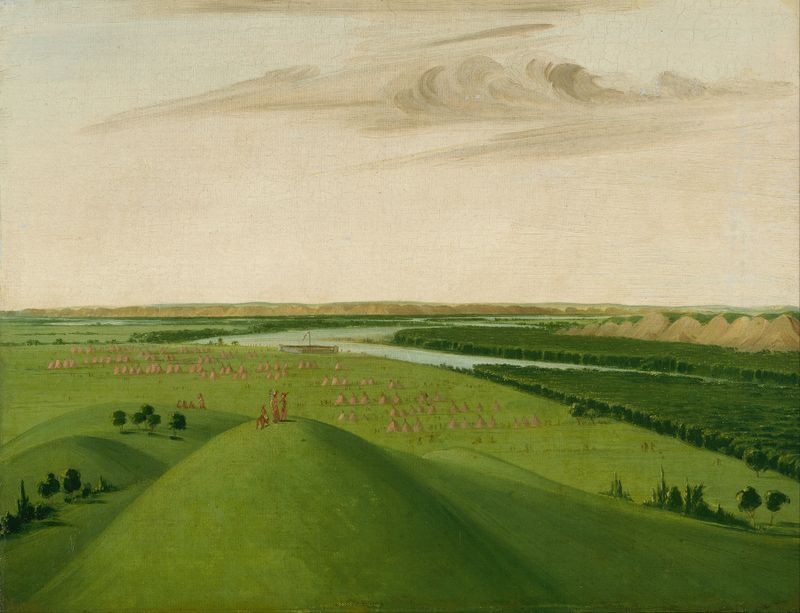
Fort Union, Mouth of the Yellowstone River, 2000 Miles above St. Louis
George Catlin
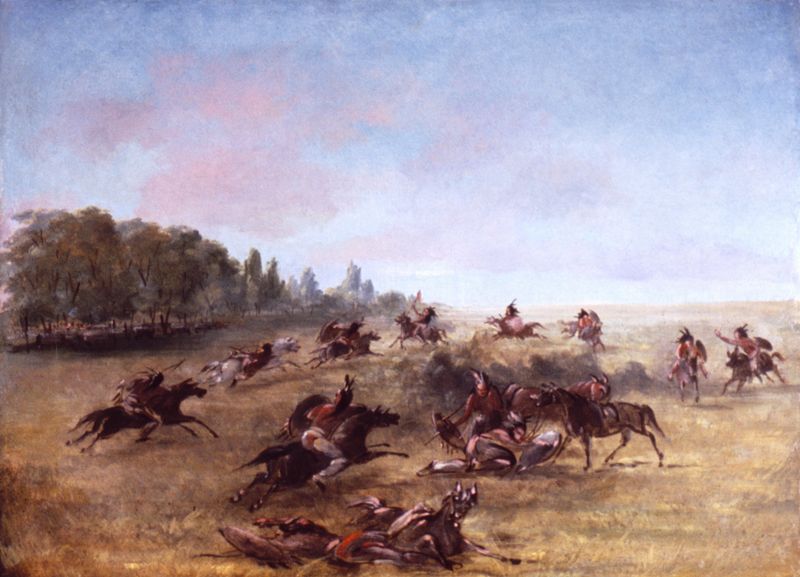
Mounted War Party Scouring A Thicket
George Catlin

Buffalo Chase, A Surround by the Hidatsa
George Catlin
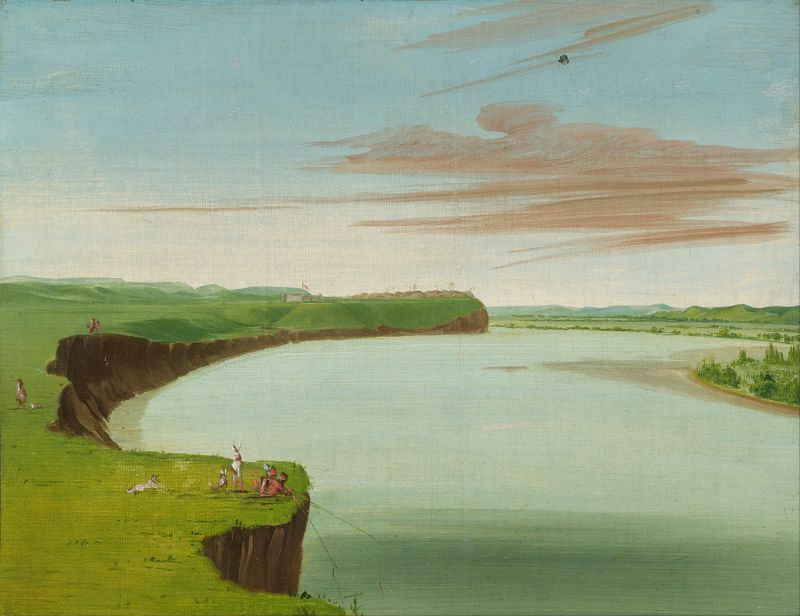
Distant View of the Mandan Village
George Catlin
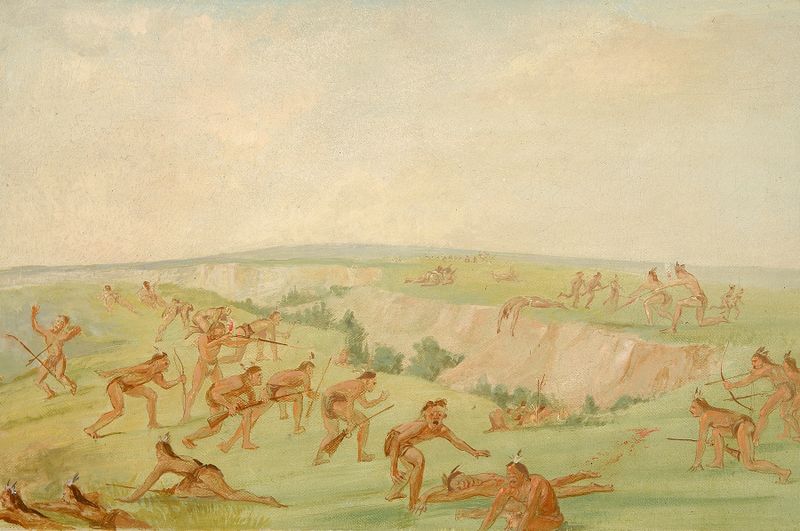
Mandan Attacking A Party Of Arikara
George Catlin
View On The Upper Mississippi, Beautiful Prairie Bluffs
George Catlin
Sac And Fox Sailing In Canoes
George Catlin





