
Mrs. Winfield Scott — History & Facts
What first catches the eye in Mrs. Winfield Scott is the poised calm of the sitter, her gaze meeting ours with a quiet directness that holds the room. The painter, Asher Brown Durand, has chosen a moment of composed stillness, yet every detail is charged with intention: the delicate hand resting on a marble table, the soft petals of the flowers, the gentle sweep of her dress.
The light, cool and steady, glances across her bare shoulders and the sheer sleeves, drawing out the subtle sheen of fabric and the warm tones of her skin. Behind her, a landscape opens to water and sky, a faint suggestion of distance and possibility, yet the world outside is secondary to her presence. The flowers—one held, one laid aside—hint at a story, perhaps of time passing or choices made, but the true narrative is in her unwavering look. Painted in 1831, this portrait belongs to a period when American artists, inspired by European models, were shaping a new visual language for the young republic’s elite.
Portraits like this were often commissioned to affirm status and virtue, their careful staging and fashionable dress signaling both personal refinement and social aspiration. Asher Brown Durand, better known later for his landscapes, here demonstrates the precision and clarity prized in early nineteenth-century American portraiture. The work now resides in the collection of The Metropolitan Museum of Art, a testament to both the sitter’s world and the artist’s hand.
Look again at the flowers, the belt, the distant ships—each detail a thread connecting sitter, artist, and viewer across nearly two centuries.
More Artworks by Asher Brown Durand

A Sycamore Tree, Plaaterkill Clove (The Sycamore, Kaaterskill Clove)
Asher Brown Durand
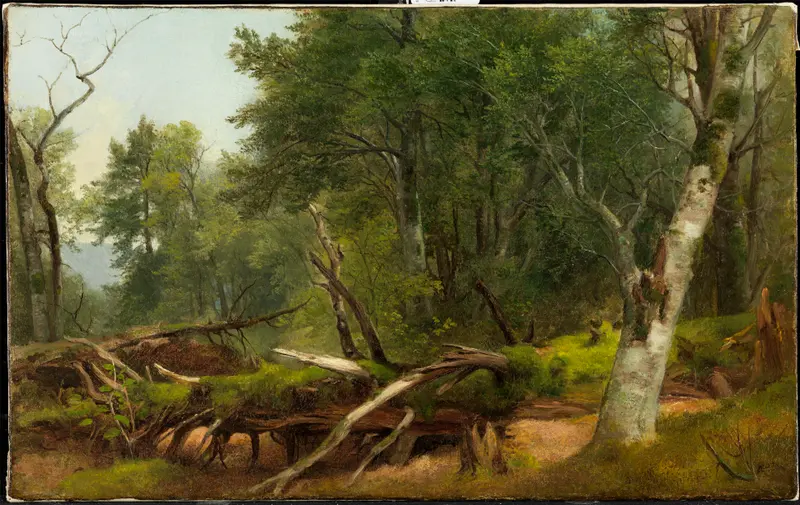
Forest Scene in the Catskills
Asher Brown Durand
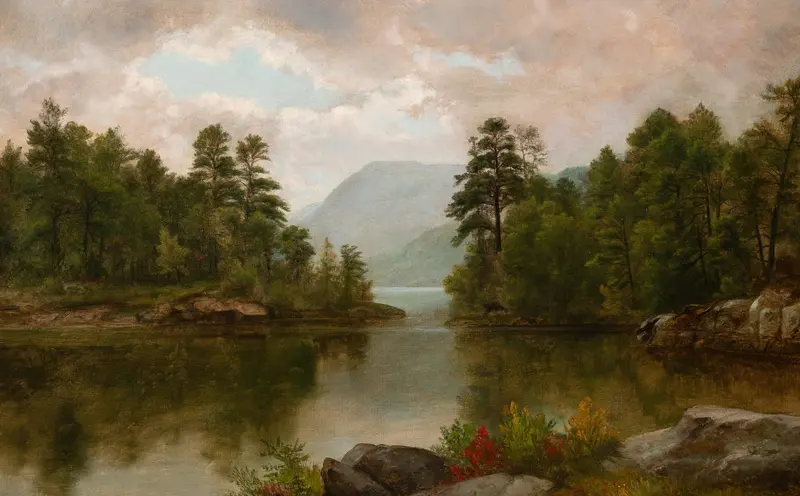
The Narrows, Lake George
Asher Brown Durand
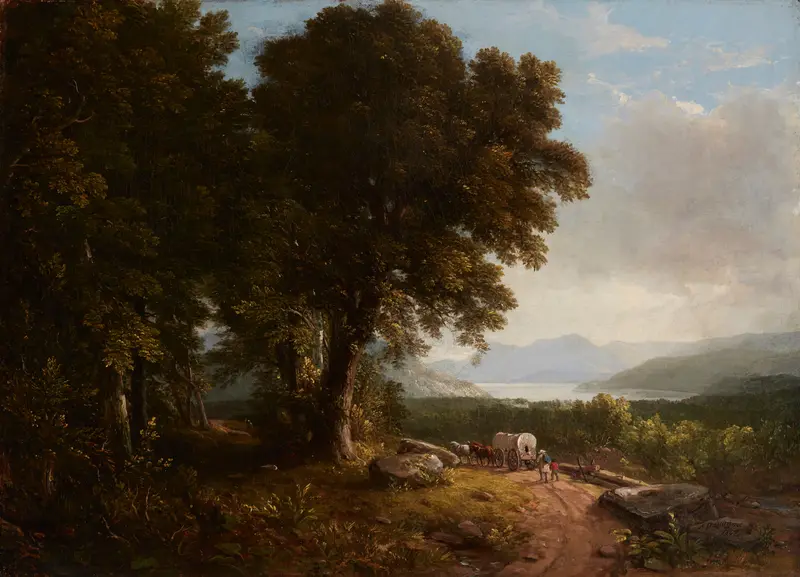
Landscape with Covered Wagon
Asher Brown Durand
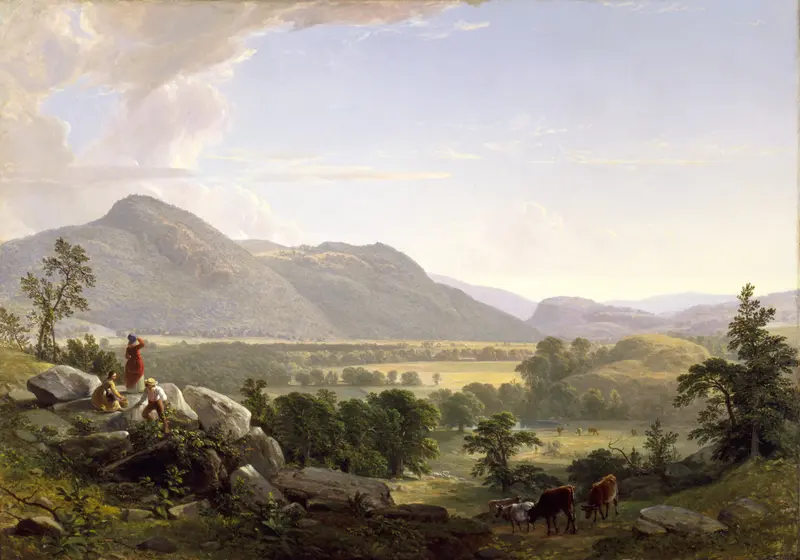
Dover Plains, Dutchess County, New York
Asher Brown Durand
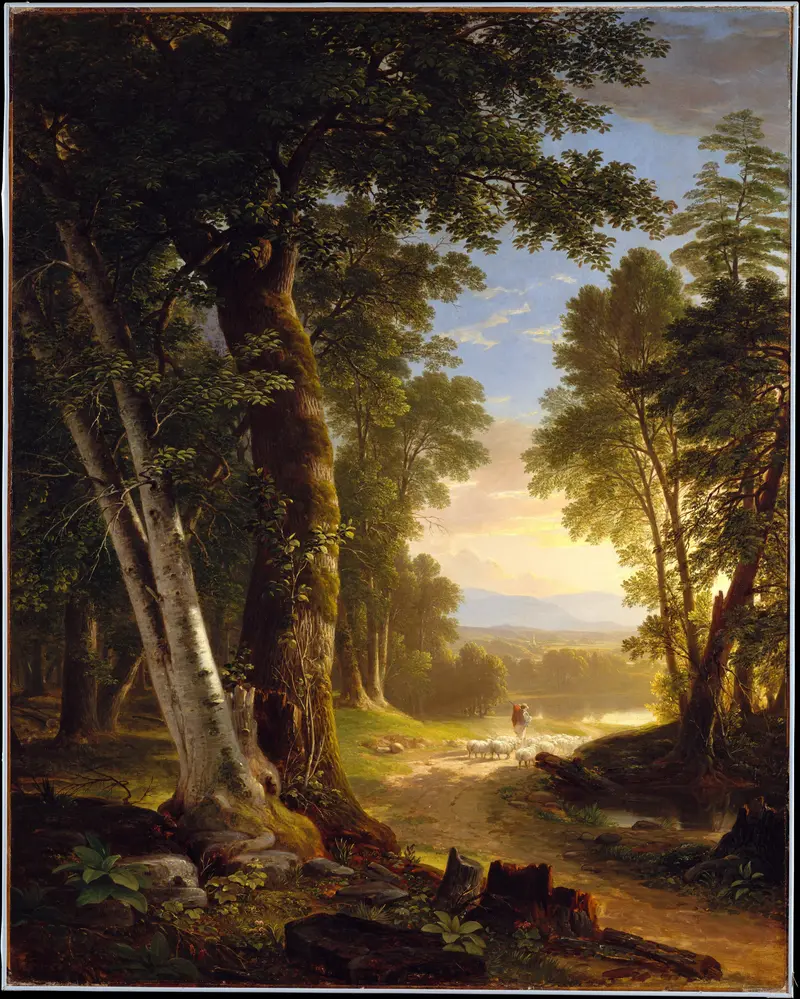
The Beeches
Asher Brown Durand

Kaaterskill Landscape
Asher Brown Durand
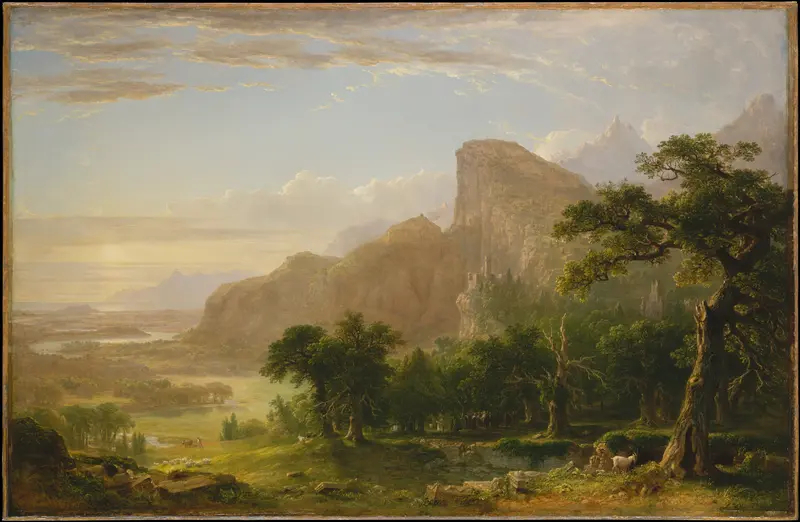
Landscape—Scene from ‘Thanatopsis’
Asher Brown Durand
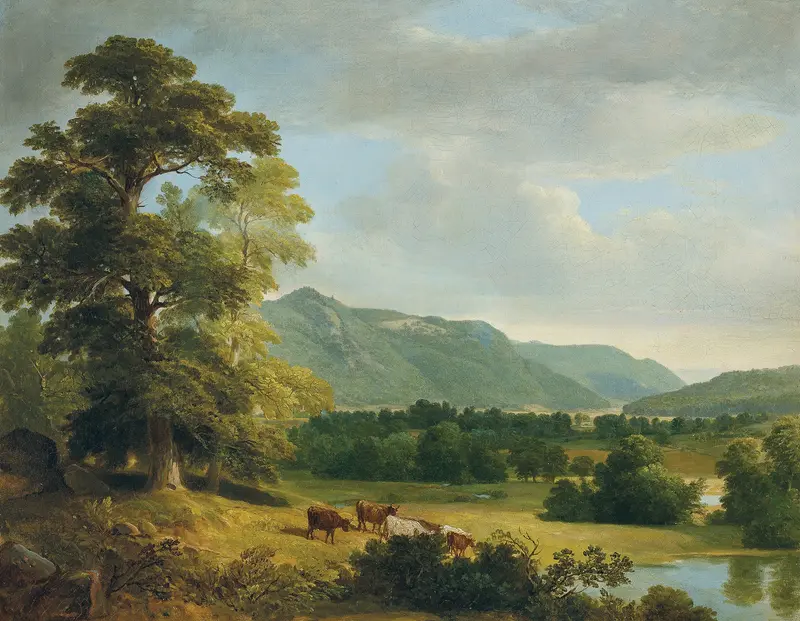
Landscape Study, Dover Plains, New York
Asher Brown Durand
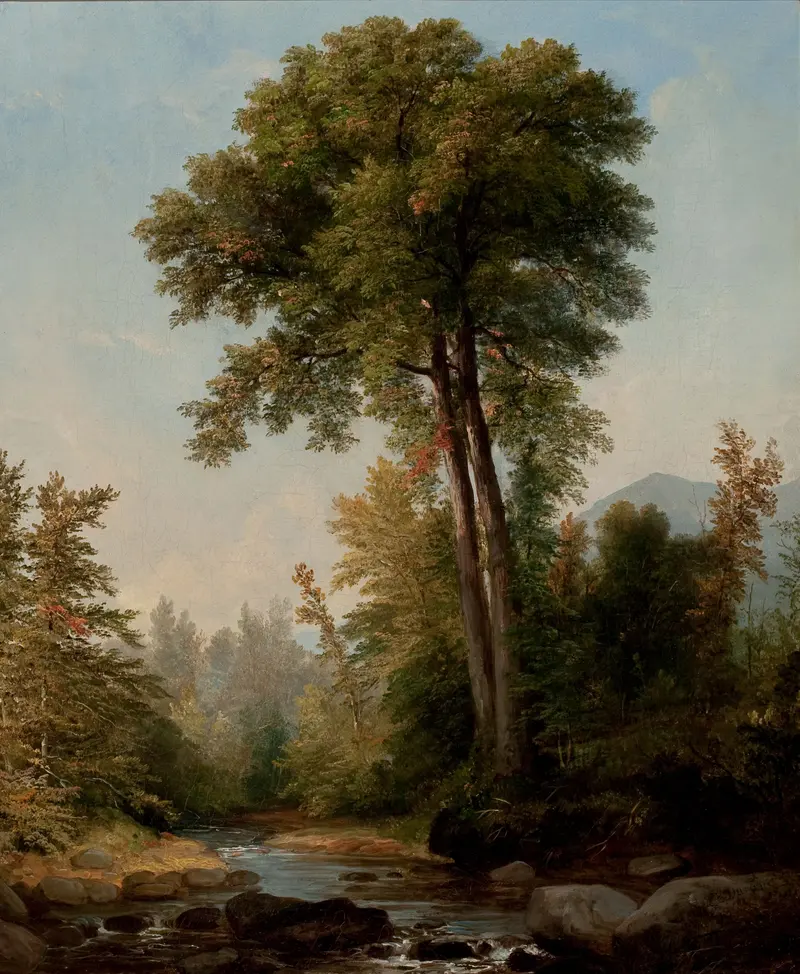
A Natural Monarch
Asher Brown Durand





