
MuMA Willaerts Vaisseau appareillant — History & Facts
A crowd gathers at the water’s edge, their faces turned toward a ship bristling with flags and sails, poised to depart beneath a sky heavy with cloud. The eye is drawn first to the bustle of the quay, where figures in dark hats and bright dresses cluster, some gesturing, others seemingly lost in thought. The ship itself, with its crisp, wind-filled sails and fluttering banners, stands as a promise of adventure or separation—its decks crowded with tiny, animated forms.
The painter’s low horizon gives the sky a commanding presence, while the angled masts and busy boats create a sense of movement and anticipation. Even the dogs and children on shore seem caught up in the moment, as if the whole world is pausing to watch this vessel’s next journey. Painted in the 17th century, this scene belongs to a world in which maritime trade, exploration, and naval power shaped daily life and national identity. Works like this, often commissioned by merchants or civic leaders, celebrated the prosperity and reach of seafaring cities, and served as proud reminders of the ships and people that connected continents.
The artist, working in an age when Dutch and Flemish painters excelled at capturing the drama of the sea, fills the canvas with details that speak to both the grandeur and the human scale of these departures. Though little is recorded about this specific painting’s journey, its survival in a modern collection reminds us how these bustling harbors once stood at the center of commerce, hope, and farewell. Look again at the figures on the shore, and you may sense the stories—of longing, ambition, and uncertainty—that such scenes once inspired.
More Artworks by Adam Willaerts
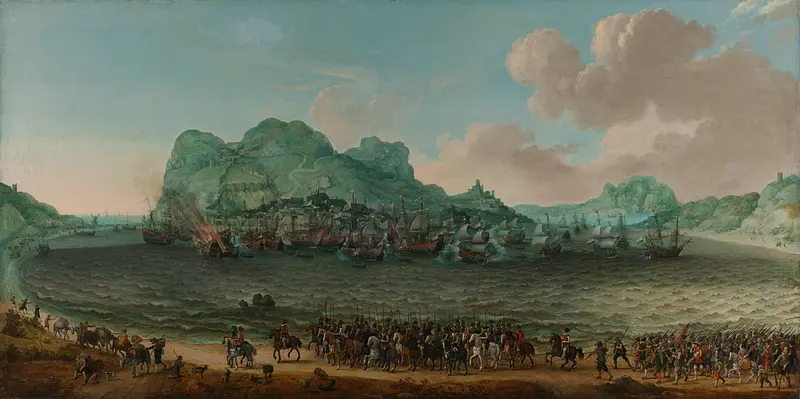
Victory over the Spanish near Gibraltar by a Fleet Commanded by Admiral Jacob van Heemskerck, 25 April 1607
Adam Willaerts
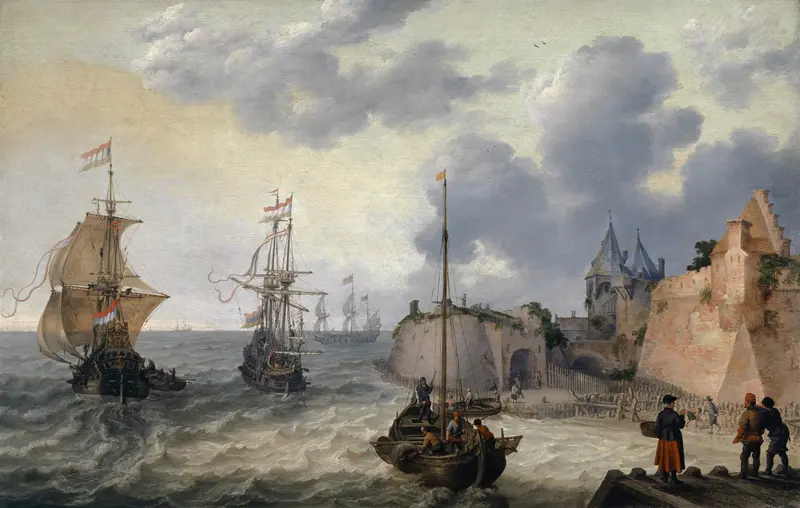
Dutch Harbour with Sailing Ships
Adam Willaerts
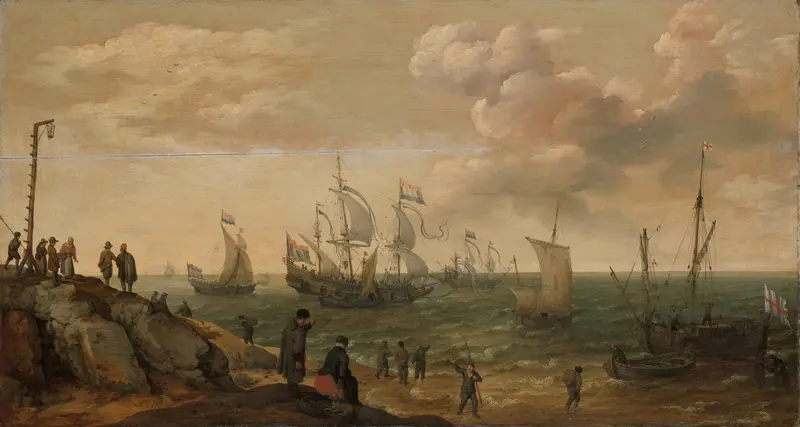
Ships along the Shore
Adam Willaerts
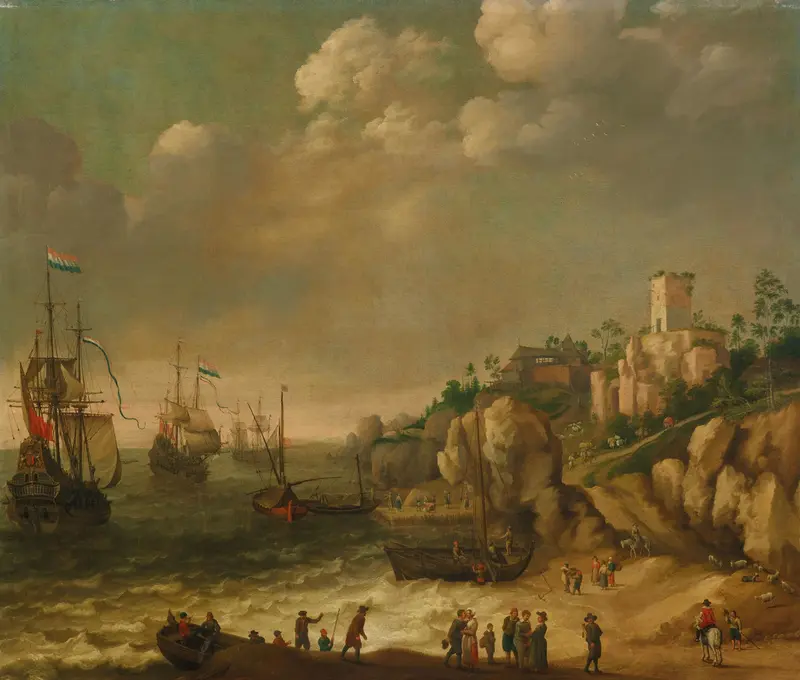
Dutch ships in front of a rocky coast with figures, buildings beyond
Adam Willaerts
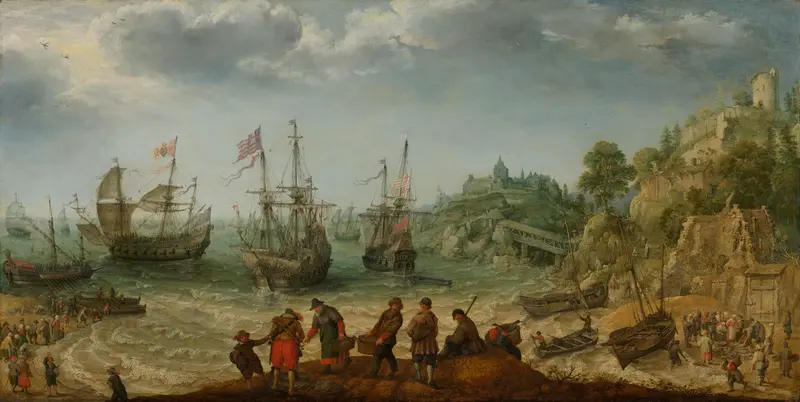
Ships off a Rocky Coast
Adam Willaerts
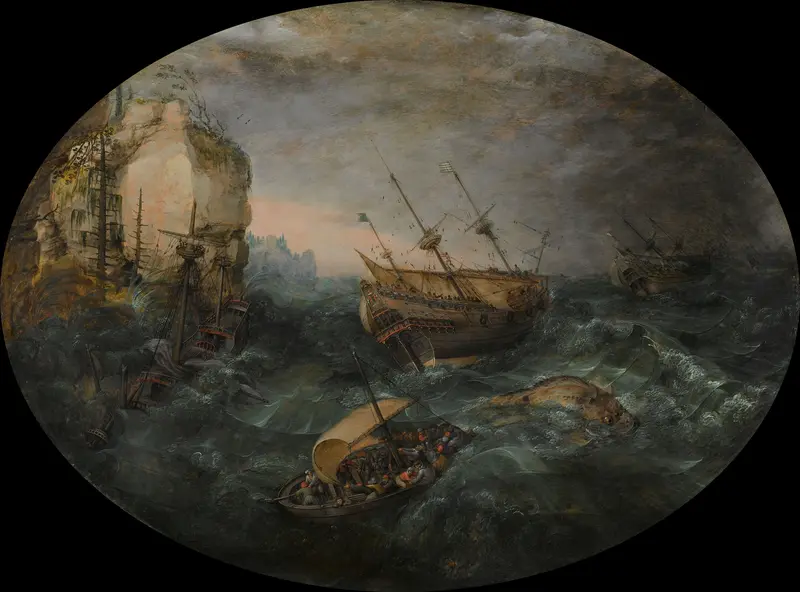
Shipwreck off a Rocky Coast
Adam Willaerts
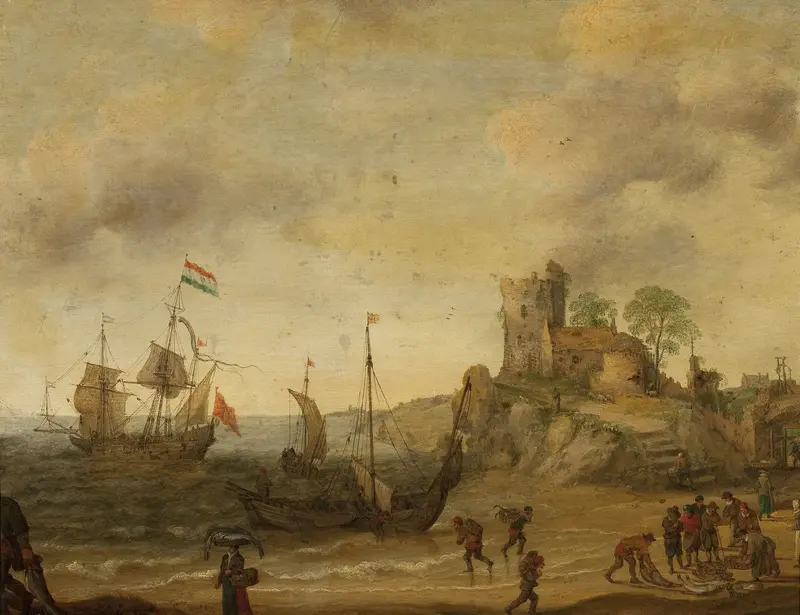
Fishermen at the seaside
Adam Willaerts
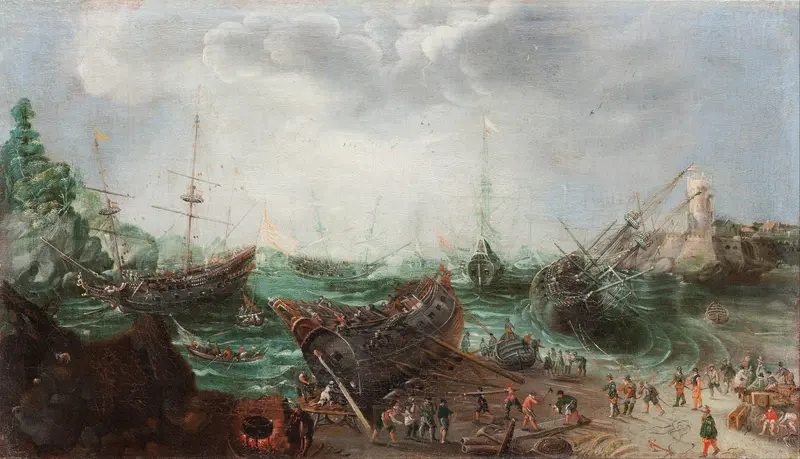
Harbour scene
Adam Willaerts
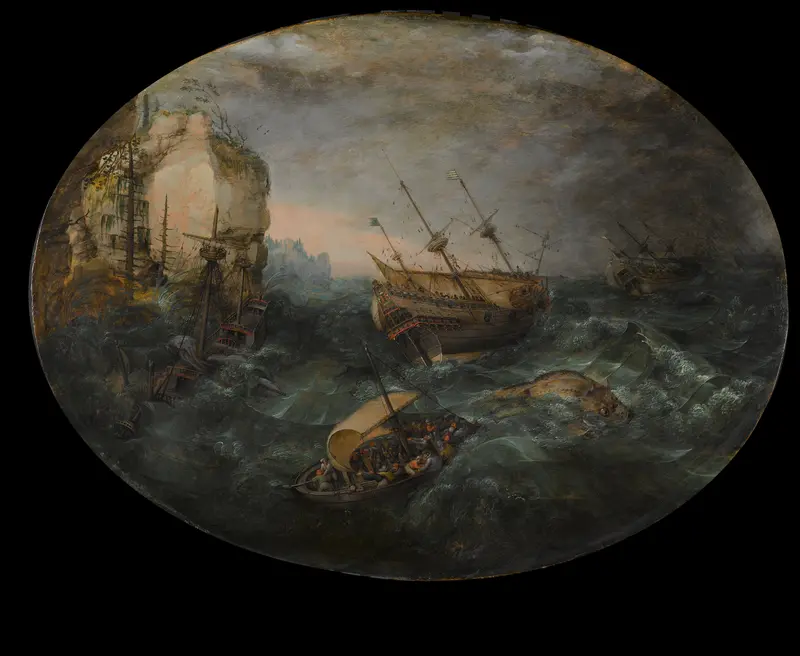
Shipwreck off a Rocky Coast
Adam Willaerts
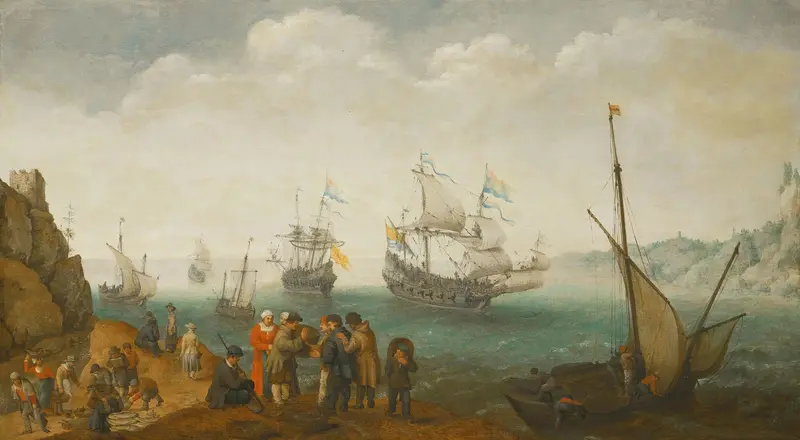
A Marine With Five Vessels Out To Sea And Another In Port, And With Groups Of Largely Male Figures Engaged In Buying Or Selling Fish Or Other Wares
Adam Willaerts





