Mythological Scene — History & Facts
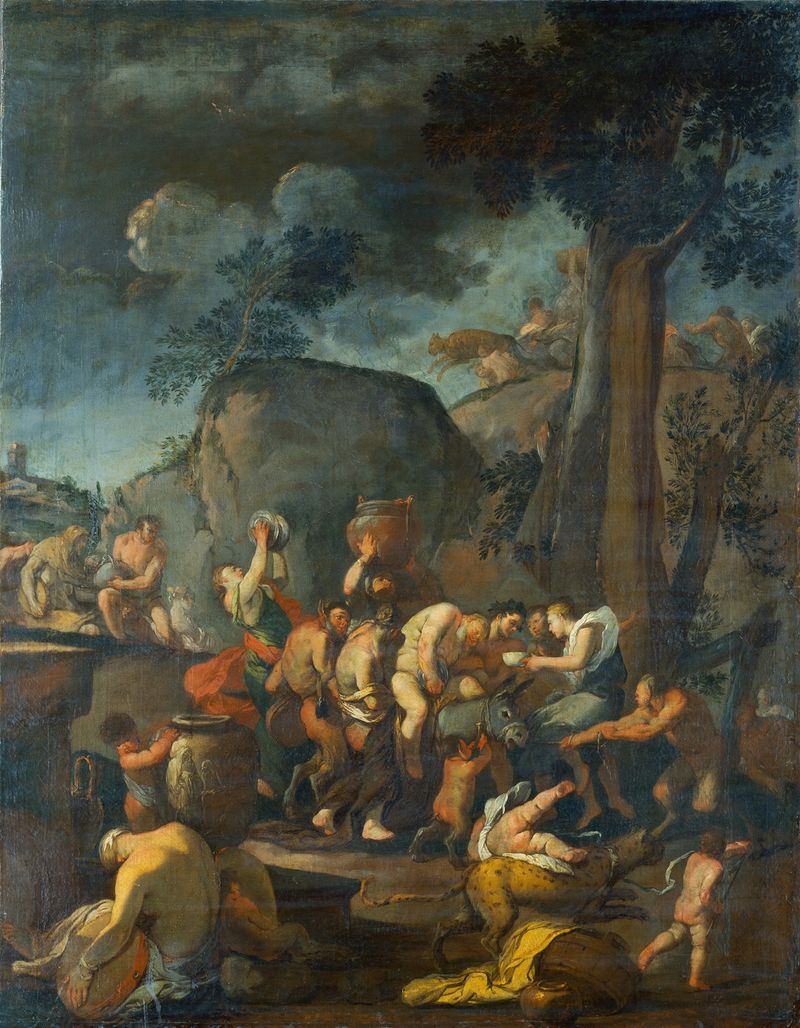
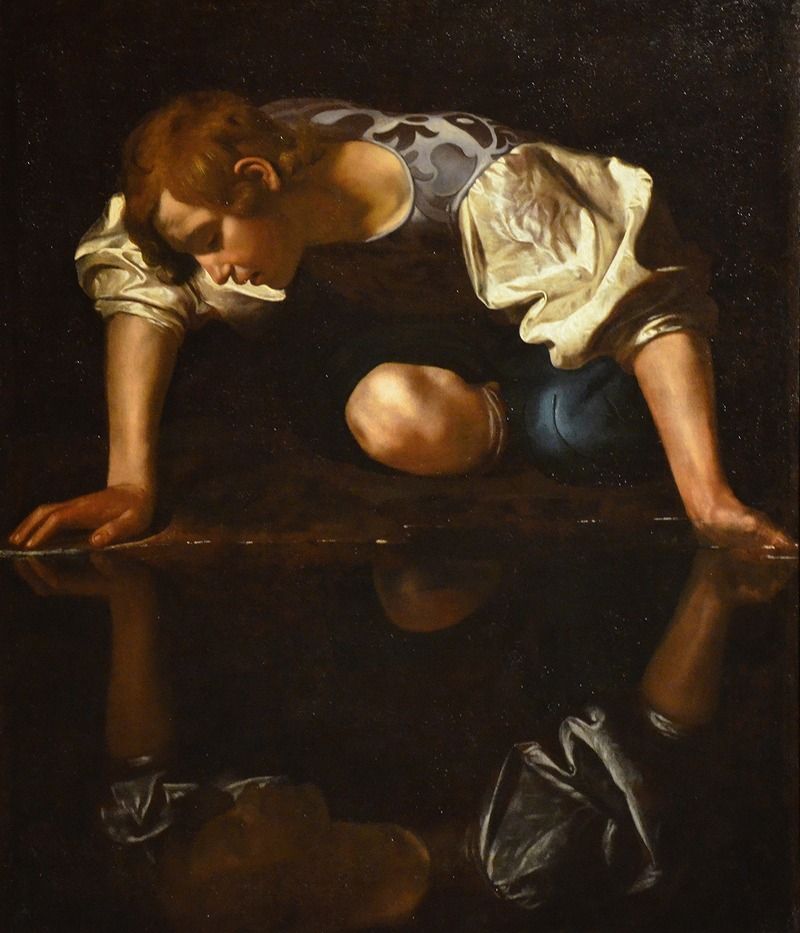
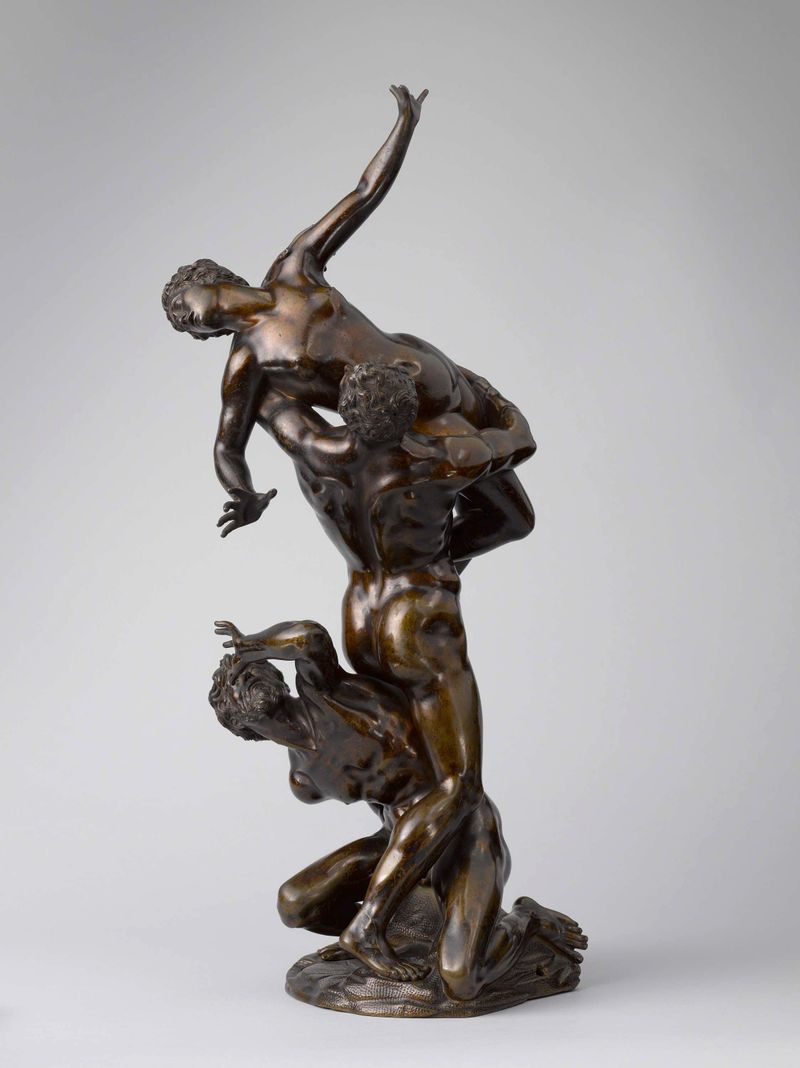
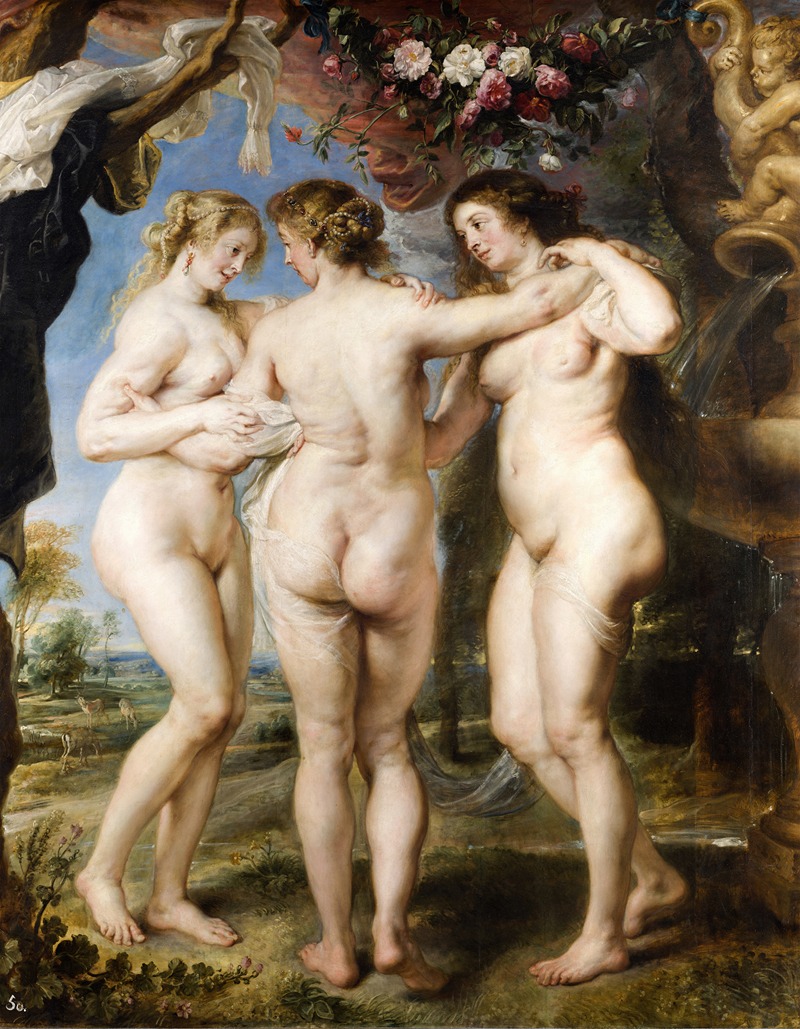
In the vast expanse of art, some works whisper while others shout, yet it is the quiet pieces that often hold our gaze the longest. This particular artwork serves as a poignant reminder of the void that exists beneath the surface of myth and legend, inviting viewers to explore the depths of their own perception. Look to the center of the canvas where the figures are elegantly arranged, creating a dynamic interplay between movement and stillness. The soft, muted tones—pinks, blues, and earthy browns—drift gently into one another, suggesting a hazy dream rather than a stark reality.
Notice how the light delicately illuminates the central figure, casting elongated shadows that stretch across the ground, drawing your eye toward the intricate details of their garments and expressions. It’s as if time stands still in this moment, allowing the emotions to breathe. As you delve deeper into the painting, consider the tension between the ethereal and the corporeal. Each figure appears both present and distant, embodying their mythological roles while simultaneously hinting at their own vulnerabilities.
The hidden void created by the spaces between them compels us to ponder the underlying themes of isolation and connection—how despite their divinity, they too confront the loneliness inherent in existence. This duality invites introspection, urging viewers to reflect on their own narratives and the stories that shape their lives. Giulio Carpioni painted this work during the 17th century, a time when the Baroque style dominated European art. Based in Venice, Carpioni was influenced by the dramatic narratives of his contemporaries while also exploring the subtleties of emotion through color and form.
The period was marked by a fascination with classical mythology, and his approach to this theme reflects a nuanced understanding of both human experience and the transcendent qualities of art amid a world in flux.