
Naples, pins parasols — History & Facts
What if silence could speak through light? In Naples, pins parasols, the luminosity captures a world on the edge of decay, whispering the stories of sunlit days and fading glory. Look to the left at the sturdy, crumbling ruins bathed in golden sunlight. The juxtaposition of vibrant parasols against the weathered architecture creates a striking focal point; the colorful fabric seems to dance in the breeze, while the stone stands resolute, steeped in history. Notice how the artist deftly employs a warm palette, the blues and ochres harmonizing, evoking a sense of nostalgia that invites the viewer to linger. The tension between vibrancy and decay is palpable in every brushstroke.
Each parasol, vivid yet ephemeral, symbolizes fleeting joy amidst the backdrop of a city marked by the passage of time. The shadows cast by the structures suggest a lingering melancholy, hinting at stories untold—of laughter that once resonated in the now-silent space, and of beauty that inevitably succumbs to the relentless grip of time. Félix Ziem painted this work during the height of the Romantic movement, between 1850 and 1862, a period marked by an exploration of nature, emotion, and history. Living in Paris, Ziem traveled to Italy frequently, drawn to the enchanting landscapes and rich cultural heritage.
Naples, pins parasols reflects his dual fascination with beauty and decay, capturing the essence of a city that stands as both a vibrant tourist destination and a poignant reminder of its past.
More Artworks by Félix Ziem
Browse all →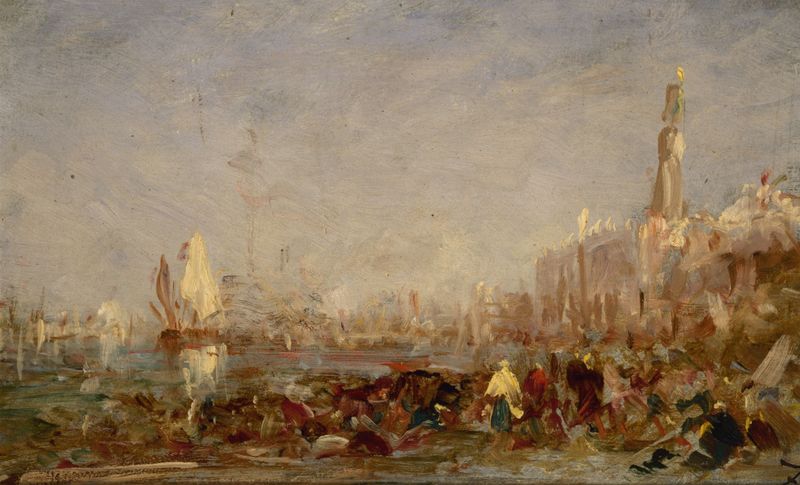
Venise
Félix Ziem
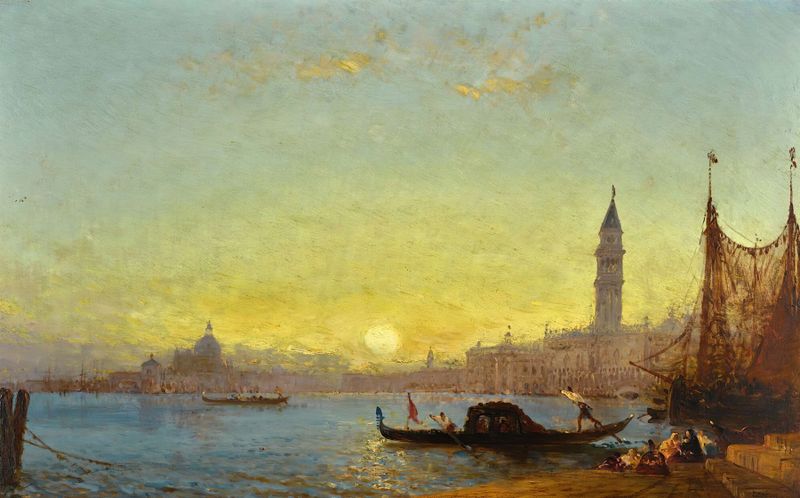
Coucher De Soleil À Venise
Félix Ziem
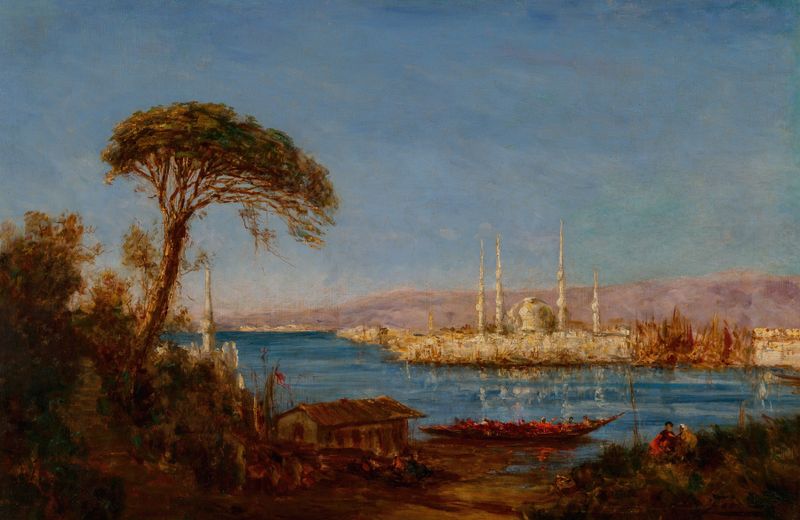
Constantinople
Félix Ziem
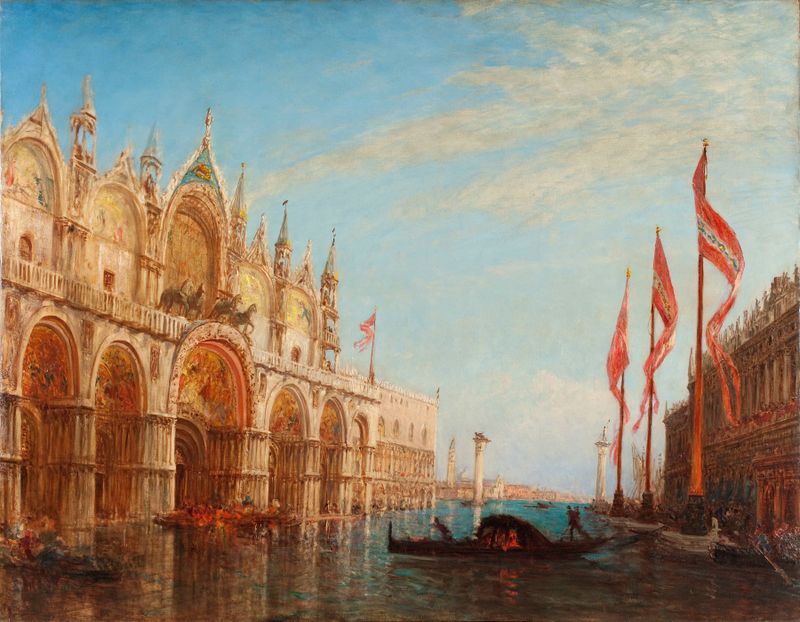
La place Saint-Marc, inondation de 1863
Félix Ziem
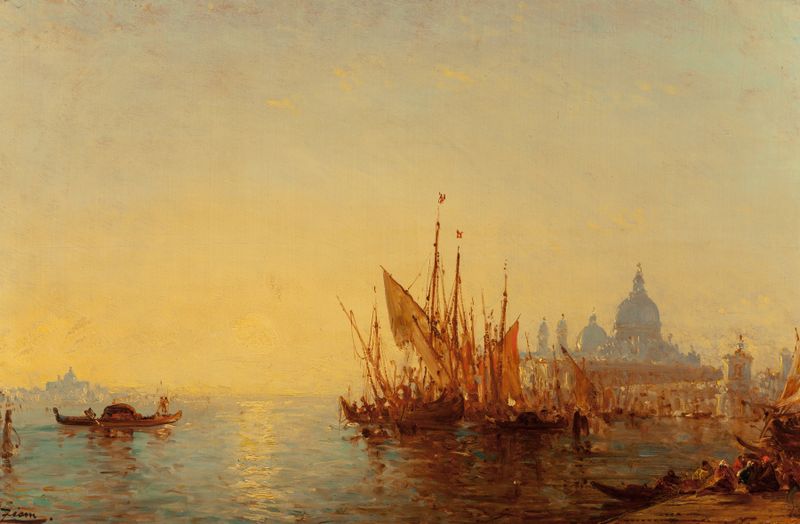
Bacino di San Marco
Félix Ziem

Canal Grande
Félix Ziem
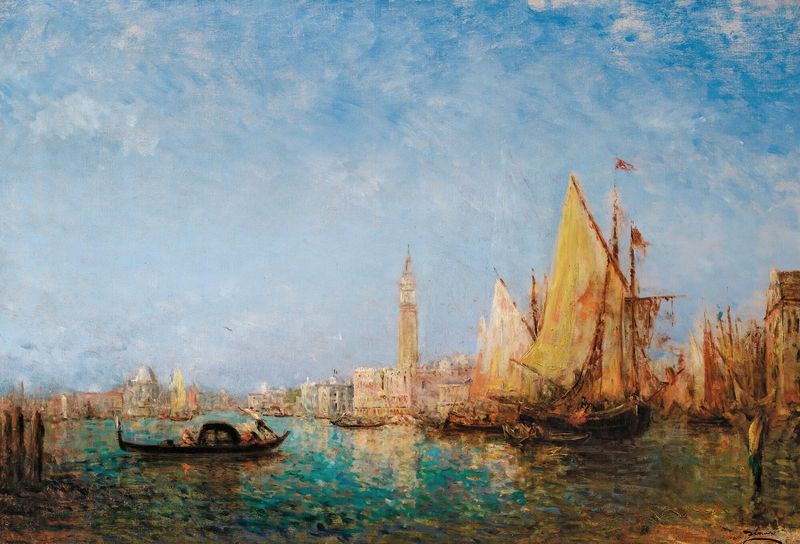
Le Palais Du Doge, Venise
Félix Ziem
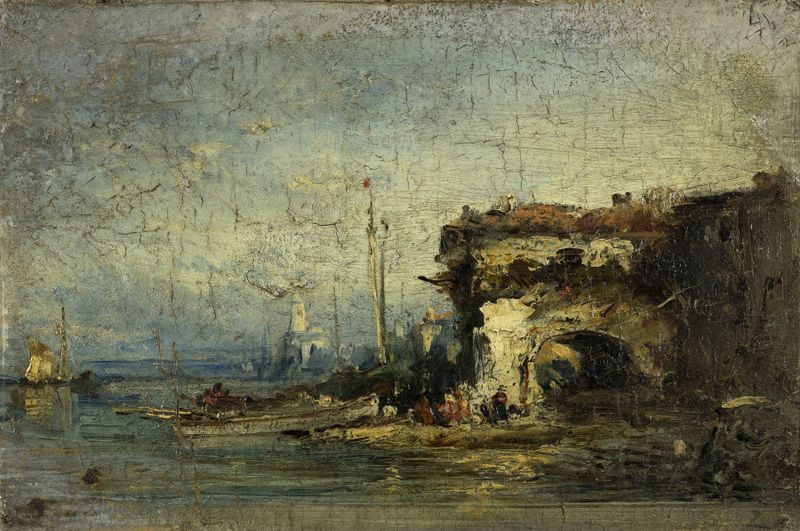
Vue d’Italie; la vieille porte
Félix Ziem
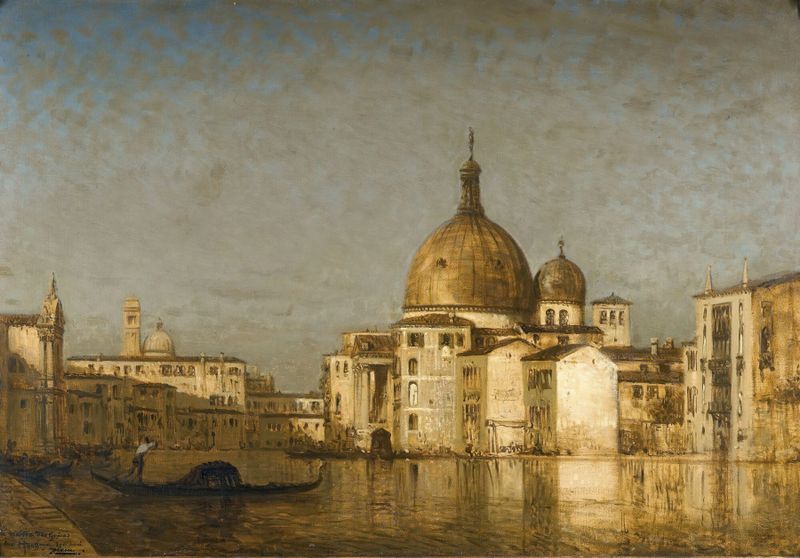
San Simeone Piccolo Au-Delà Du Grand Canal, Venis
Félix Ziem
Venise, gondole et voiliers devant le Palais des doges et San Giorgio Maggiore
Félix Ziem





