
Near the Fiord — History & Facts
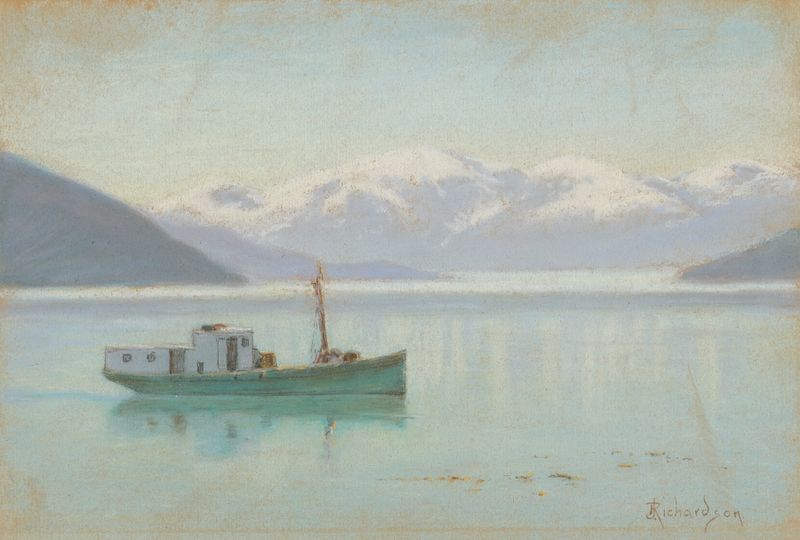
Could a single brushstroke hold eternity? In Near the Fiord, the essence of obsession lingers, inviting viewers to explore the depths of nature's grandeur and the human psyche intertwined within it. Look to the left at the majestic mountains, their peaks crowned with a soft, ethereal glow that captures the early morning light. The artist employs a delicate palette of blues and greens, giving life to the tranquil waters that mirror the towering cliffs above. Notice how the brushstrokes vary in intensity, with gentle swirls near the shoreline contrasting sharply with the bold, jagged lines of the rocks, creating a sense of movement that draws your eye across the canvas. Within this serene landscape, emotional tensions simmer beneath the surface.
The calm waters suggest a stillness, yet the formidable mountains loom above, hinting at nature's duality — beauty intertwined with danger. Tiny figures dot the shore, their insignificance against the grandeur provoking contemplation of humanity's place in the vastness of the earth. This juxtaposition evokes a feeling of both awe and vulnerability, encapsulating the obsession to conquer or connect with the sublime. Theodore J.
Richardson created Near the Fiord in the 19th century, a period when the Romantic movement was thriving, emphasizing the power of nature and individual emotion. During this time, Richardson was deeply influenced by his surroundings in England, where the exploration of landscape painting flourished. His work reflects the era's fascination with nature, as well as an emerging desire to convey personal experiences through artistic expression.
More Artworks by Theodore J. Richardson
Browse all →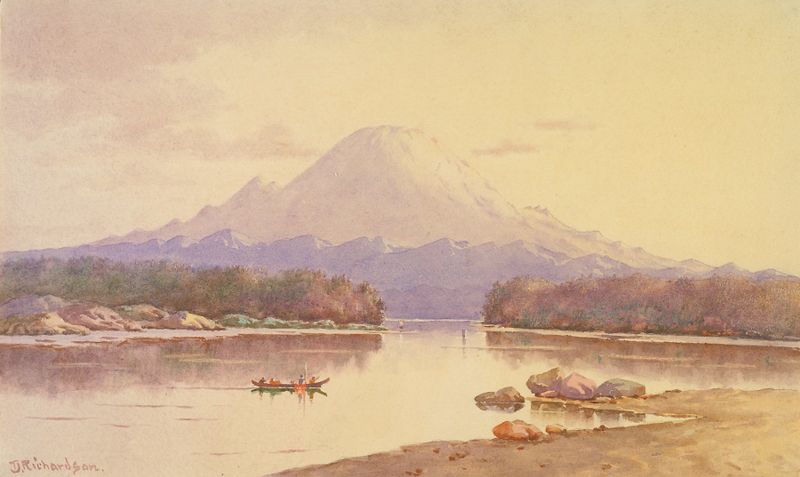
Mount Rainier
Theodore J. Richardson
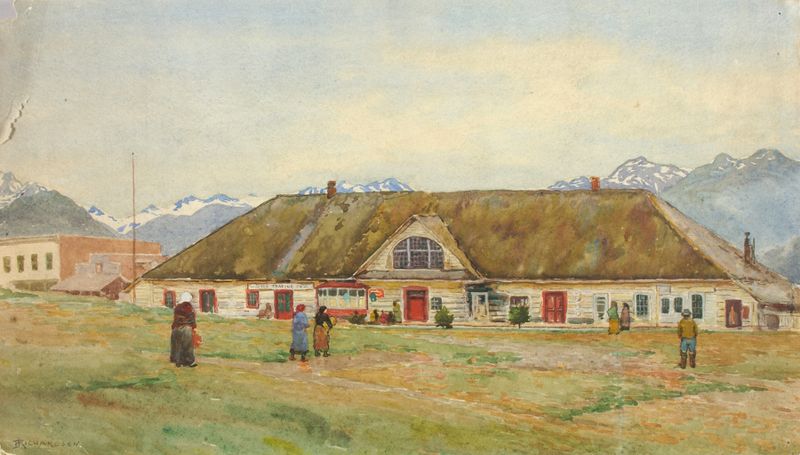
Old Russian Trading Post, Sitka
Theodore J. Richardson

The Ranch Native Village, Sitka, 1884
Theodore J. Richardson

Rear View Of Greek Church, Sitka, 1888
Theodore J. Richardson
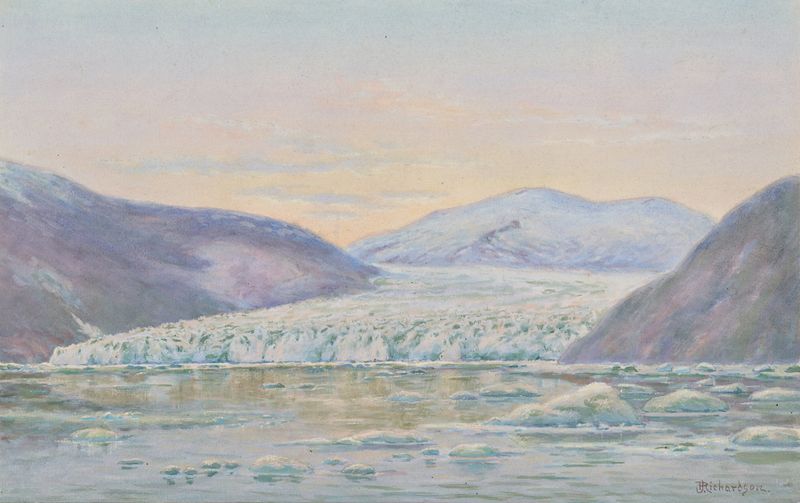
Taku Glacier, Evening
Theodore J. Richardson

St. Elias Alps
Theodore J. Richardson

Drying Blankets Over Canoes
Theodore J. Richardson

In The Old Quarter, Sitka, 1900
Theodore J. Richardson
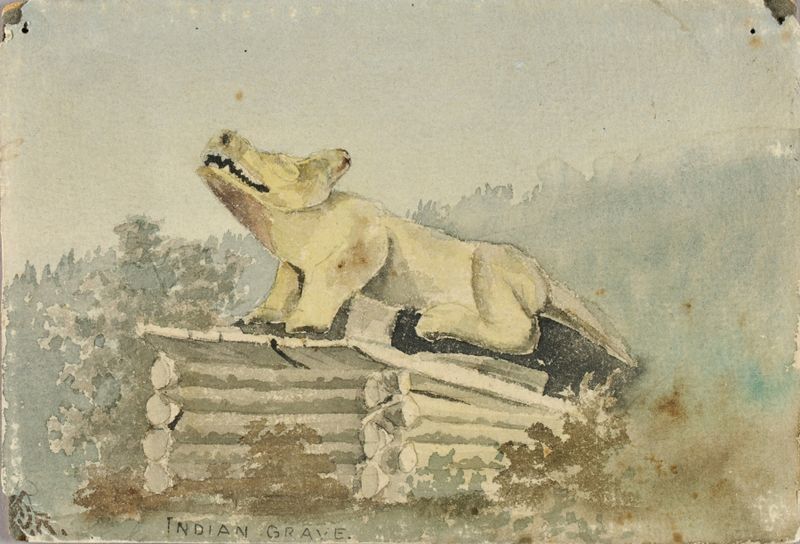
Indian Grave. Wolf Totem Over Medicine Man Grave, Wrangell
Theodore J. Richardson
Jack Mantle’s Boat
Theodore J. Richardson





