
New England Inlet with Self-Portrait — History & Facts
In the stillness of a seaside inlet, the essence of movement lingers subtly in the air, hinting at deeper narratives waiting to be unraveled. Look closely at the foreground, where the water’s surface shimmers with a soft interplay of blues and greens, capturing fleeting reflections of the cloudy sky above. The artist’s self-portrait, positioned with quiet confidence amidst the natural landscape, draws the eye with its meticulous detail—notice how the brushwork evokes both the solidity of the figure and the ephemeral quality of the surrounding waves. The muted palette enhances a contemplative mood, inviting viewers to pause and reflect. Delving deeper, the juxtaposition of the self-portrait against the vast expanse of nature speaks to the artist’s own introspection, a dialogue between self and environment.
The sailboat in the distance, barely adrift, becomes a metaphor for the delicate balance between human endeavor and the untamed beauty of the sea. Each nuance in the painting whispers of isolation and connection, suggesting that movement is not just physical but emotional and spiritual as well. In 1848, during his time in Gloucester, Massachusetts, the artist painted this piece while navigating the early stages of his career. This was a period marked by a growing appreciation for American landscapes and the development of Romanticism in art, as artists sought to capture the sublime beauty of their surroundings.
Lane, increasingly recognized for his mastery of light and atmosphere, used this work to establish his unique voice within this evolving artistic landscape.
More Artworks by Fitz Henry Lane
Browse all →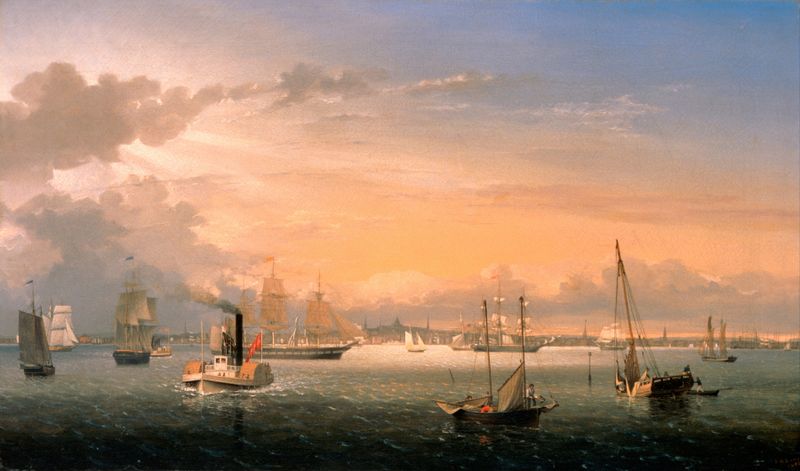
Boston Harbor
Fitz Henry Lane

Becalmed off Halfway Rock
Fitz Henry Lane

Owl’s Head, Penobscot Bay, Maine
Fitz Henry Lane

Stage Fort across Gloucester Harbor
Fitz Henry Lane
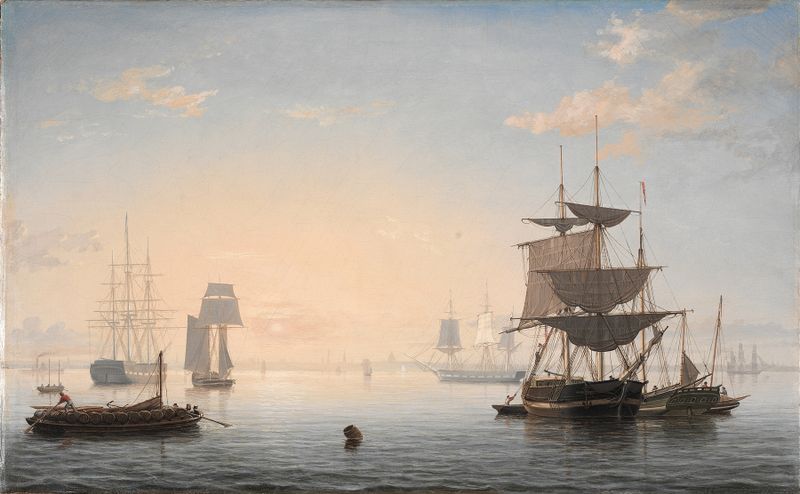
Harbor of Boston, with the City in the Distance
Fitz Henry Lane

The Ships ‘Winged Arrow’ and ‘Southern Cross’ in Boston Harbor
Fitz Henry Lane
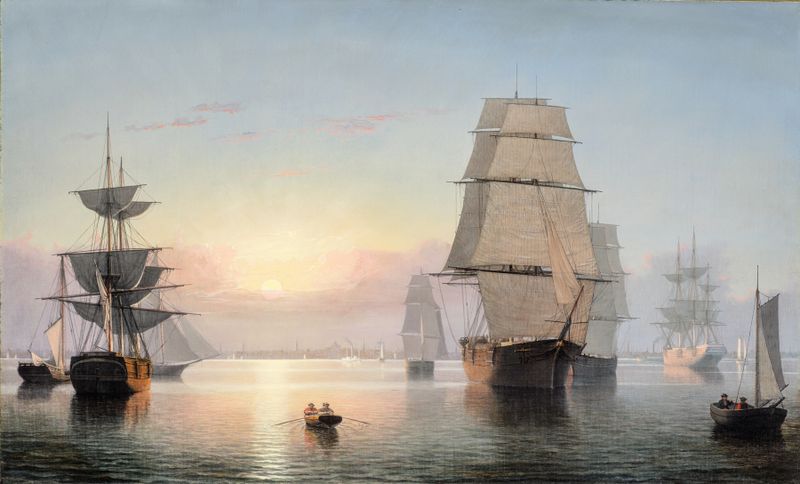
Boston Harbor, Sunset
Fitz Henry Lane

Brig Off the Maine Coast
Fitz Henry Lane
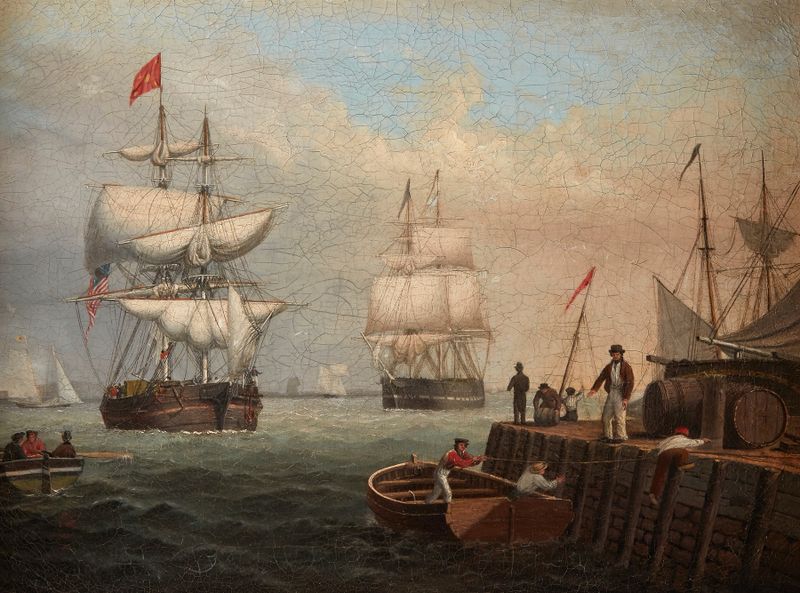
Boston Harbor
Fitz Henry Lane

Brace’s Rock, Brace’s Cove
Fitz Henry Lane





