
New Radnor — History & Facts
What if silence could speak through light? In the delicate interplay between shadow and hue, New Radnor captures the essence of a fleeting moment, echoing the transience of life itself. Begin by looking at the gentle sweep of the landscape that unfolds across the canvas. Notice how the soft pastel blues and greens blend seamlessly, creating a serene horizon where earth meets sky. The rolling hills, painted with tender strokes, invite the viewer's eye to wander inward, while the wisps of clouds seem to float, almost weightlessly, above them.
The light spills softly across the scene, illuminating the valley with a quiet glow, evoking a sense of stillness and contemplation. Yet beneath this tranquil surface lies a profound tension. The muted colors suggest a world in transition, a symbol of the inevitable march of time and the approach of mortality. The nearly ethereal quality of the landscape hints at impermanence, as if the entire scene could dissolve at any moment.
Small details, like the sparse trees perched upon the hillsides, stand as lone sentinels, emphasizing the solitude of existence and the quiet acceptance of what lies ahead. Created during the late 18th century, New Radnor reflects Francis Towne’s fascination with the picturesque and the sublime. During this period, the artist was deeply engaged with the emerging Romantic movement, which sought to express the emotional and the natural. His travels through Wales provided inspiration, as he sought to convey the beauty and fragility of the landscape at a time when the world was rapidly changing with the rise of industrialization.
More Artworks by Francis Towne
Browse all →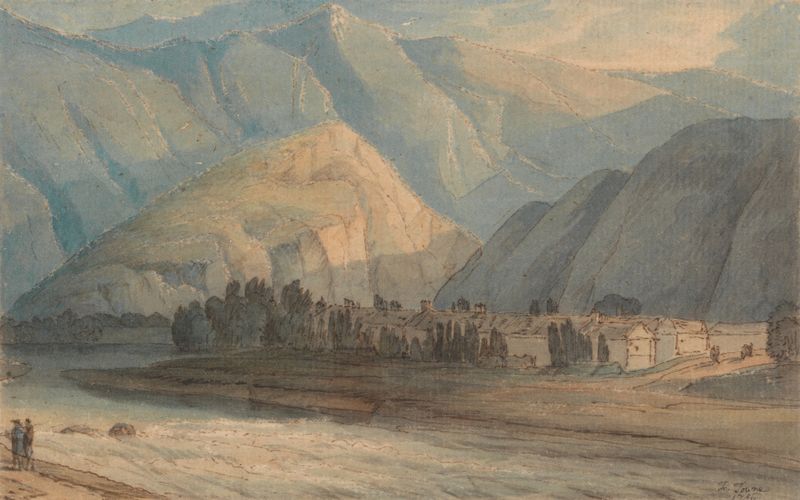
The Grange at the Head of Keswick Lake
Francis Towne

Vauxhall Stairs, from Millbank, July 5, 1797
Francis Towne

View in Borrowdale of Eagle Crag and Rosthwaite
Francis Towne

View of Lake Como with Monte Leoni
Francis Towne
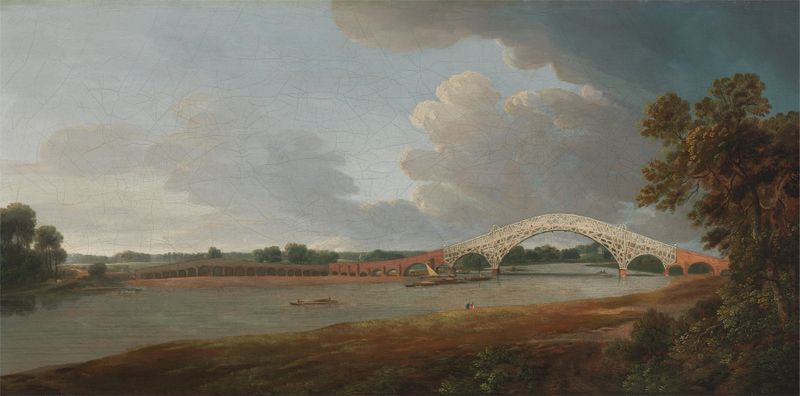
Old Walton Bridge
Francis Towne
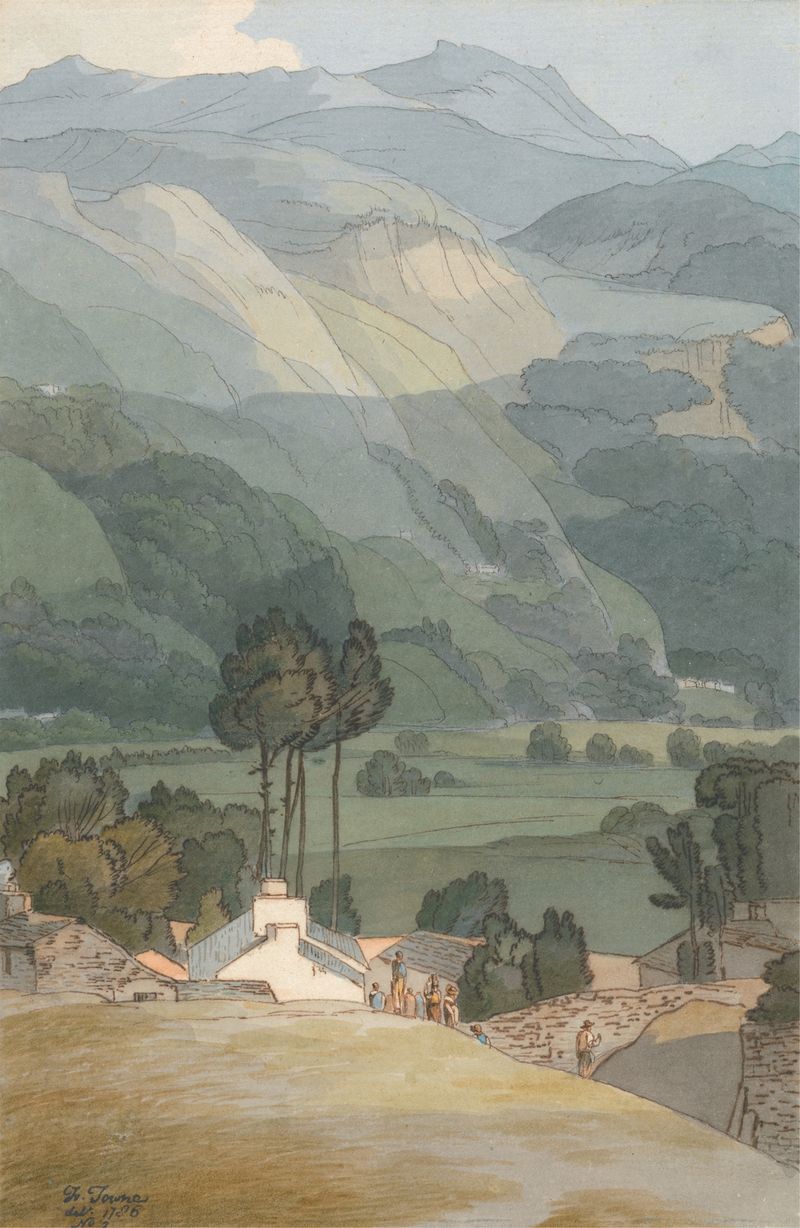
Ambleside
Francis Towne
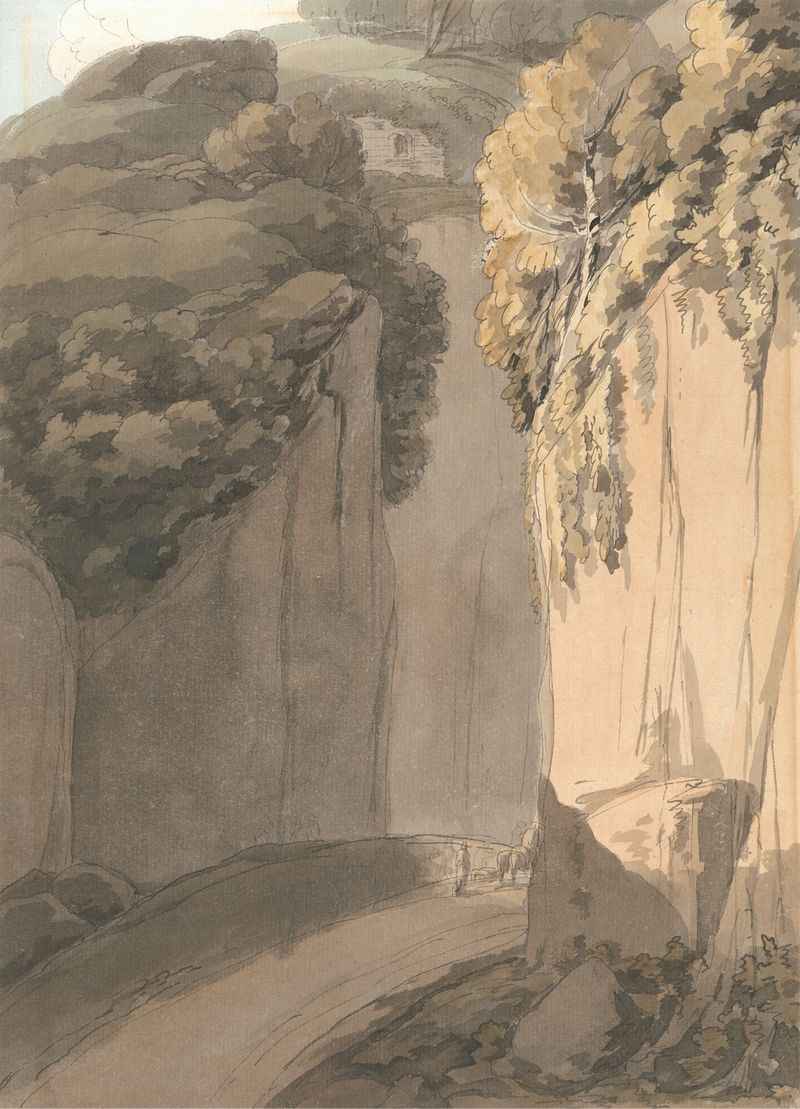
Entrance to the Grotto at Posilippo, Naples
Francis Towne

The Claudian Aquaduct, Rome
Francis Towne

A View Near the Arco Scuro, Looking Towards the Villa Medici, Rome
Francis Towne

View of the Rhydaer
Francis Towne





