
Newgate — History & Facts
In every stroke lies a story of decay and renewal, capturing the fragile beauty of a world in transition. Focus first on the crumbling architecture that dominates the canvas, where time has etched its relentless passage into the very walls of Newgate. Look closely at the interplay of warm ochres and cool grays, the artist’s palette mirroring the stark contrast between life and decay. The ruins seem to breathe, caught in a moment where nature's reclamation is both tender and violent, each detail inviting you to explore the layers of history woven into the fabric of the scene. As you delve deeper into the artwork, note the contrasting elements of light and shadow.
The soft glow creeping through the broken windows hints at the possibility of renewal amidst the desolation, while the gnarled vines creeping across the stone symbolize nature's slow but certain dominance over human constructs. This duality evokes a profound sense of nostalgia, highlighting the tension between human ambition and inevitable decay—a reminder that even in ruin, there lies a poignant grace. Created during a time when the artist was immersed in the vibrant yet turbulent art scene of late 18th-century England, this work reflects the shifting sentiments towards industry and urbanization. The rise of neoclassicism and romanticism influenced his portrayal of architectural subjects, as society grappled with the consequences of progress and modernization.
In this context, the painting stands as a testament to both the beauty and the transience of human endeavors.
More Artworks by Thomas Malton the Younger
Browse all →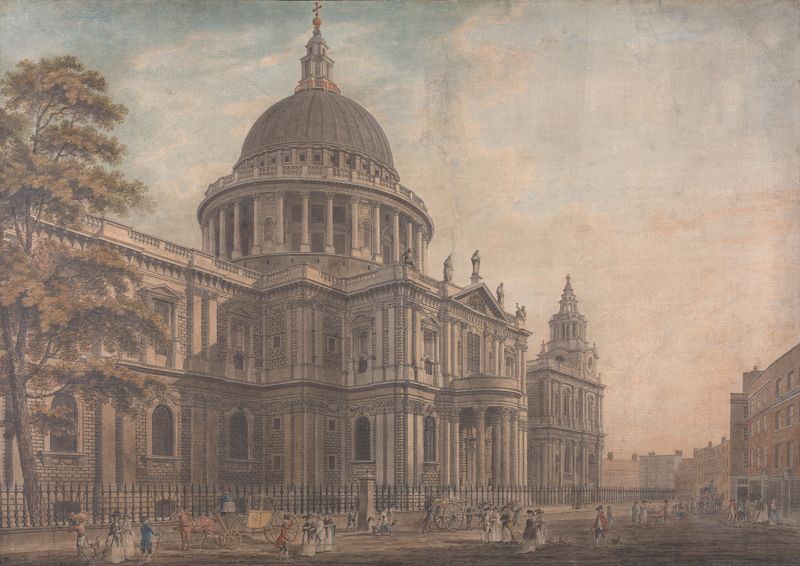
The North Front of St. Paul’s
Thomas Malton the Younger
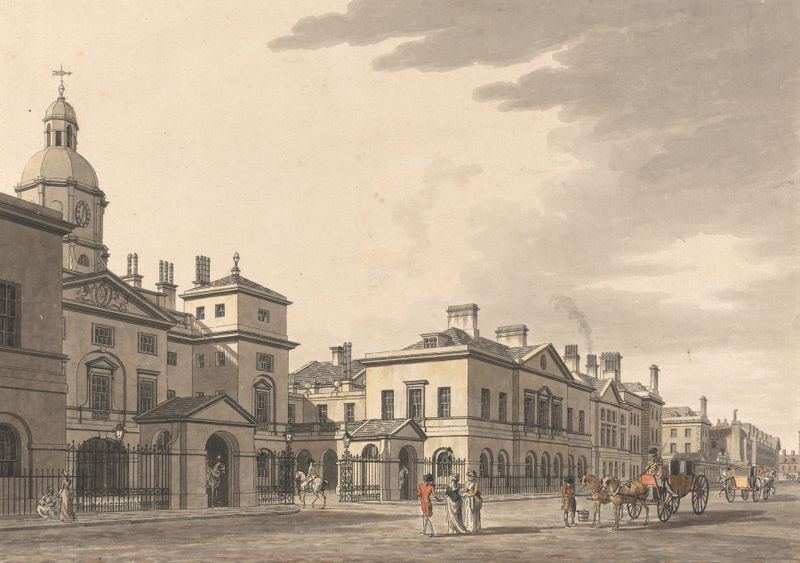
Horse Guards, Whitehall
Thomas Malton the Younger

Interior of St. Paul’s Cathedral
Thomas Malton the Younger
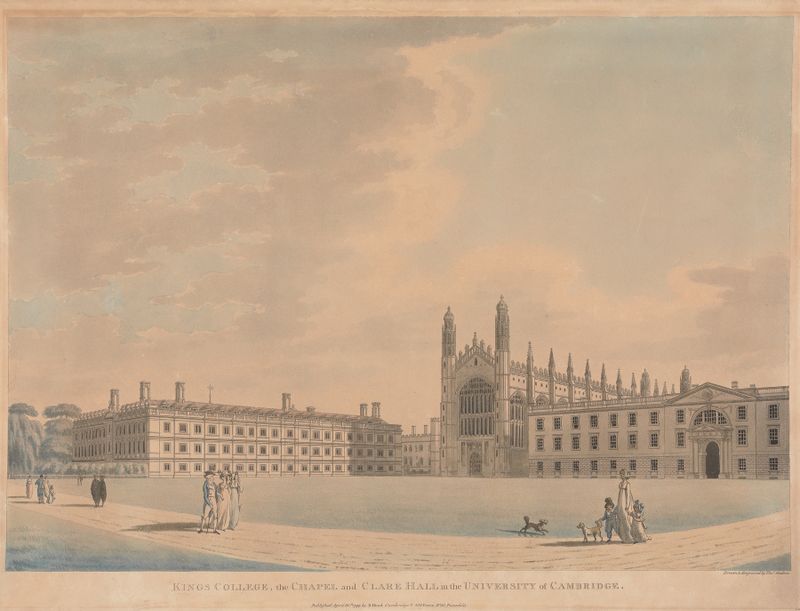
Kings College, the Chapel and Clare Hall in the University of Cambridge
Thomas Malton the Younger

Cambridge University; Jesus College
Thomas Malton the Younger
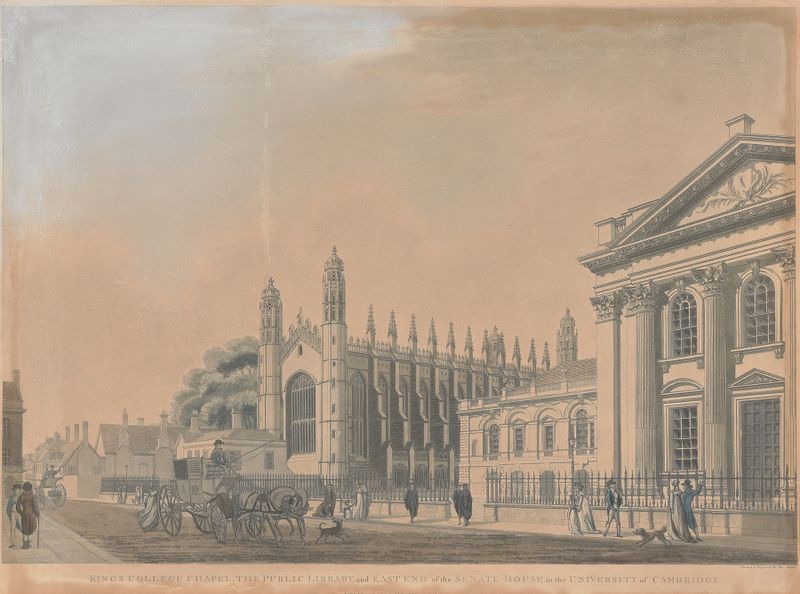
Cambridge University; Kings College Chapel
Thomas Malton the Younger
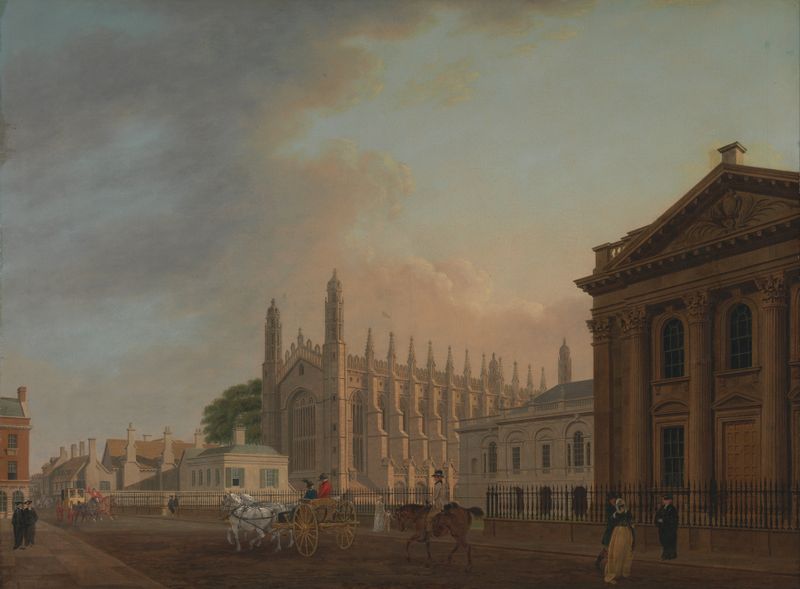
King’s Parade, Cambridge
Thomas Malton the Younger

Cambridge University; Queens College
Thomas Malton the Younger
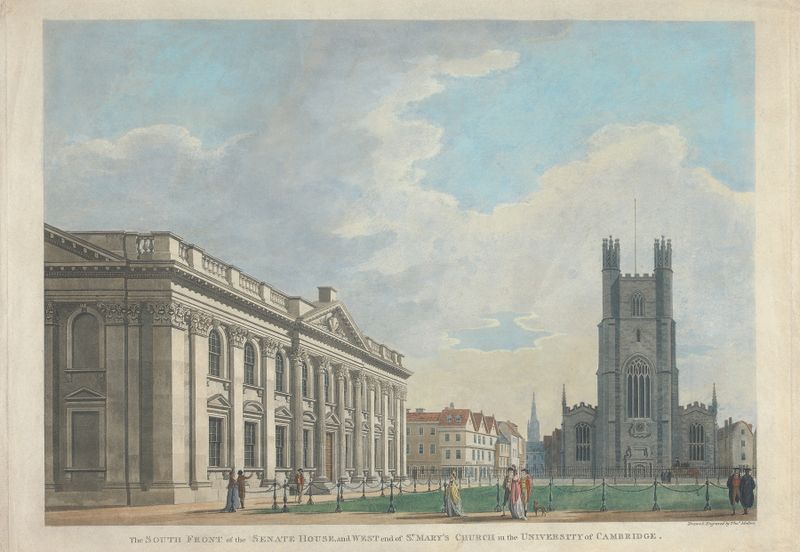
The South Front of the Senate House, and West End of St Mary’s Church in the University of Cambridge
Thomas Malton the Younger
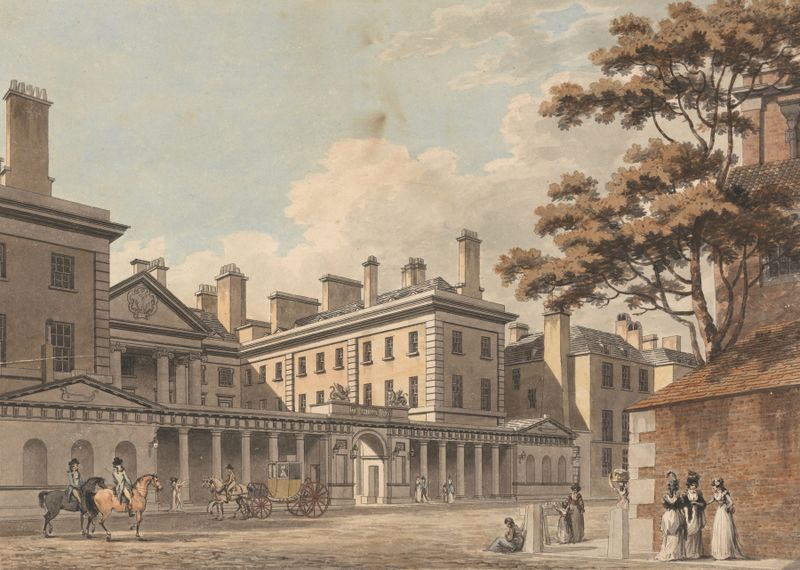
The Admiralty
Thomas Malton the Younger
More Architecture Art
Browse all →
The statue of Liberty
Frédéric Auguste Bartholdi

View of Houses in Delft, Known as ‘The Little Street’
Johannes Vermeer

View of Houses in Delft, Known as ‘The Little Street’
Johannes Vermeer

The Cathedral in Rouen. The portal, Grey Weather
Claude Monet

The yellow house
Vincent van Gogh

The Church in Auvers-sur-Oise, View from the Chevet
Vincent van Gogh