
Newport Beach — History & Facts
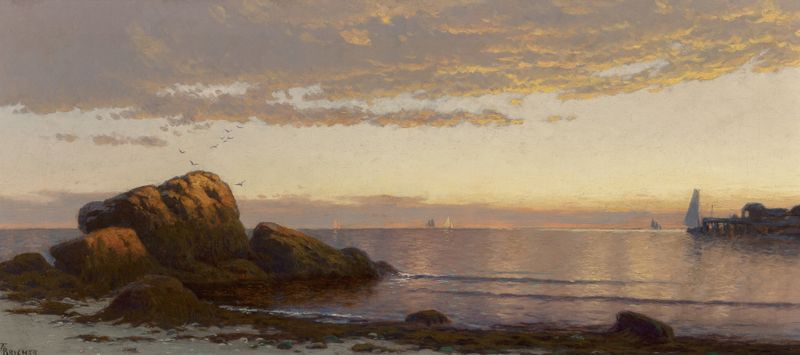
Could a single brushstroke hold eternity? In Newport Beach, the artist captures a moment of rebirth, where land meets sea, and time pauses to reflect on the beauty of nature’s cyclical dance. Look to the horizon, where the sun spills golden light, illuminating gentle waves crashing against the shore. Notice how Bricher skillfully blends a palette of soft blues and warm yellows, drawing the eye toward the brilliant sky that seems to exhale life into the painted scene. Each stroke conveys a delicate balance between the tumult of the waves and the serene expansiveness of the sky, creating an inviting yet dynamic composition that invites contemplation. The juxtaposition of the turbulent ocean and the calm, expansive sky evokes a sense of duality—chaos and peace, movement and stillness.
Subtle details, like the seagulls gliding in the breeze and the distant sailboat, add layers to the narrative, suggesting the eternal journey of life and the tranquility found in nature's embrace. Together, they reflect a moment of harmony, where the viewer might find solace amidst life's uncertainties. In 1872, while creating this piece, the artist was deeply engaged with the American landscape movement, focusing on the beauty of coastal scenes. Bricher, who often painted en plein air, was influenced by the Romantic ideals of nature, seeking to capture not just the visual experience but also the profound emotional connection to the land.
This period was marked by a growing appreciation for American landscapes, and Bricher’s work contributed to a broader dialogue about the significance of the natural world in the face of industrialization.
More Artworks by Alfred Thompson Bricher
Browse all →
New England Coast
Alfred Thompson Bricher
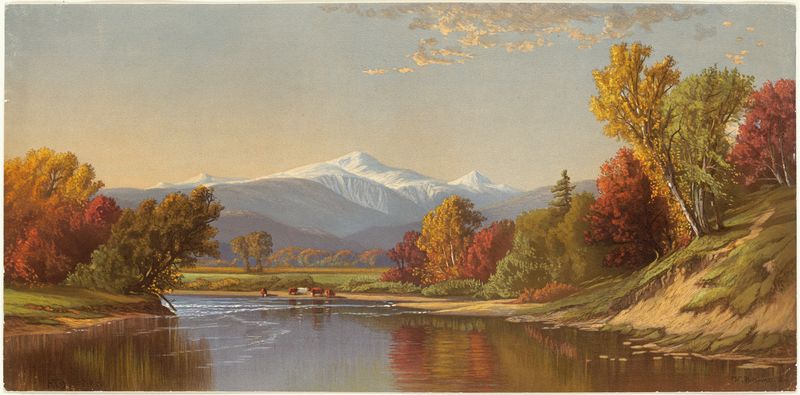
Late Autumn in the White Mountains
Alfred Thompson Bricher
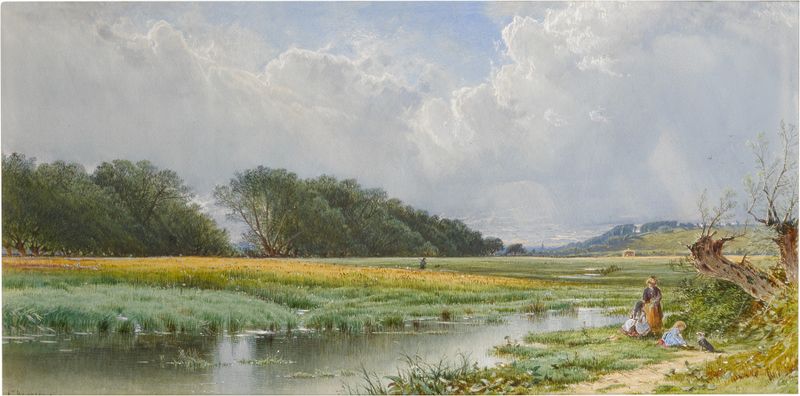
On the Meadows of Old Newburyport
Alfred Thompson Bricher

Along the Maine Coast
Alfred Thompson Bricher
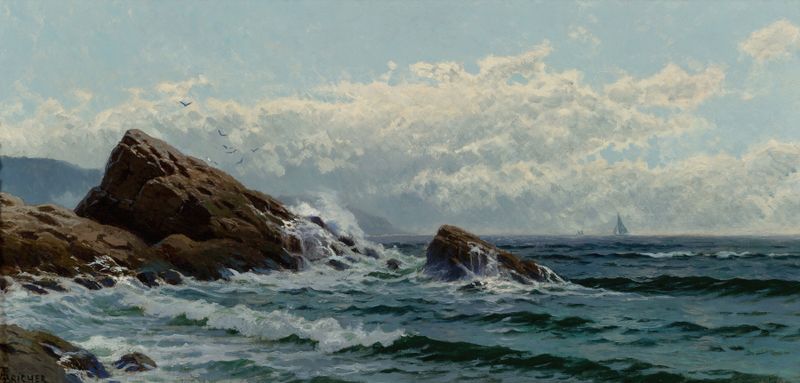
Crashing Waves
Alfred Thompson Bricher

At Water’s Edge
Alfred Thompson Bricher
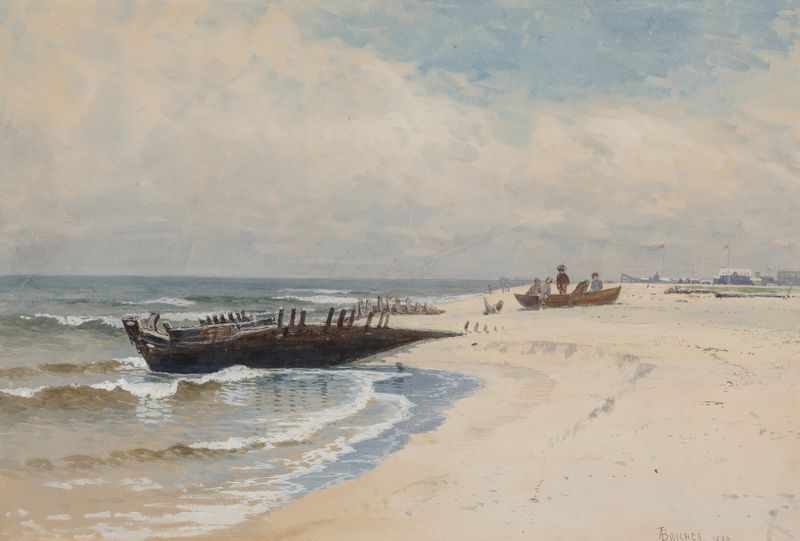
Low Tide
Alfred Thompson Bricher
Sunset on the Coast
Alfred Thompson Bricher

Castle Rock, Nahant, Massachusetts
Alfred Thompson Bricher

On the Meadows of Old Newburyport
Alfred Thompson Bricher





