
Nez Perces — History & Facts
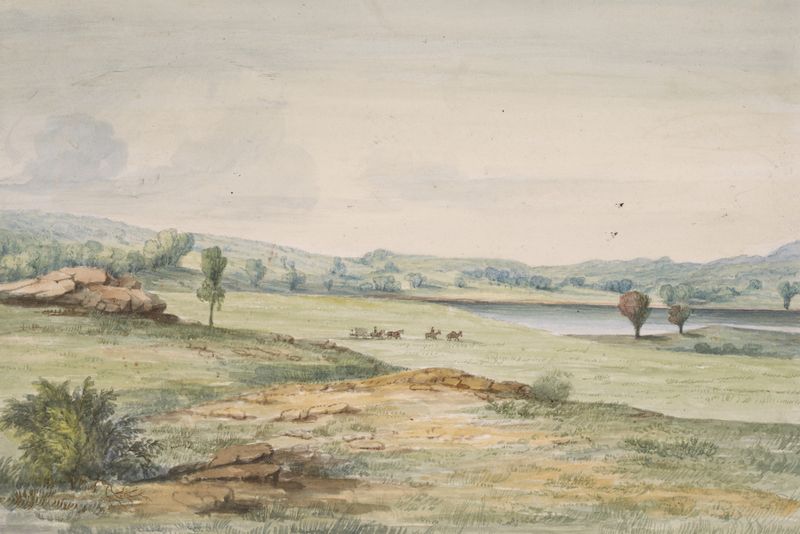
Can paint confess what words never could? In Nez Perces, a profound story unfolds, whispering of encounters and destinies shaped by a world teetering on the brink of change. Look to the center of the canvas, where a group of indigenous figures stands poised, their expressions a tapestry of hope and uncertainty. The artist employs earthy tones that come alive under the rich, warm light—a combination of ochres and greens that evokes both the land and the spirit of its people. Notice how the figures are framed by the expansive sky, filled with soft, billowy clouds, suggesting an impending shift in their world.
The careful arrangement invites contemplation of their place within the vastness, highlighting both their strength and vulnerability. Deeper meanings lie beneath the surface, intertwining the portrayal of identity and the weight of heritage. The juxtaposition of the serene environment with the tension in the figures’ stances hints at the encroaching pressures of colonization and change. Each face tells a story of resilience, but also of the profound sorrow that comes with the struggle to retain one’s identity in the face of destiny’s unrelenting march.
The intricate details of their attire and the natural elements surrounding them serve as reminders of their deep connection to the land, a bond that speaks volumes of their fight for existence. In 1854, John Mix Stanley painted Nez Perces during an era characterized by the westward expansion of America. As tensions between indigenous populations and settlers intensified, Stanley was immersed in the growing discourse on Native American rights and representation, often illustrating the complexities of their existence. This painting emerged from that tumultuous background, capturing a moment frozen in time, reflecting both the beauty and sorrow of a culture at a crossroads.
More Artworks by John Mix Stanley
Browse all →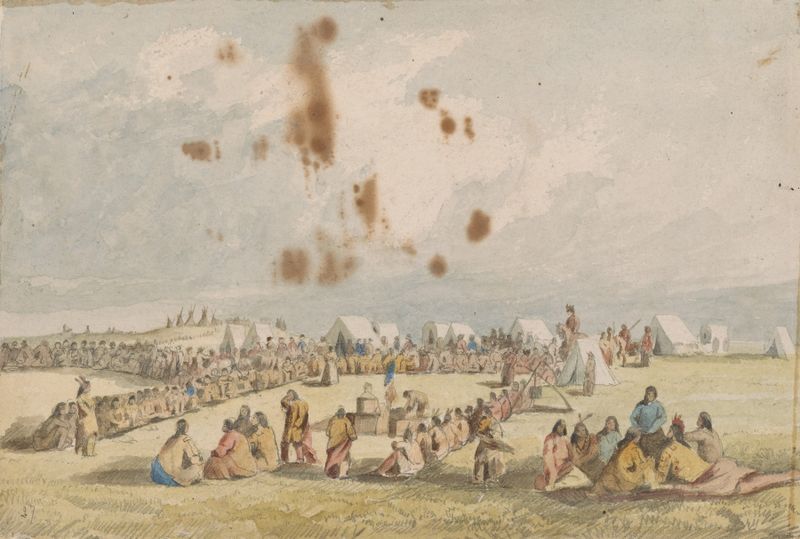
Distribution of Goods to the Assiniboins
John Mix Stanley
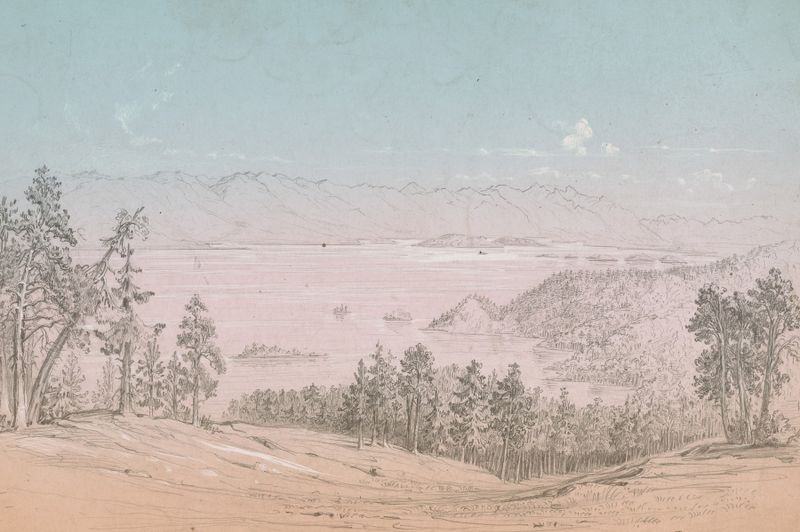
Flathead Lake, Looking toward the South
John Mix Stanley

A Morning in Milk River Valley
John Mix Stanley

Mount Rainier Viewed from Near Steilacoom
John Mix Stanley
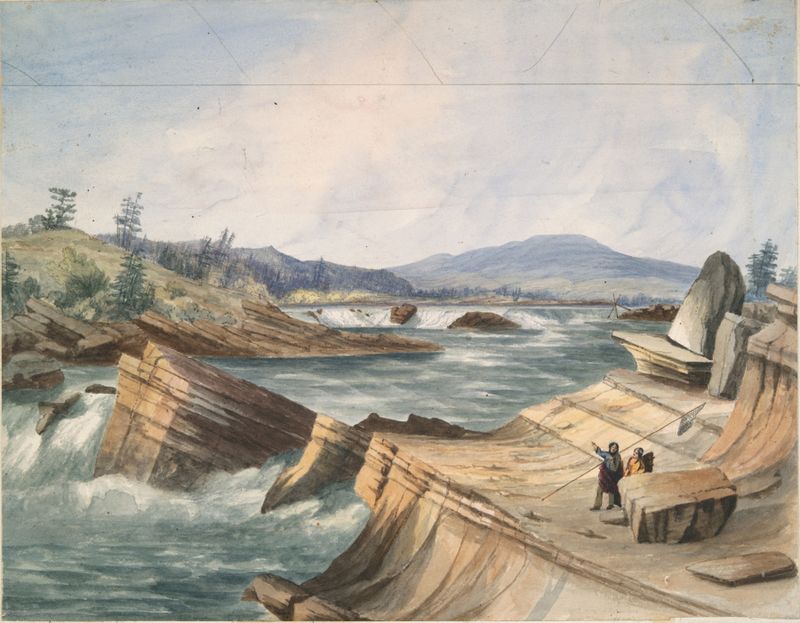
Kettle Falls, Columbia River
John Mix Stanley
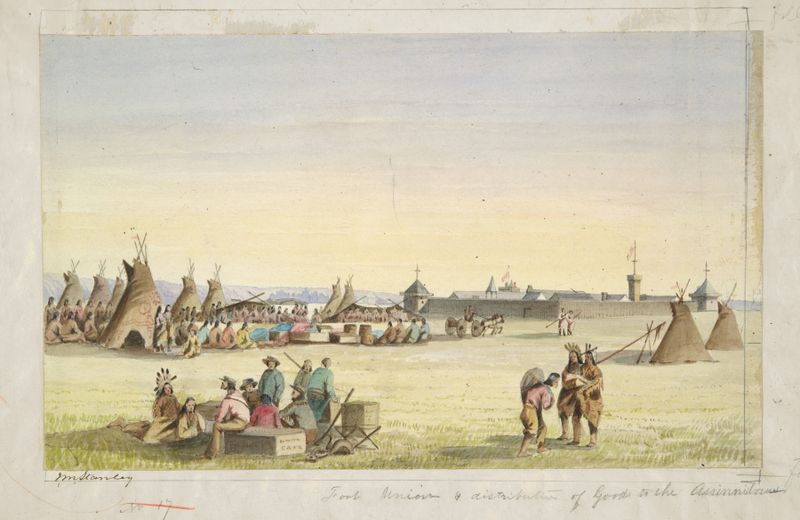
Fort Union and Distribution of Goods to the Assiniboins
John Mix Stanley

Pike Lake M.T.
John Mix Stanley
Sauk River
John Mix Stanley

Milk River – Bear’s Paw Mountain in Distance
John Mix Stanley

Fort Benton
John Mix Stanley





