Night at sea with knights — History & Facts
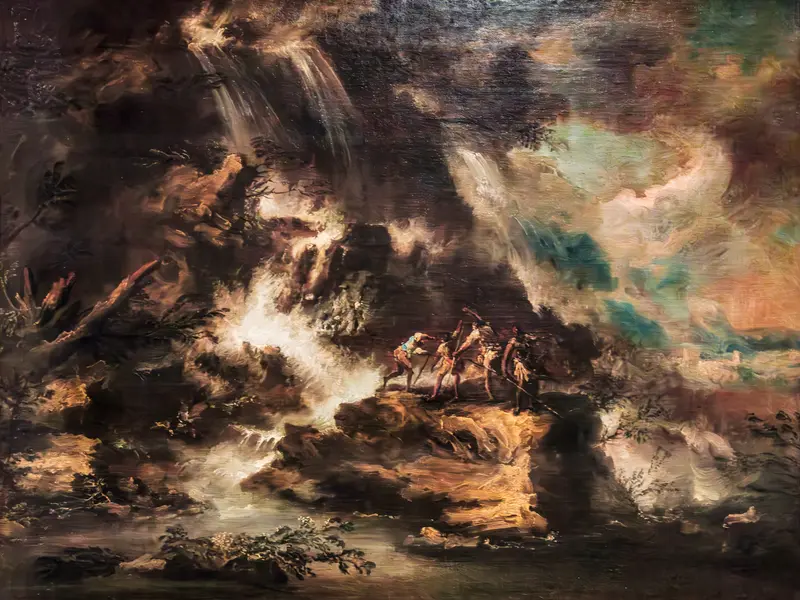
A restless moon commands the center of Night at sea with knights, its pale light slicing through a sky alive with surging clouds. The painter, Antonio Marini, draws the viewer first to the drama above: the heavens are a stage for swirling forms, their energy echoed in the wind-bent trees and the urgent gestures of horsemen in the foreground. The land is rugged, the water eerily still, and the distant ships and fortified towns seem to hold their breath under the moon’s gaze.
The knights, caught mid-action, are both dwarfed by the landscape and made heroic by their resolve to press on through the night—each brushstroke nudging the eye from earth to sky and back again. Works like this, with their brooding skies and theatrical contrasts, belong to a tradition that flourished in seventeenth- and eighteenth-century Europe, when artists and patrons alike were fascinated by the power of nature and the drama of human endeavor. Such paintings often graced the walls of noble homes, signaling both taste and a fascination with the untamed world beyond city gates. Yet history has kept few traces of Antonio Marini or this particular canvas, which was documented only recently—on 8 May 2024, as part of a private collection.
The mystery lingers in the painting itself: the moonlit journey, the uncertain destination, and the sense that, just beyond the frame, the story continues.