Sea storm with natural arch — History & Facts
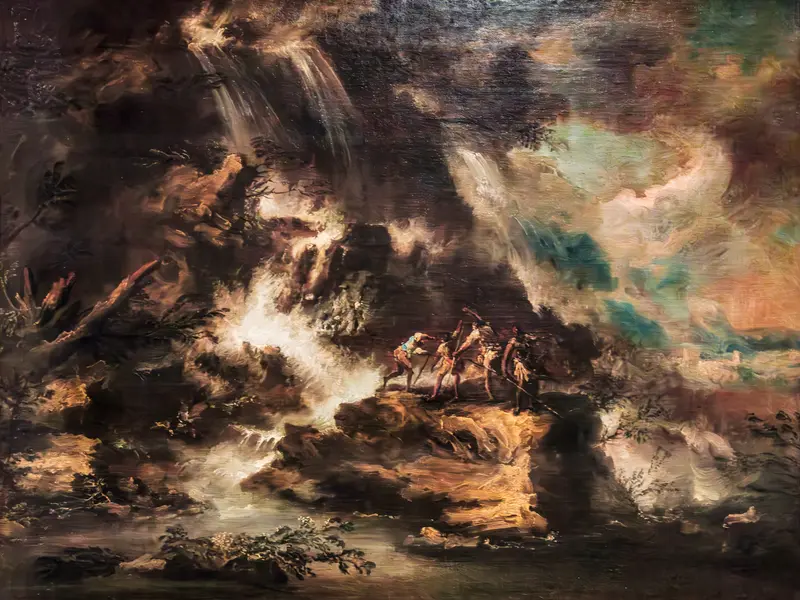
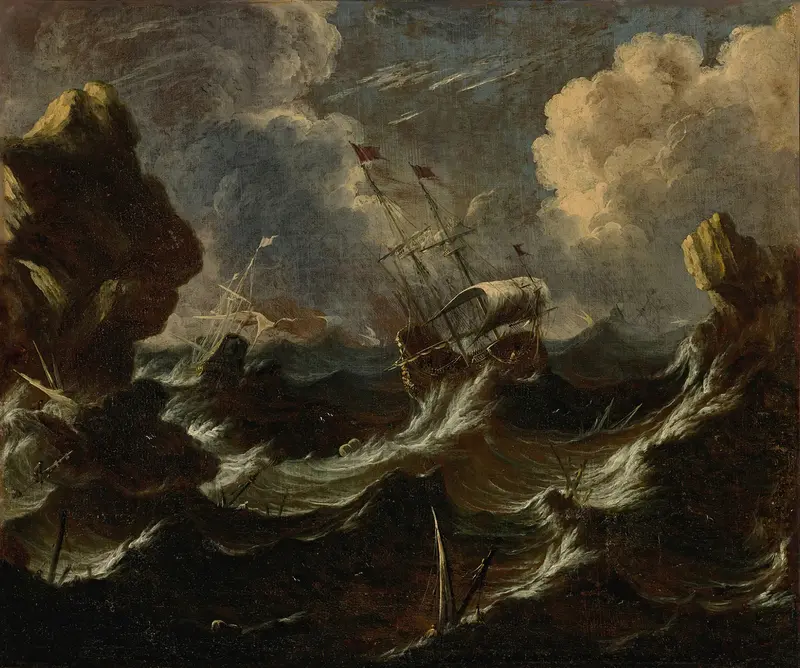
What first catches the eye in Sea storm with natural arch is the wild energy of the sea itself, whipped into motion beneath a sky that seems to churn with equal force. The painting draws the viewer into a moment of struggle and rescue: a group of figures clings together at the edge of the surf, their gestures urgent, their bodies braced against the invisible pull of the waves. The natural arch, a jagged bridge of rock, frames the left side like a gateway between chaos and uncertain safety.
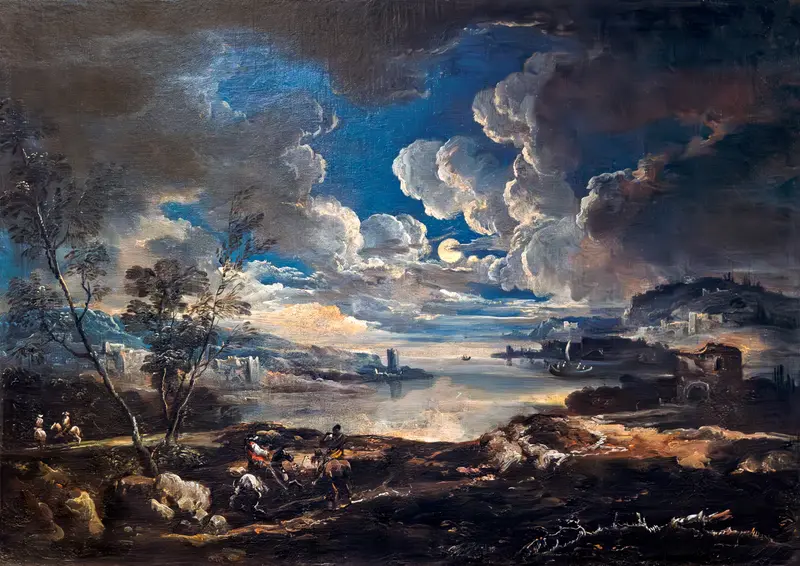
The painter’s sweeping brushwork in the clouds and water amplifies the sense of movement, while the pale, almost silvery light gives the whole scene an uneasy clarity—nothing is hidden, and yet everything feels at risk of being swept away. Works like this belong to a long tradition of dramatic seascapes, a genre that flourished in Europe from the seventeenth century onward as artists and patrons alike became fascinated by nature’s power and unpredictability. These paintings were often commissioned to decorate private homes or public halls, serving as both conversation pieces and meditations on human frailty. While the specific history of this Antonio Marini work remains obscure—recorded only as an “own work” dated 8 May 2024—its theatrical composition and dynamic figures echo the ambitions of earlier masters who sought to capture the awe and anxiety of the storm-tossed coast.
The world that produced such images was one of expanding horizons and constant peril, and this painting invites us to linger on the threshold between land and sea, order and upheaval.