Night Landscape with Gothic Ruins — History & Facts
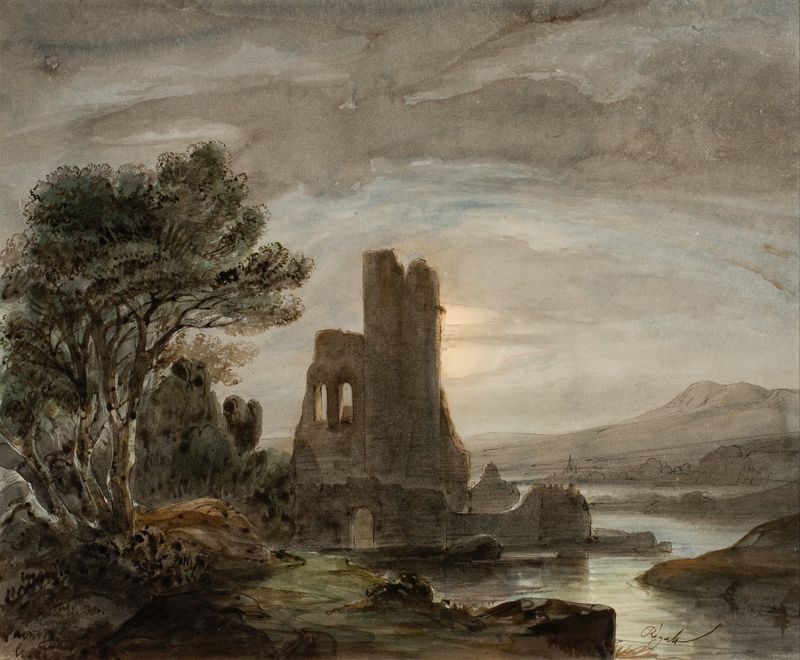
In the stillness of a night landscape, a vast expanse unfolds, hinting at the delicate balance between beauty and despair, fate and fragility. Look to the darkened horizon where the silhouette of gothic ruins juts against a deep indigo sky, casting elongated shadows that blend with the soft glow of distant stars. The interplay of light and shadow creates a haunting atmosphere, inviting the viewer to explore the contrasts between the weathered stone and the tranquil night. Notice how the muted palette of blues and grays evokes a sense of melancholy, while the gentle brushstrokes suggest movement, as if the very air is charged with whispers of history and unspoken stories. Beneath the surface, the painting resonates with themes of destiny and decay.
The ruins, once majestic, now stand as a testament to time’s relentless passage, evoking reflections on the inevitability of change. The night sky, both vast and intimate, cradles the scene, hinting at the unknown futures that lie ahead. Each element, from the crumbling architecture to the serene celestial backdrop, intertwines to reveal a narrative of loss and hope, suggesting that even in darkness, beauty can endure. In 1850, Lluís Rigalt was painting in Barcelona, a city rich with artistic and cultural evolution.
This period marked a transition in his career, as he began to immerse himself more deeply in landscape painting, moving away from earlier styles. The romanticism of the era influenced his work, as artists grappled with themes of nature, ruin, and the passage of time in a rapidly changing world.