Ruins — History & Facts
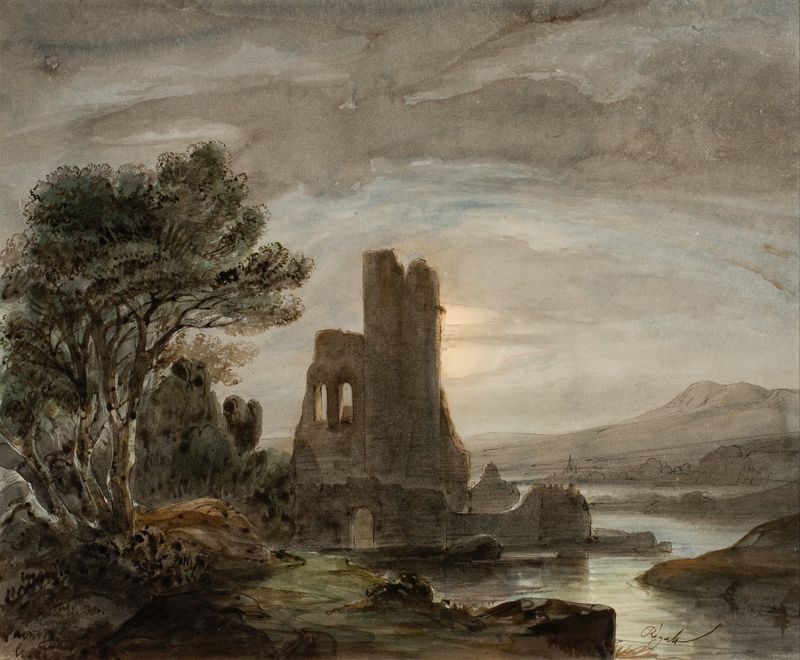
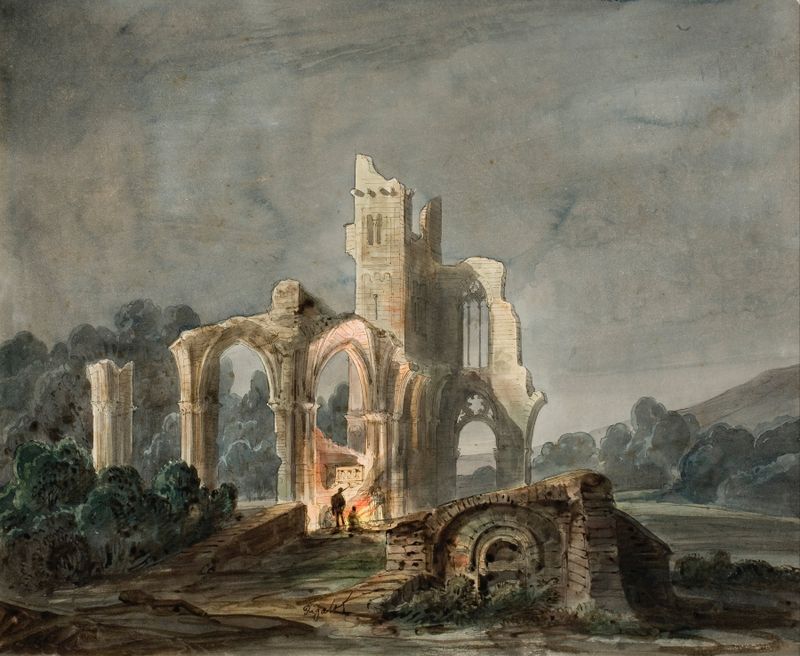
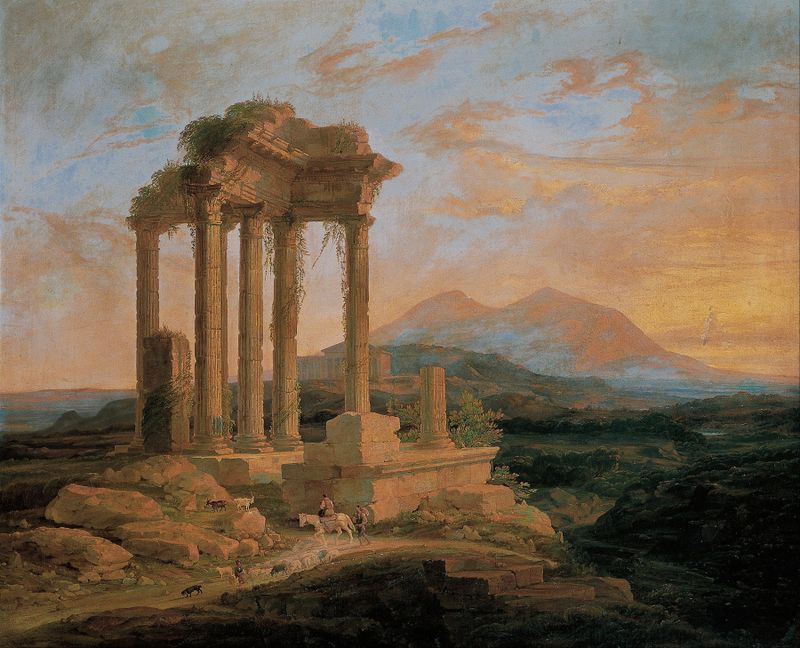
In Ruins, the brushstrokes swirl with a violent energy that belies the tranquility of the scene. What remains of human endeavor becomes a haunting testament to time's relentless march. Look closely at the crumbling stonework in the foreground, where nature's encroachment tells a story of decay and reclamation. Notice how the sunlight dapples through the leaves, casting fluid shadows across the weathered stones.
The muted palette of earthy browns and greens evokes a sense of somber beauty, while delicate touches of light suggest a fleeting moment of serenity amid the chaos of destruction. Beneath the surface, the contrasts in the artwork reveal deeper existential tensions. The juxtaposition of the resilient flora against the ruins symbolizes nature's enduring power over human creations. Each crack in the stone seems to echo the violence of time, hinting at the fragility of existence.
The gentle interplay of light and shadow serves not only to illuminate but to remind us of the inevitability of change, transforming loss into an almost poetic grace. In 1865, Lluís Rigalt was deeply entrenched in the Romantic movement, living in Spain during a time of intense upheaval and transformation. Working in a period marked by both social and artistic experimentation, he found inspiration in the ruins that dotted the Spanish landscape, reflecting a collective longing for the past amidst a rapidly modernizing world. This painting stands as both a personal reflection and a broader commentary on the ephemeral nature of beauty and permanence.