Night Landscape with Ruined Monastery — History & Facts
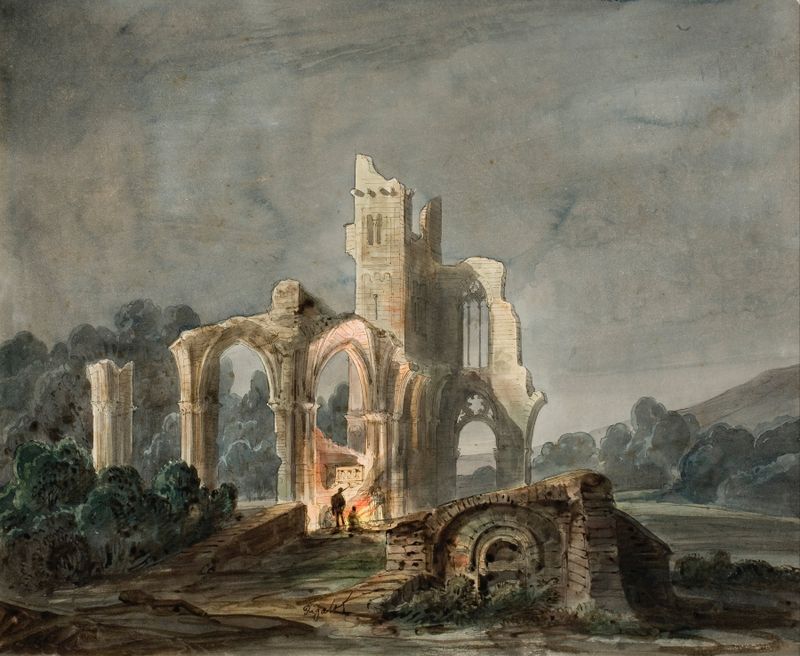
In the stillness of twilight, the world transforms, shadows stretching and deepening into a tapestry of memories and whispers. It is at this hour that we confront both the beauty and decay of existence, inviting us to ponder the relentless march of time. Look to the left at the crumbling stones of the monastery, which stand as sentinels of the past. Notice how the moonlight casts a silvery glow across the ruins, highlighting their texture and emphasizing the lingering presence of what once was.
The deep blues and soft grays merged with hints of green create an atmospheric depth that draws the viewer deeper into the scene, as if compelled to explore the secrets hidden beneath the surface. In this evocative landscape, contrasts emerge: the vibrancy of nature versus the desolation of human endeavors. The looming silhouettes of trees, thick with foliage, cradle the ruins, symbolizing the persistent return of life, even amidst reminders of abandonment. Here, time feels fluid—an invitation to reflect on impermanence, where every cracked stone and fading wall tells a story of resilience and loss. Lluís Rigalt painted this work in 1850 during his stay in Barcelona, capturing the essence of Romanticism, which was gaining momentum in Europe.
As an artist immersed in the principles of both realism and emotional expression, he sought to convey nature’s power and humanity’s fragility in a rapidly changing world, marked by industrial advancement and societal shifts. This painting stands as a testament to his engagement with the passage of time, preserving moments that could easily slip away into obscurity.