
November — History & Facts
Who listens when art speaks of silence? In November, the tranquil atmosphere encapsulates the fleeting essence of life, where every brushstroke whispers the inevitability of mortality. Focus your gaze on the canvas's muted palette, where ochres and deep greens blend seamlessly, evoking the somber embrace of autumn. Notice the delicate interplay of light filtering through dense clouds, casting long shadows that stretch across the landscape. The horizon, just a thin line of hope, delineates the starkness of the scene and invites contemplation — a world poised on the edge of winter. Delve deeper into the composition, and you may perceive a profound tension between life and decay.
The barren trees, stripped of their foliage, stand as somber sentinels to the passage of time, while the occasional flash of color from fallen leaves hints at the transient beauty inherent in demise. This juxtaposition reinforces the cycle of existence, urging viewers to find solace in the acceptance of change and the beauty intertwined with loss. In 1855, when this work was created, Kruseman was immersed in the Dutch Romantic movement while living in The Hague. The art world was shifting, grappling with themes of identity and nature's power, and artists sought to capture the emotional weight of their surroundings.
Against this backdrop, November not only reflects the artist’s personal interpretation of the autumnal landscape but also resonates with the broader existential inquiries of the time, inviting a meditative pause in a world of chaos.
More Artworks by Frederik Marinus Kruseman
Browse all →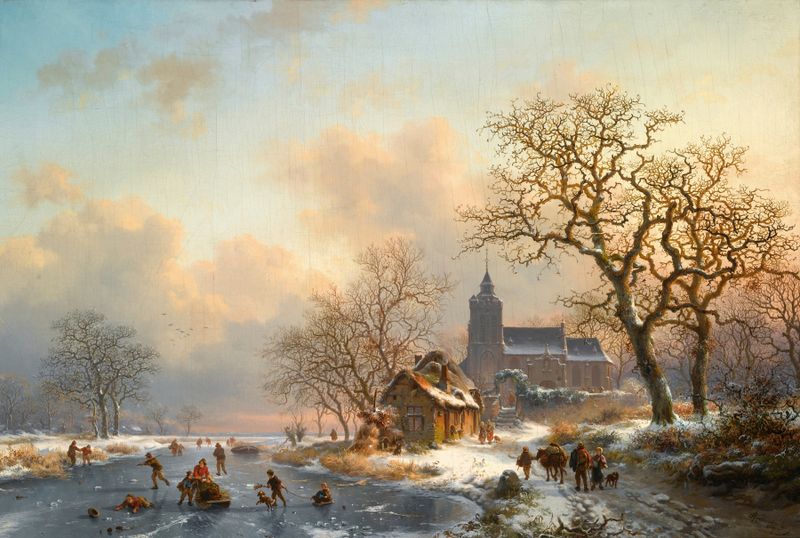
A Winter Landscape With Skaters On A Frozen River
Frederik Marinus Kruseman

Winter Landscape With Strollers And Skaters
Frederik Marinus Kruseman

Monk Meditating near a Ruin by Moonlight
Frederik Marinus Kruseman
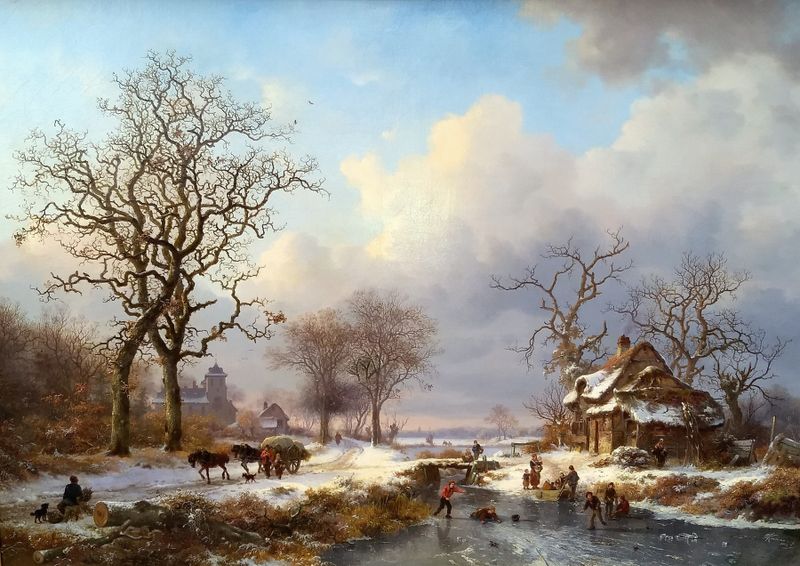
Dutch Winter Landscape with Skaters
Frederik Marinus Kruseman

Winter landscape with figures on a frozen river
Frederik Marinus Kruseman
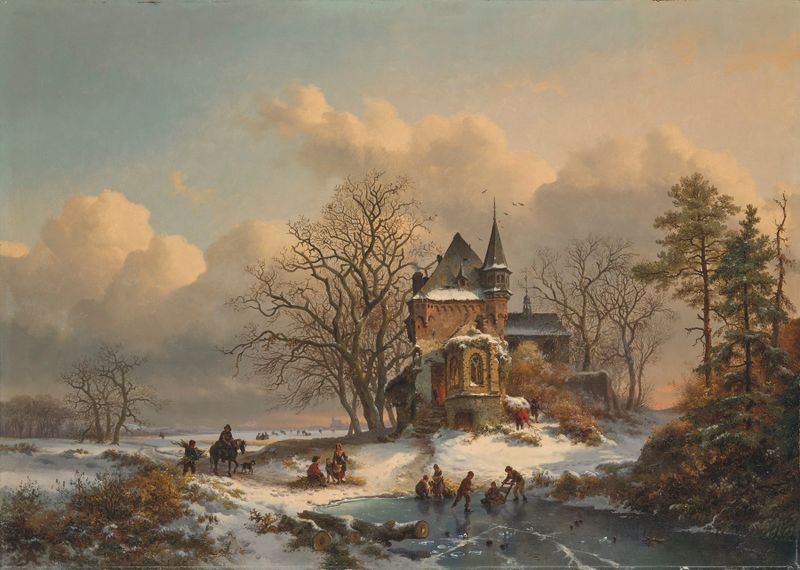
Winter landscape with skaters
Frederik Marinus Kruseman
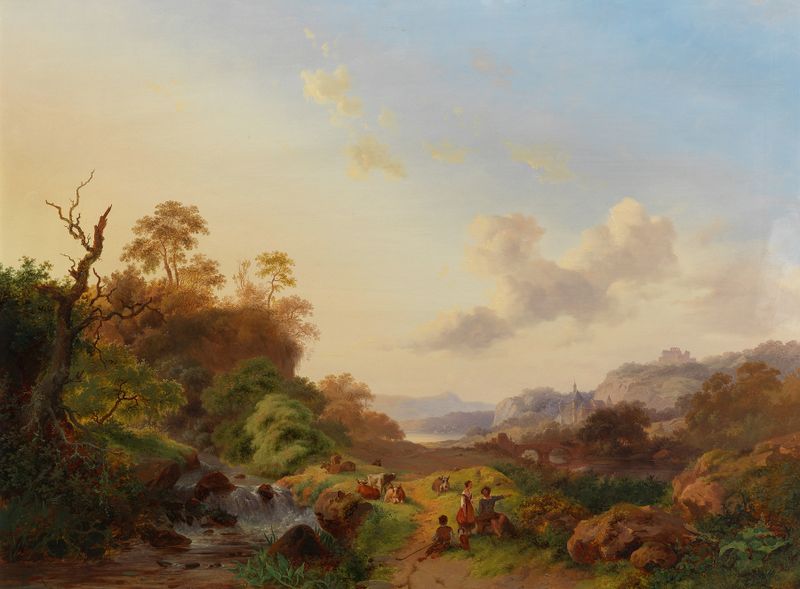
Summer landscape with figures and cattle near a waterfall
Frederik Marinus Kruseman
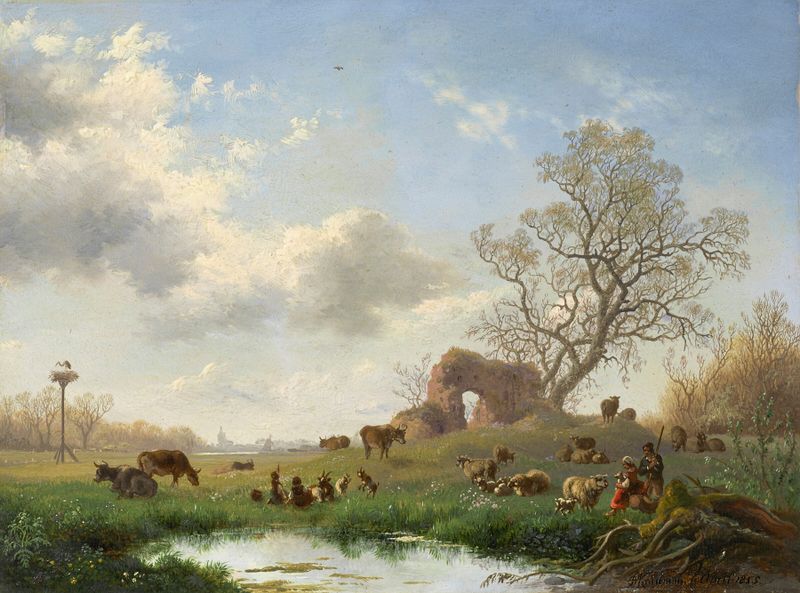
April
Frederik Marinus Kruseman
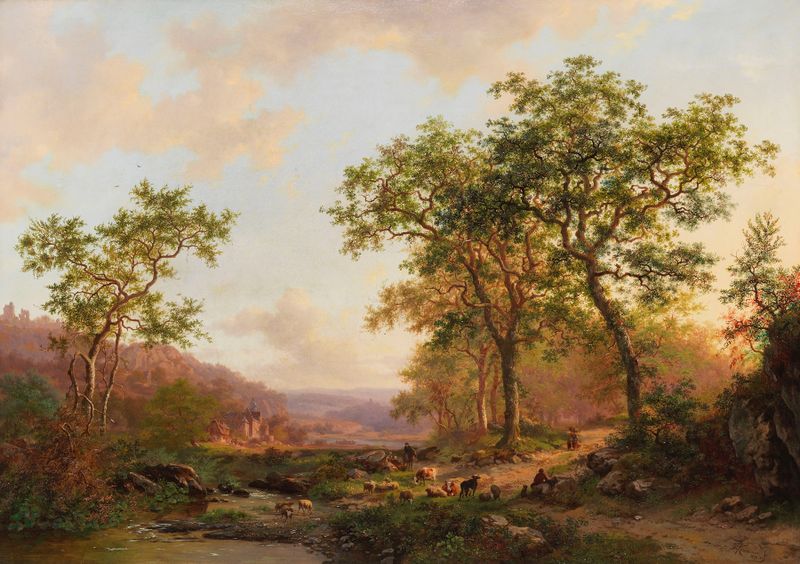
Weite Landschaft im Abendlicht
Frederik Marinus Kruseman
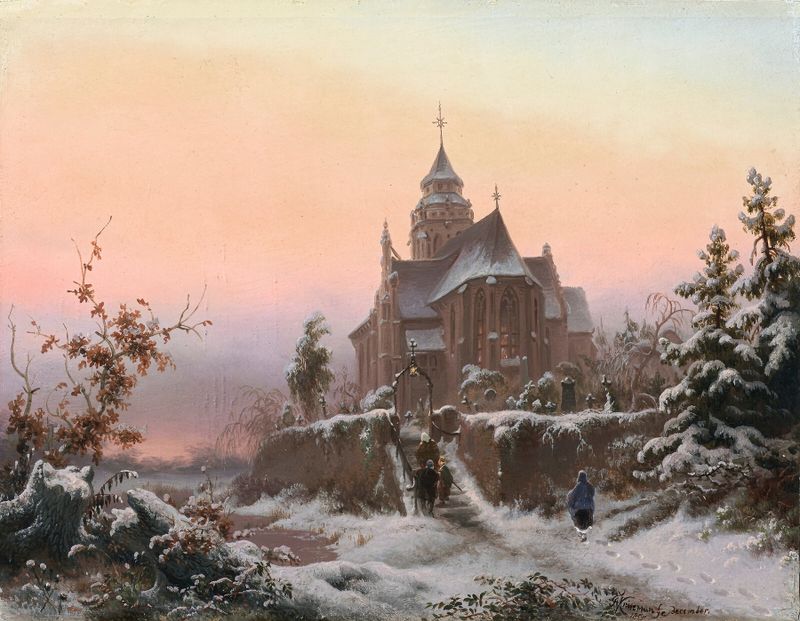
December
Frederik Marinus Kruseman





