
Nude — History & Facts
What first catches the eye in Nude by August Macke is the way the figure seems both present and apart, her gaze lowered, her form outlined in bold, almost sculptural strokes. The palette is warm but restless, with the background broken into planes of color—ochre, green, red, and black—that jostle for attention without ever quite settling into harmony. The model’s pose is natural, yet her placement amid such abstracted surroundings gives her a sense of quiet isolation, as if she is both part of and separate from the world she inhabits.
The patterned textiles beneath her, rendered with swift, confident brushwork, anchor her in a domestic space, but the angular forms behind her hint at something more experimental, almost theatrical. Light falls softly across her body, modeling her flesh with a gentle gradation that contrasts with the sharper, more abrupt transitions in the background. Painted in 1913, this work belongs to a moment of rapid change in European art, when artists like Macke—a leading figure of the German Expressionist group Der Blaue Reiter—were reimagining the traditions of the nude. Where earlier academic nudes aimed for idealization, here the figure is immediate and human, her vulnerability heightened by the boldness of the setting.
Such works were rarely private commissions; rather, they were statements for the public sphere, meant to challenge viewers’ expectations and provoke new ways of seeing. This particular painting, now in the Wuselig collection, is a testament to that restless spirit of innovation, inviting us to linger on the tension between intimacy and abstraction, and to see the nude not as an object, but as a presence—quiet, thoughtful, and utterly modern.
More Artworks by August Macke
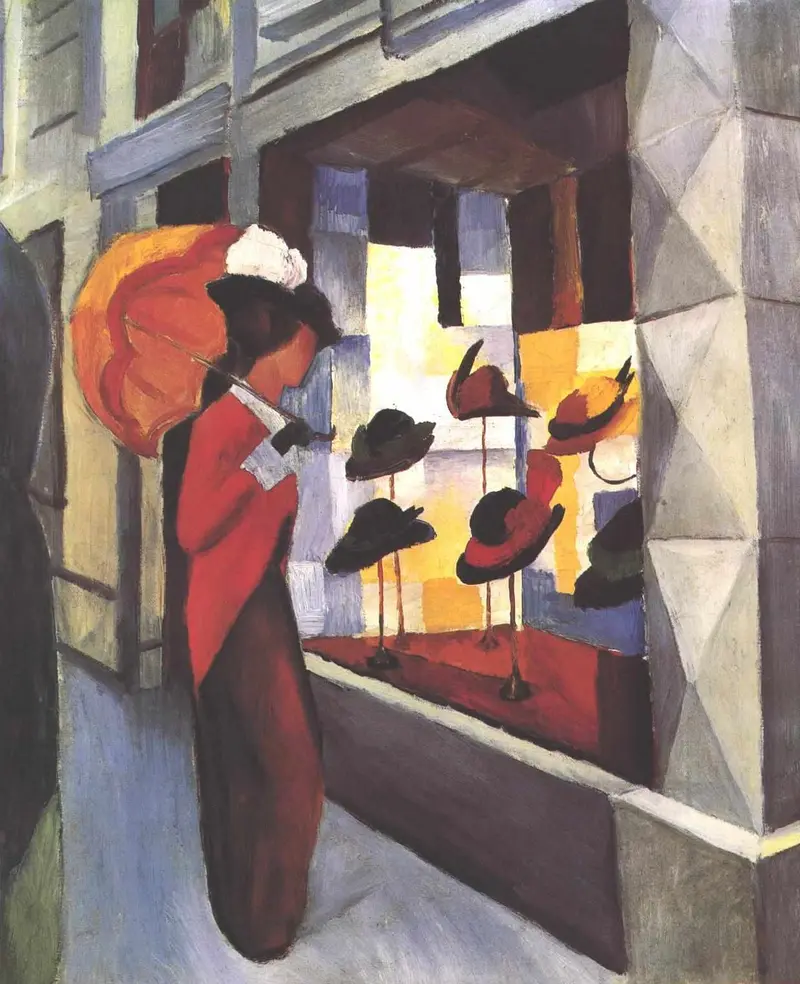
Woman with a Parasol in Front of a Hat Shop
August Macke

Street with Church in Kandern
August Macke
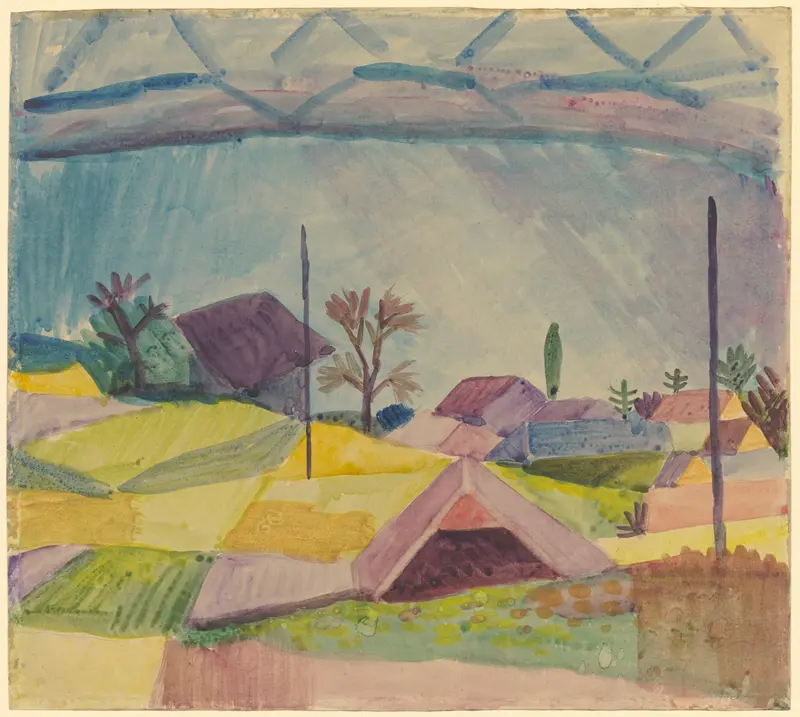
View of Hilterfingen
August Macke

Paar im Nachen
August Macke
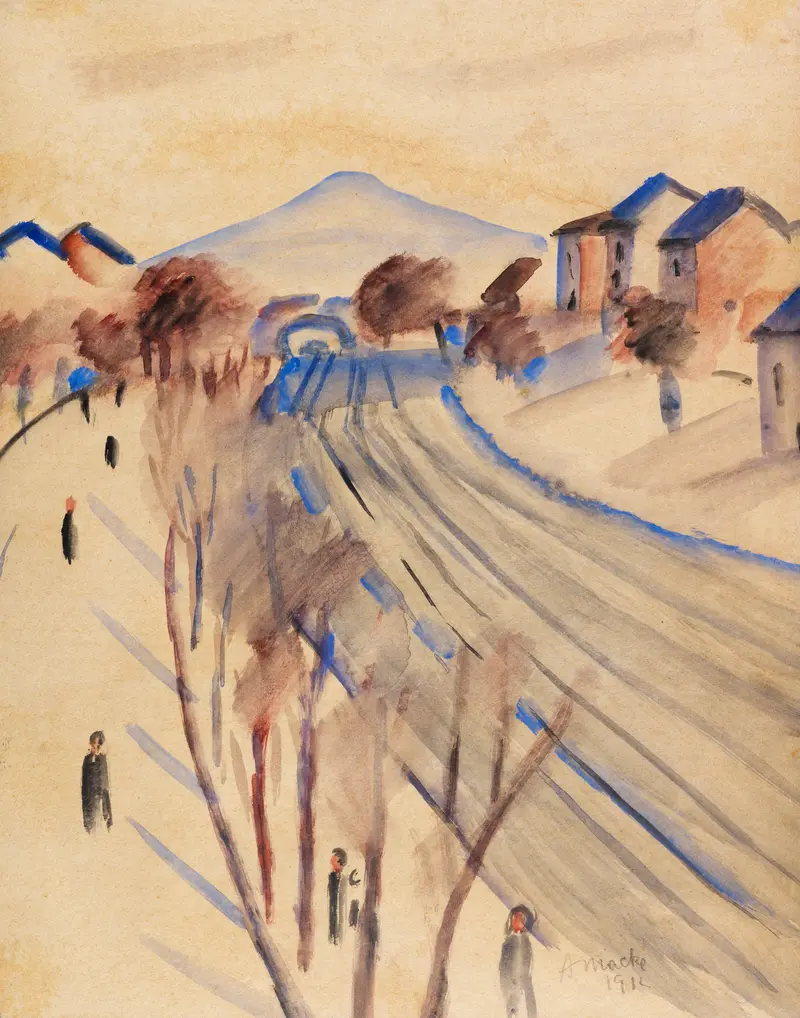
Ölberg mit Bahngleisen II
August Macke
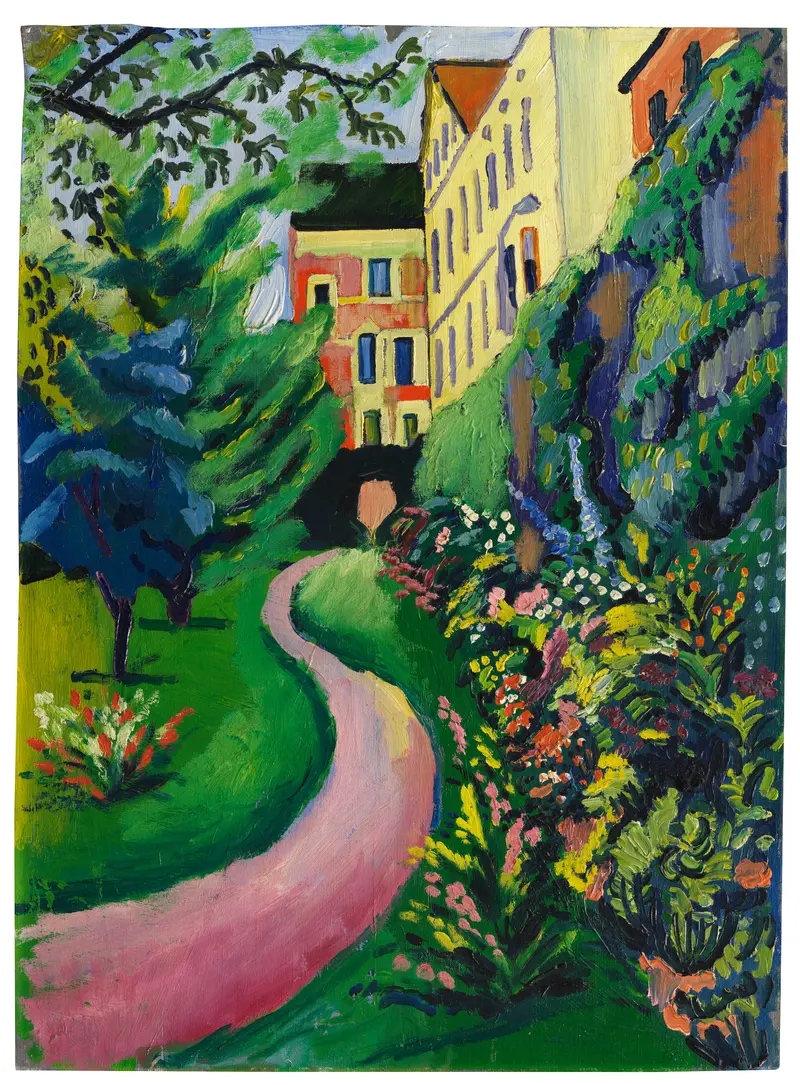
Unser Garten mit blühenden Rabatten
August Macke
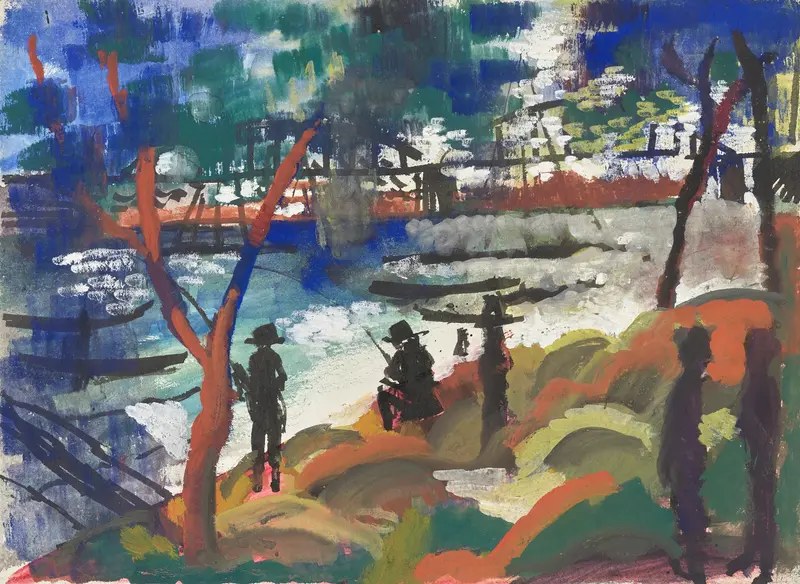
Angler am Fluss
August Macke
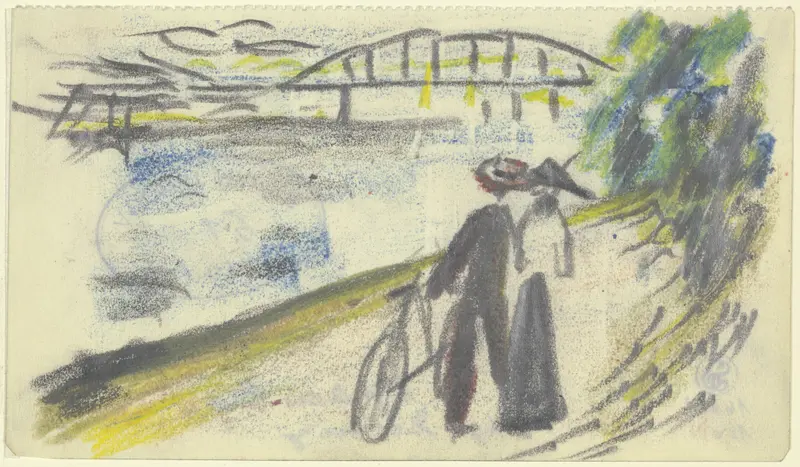
Path at the Rhine
August Macke
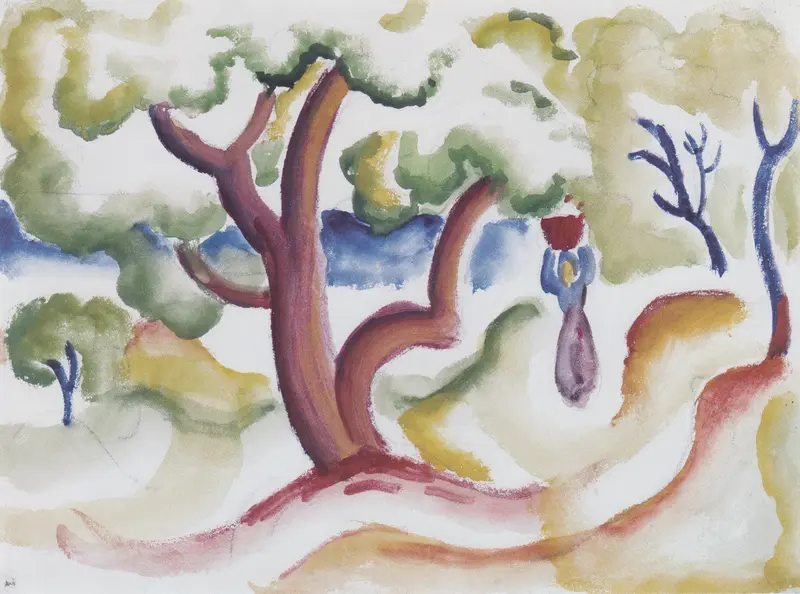
Frau mit Krug unter Bäumen
August Macke
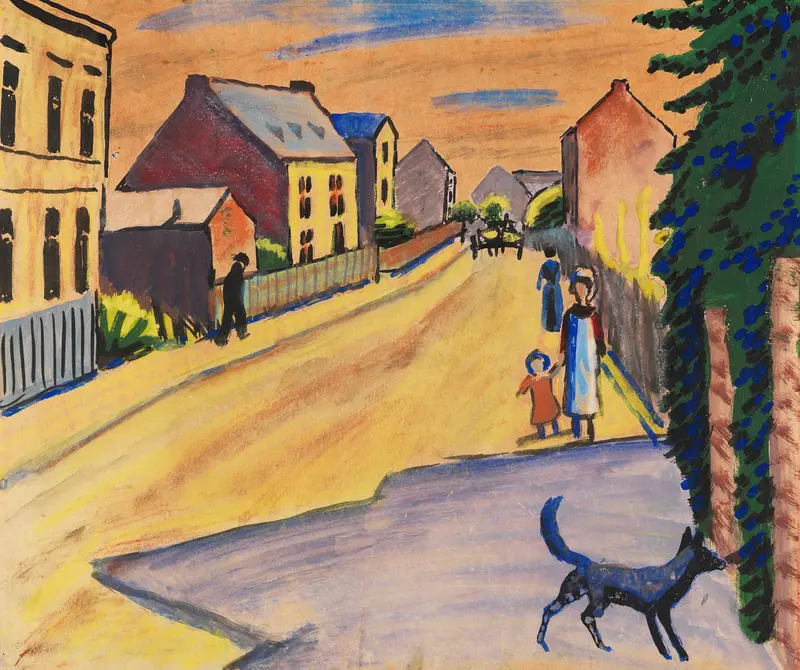
Sonnige Straße mit Hund
August Macke



