Oberbayerisches Gebirgstal mit Mühle — History & Facts
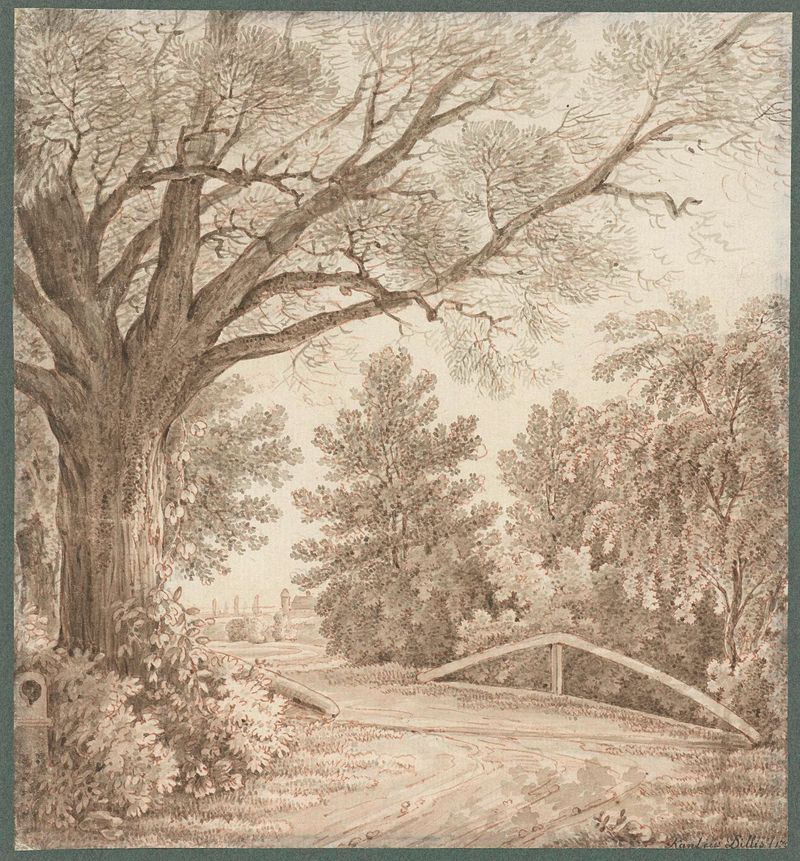
What secret hides in the quiet of the canvas? Here, the serene beauty of the Bavarian landscape invites contemplation, drawing viewers into a world where nature and human craftsmanship coexist in harmony. Look to the foreground where the quaint mill stands steadfast, its wooden structure nestled among lush greenery. Notice how the soft brushstrokes create a gentle texture on the trees, alive in various shades of green, while the mill embraces earthy browns. Focus on the way light dances across the water, reflecting the vibrant sky, as if time itself has paused to admire this tranquil scene.
The composition leads the eye towards the distant mountains, their majestic heights shrouded in a whisper of mist, grounding the viewer in the natural world. At first glance, the artwork may seem solely an ode to pastoral beauty, but it speaks of deeper revelations. The mill, with its steady presence, symbolizes industriousness and the human touch within nature's grace. The contrast between the man-made structure and the organic landscape hints at a tension between progress and preservation, suggesting a narrative of coexistence.
This duality resonates with the viewer, prompting reflections on our own relationship with the environment. Cantius Dillis painted this piece in 1820 during a time when the Romantic movement was gaining momentum across Europe, emphasizing emotion and nature. Living in the Bavarian region, he immersed himself in local scenery, capturing its essence and the simplicity of rural life. In an era marked by industrialization, Oberbayerisches Gebirgstal mit Mühle serves as a poignant reminder of the beauty that can emerge at the intersection of nature and human endeavor.