
Off to the fishing grounds 2 — History & Facts
What catches the eye first in Off to the fishing grounds 2 is the crisp clarity of the sails, their white surfaces catching the morning light in a way that makes the air feel brisk and salt-laden. The boats crowd the foreground, their hulls angled sharply as if eager to break free from the shallows and into the open sea. Each figure is intent on his task: a man in red bends forward, absorbed in the work of steering or preparing gear, while others brace themselves against the movement of the vessel.
The Dutch flag flutters at the stern, a flash of color and identity, while the water’s greenish hue and the scattered foam suggest the churn of a busy harbor mouth. The sky, vast and pale, presses down on the scene, its clouds opening space for the drama below. Scenes like this were a staple of 19th-century Dutch and British marine painting, a genre that thrived on the romance and reality of working life at sea. Painters such as Abraham Hulk—whose signature appears at lower left—found both national pride and everyday poetry in the depiction of small fishing boats and merchantmen.
These works were often sought after by collectors who longed for reminders of coastal heritage or the dignity of labor, and they circulated widely in the art markets of London and Amsterdam. This particular painting surfaced at Bonhams London in 2009, a fleeting record in the long journey of such images. Look again at the way the boats lean into the wind, and you may sense the quiet persistence of those who made their living from the sea.
More Artworks by Abraham Hulk

A freshening breeze
Abraham Hulk
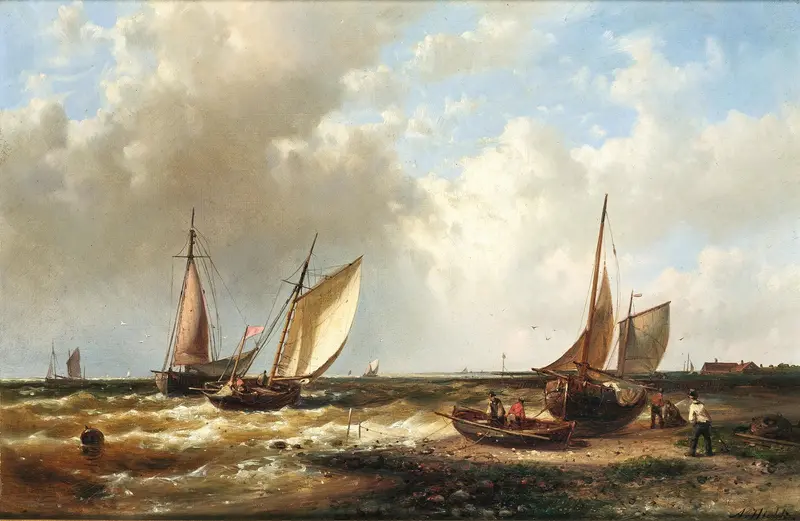
Fishermen at the Seaside
Abraham Hulk

Shipping off the coast
Abraham Hulk
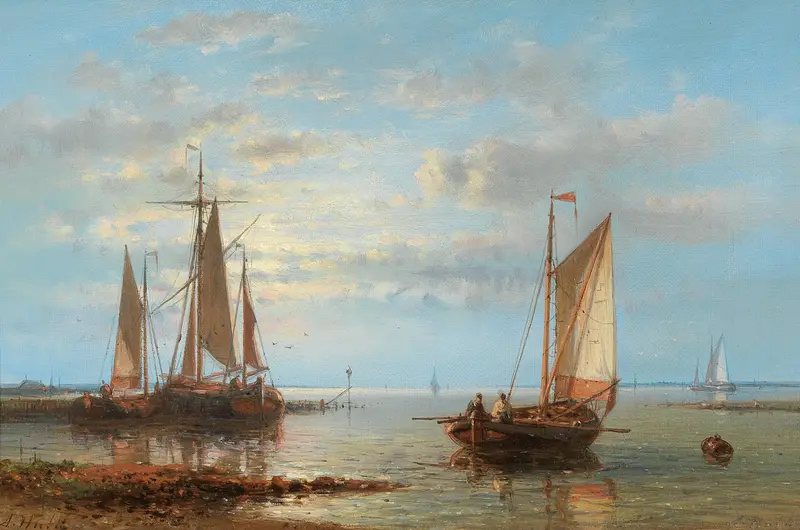
Sailing Boats on Rough Seas
Abraham Hulk
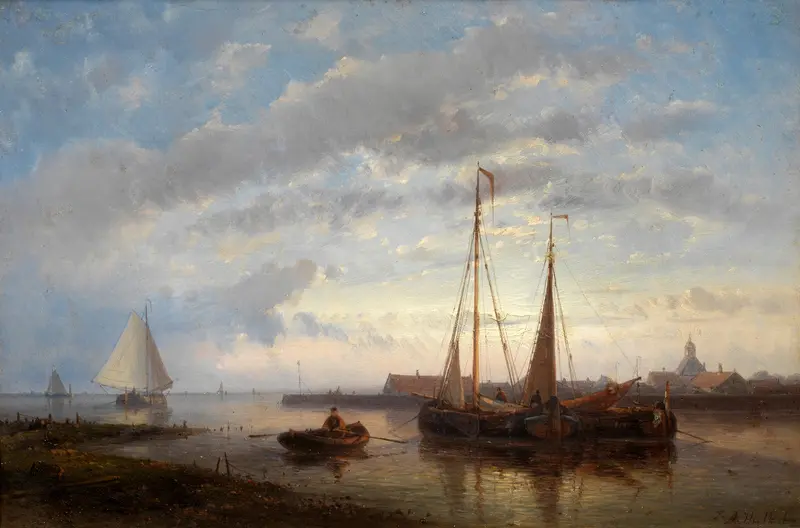
Fishermen at sunset
Abraham Hulk
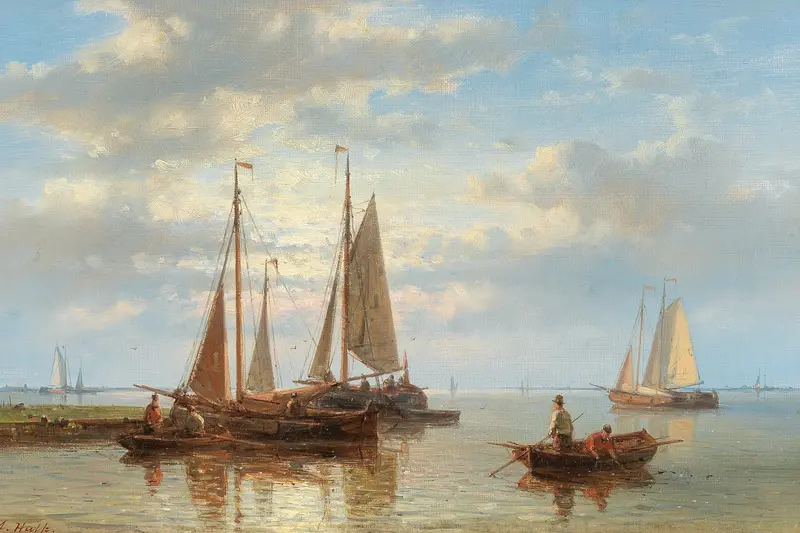
Sailing Boats On Rough Seas
Abraham Hulk
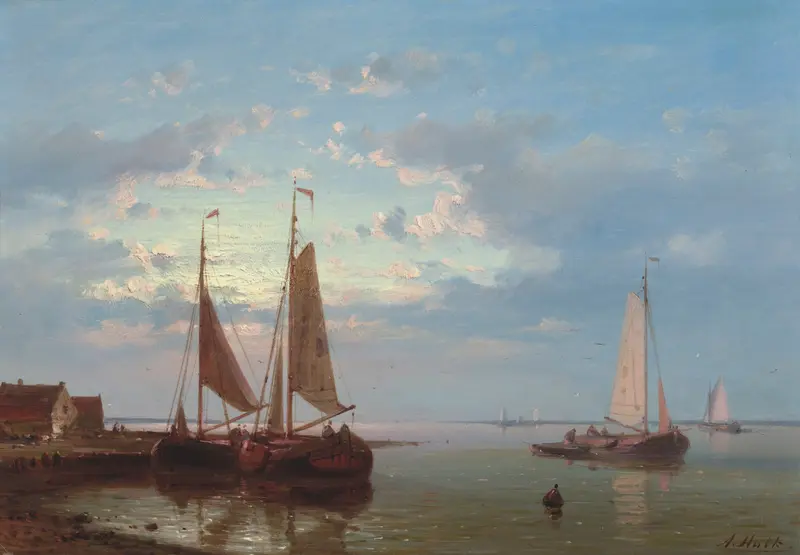
Fishing boats moored in a calm harbour
Abraham Hulk
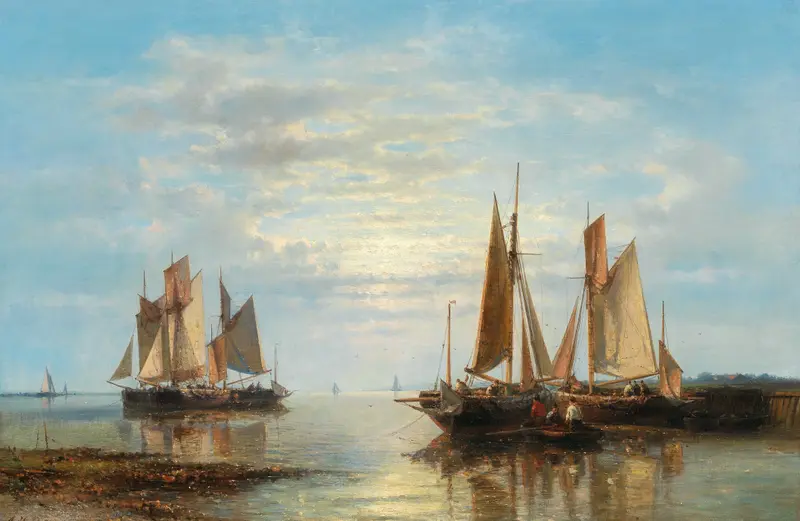
Sailing Boats On A Calm Sea
Abraham Hulk
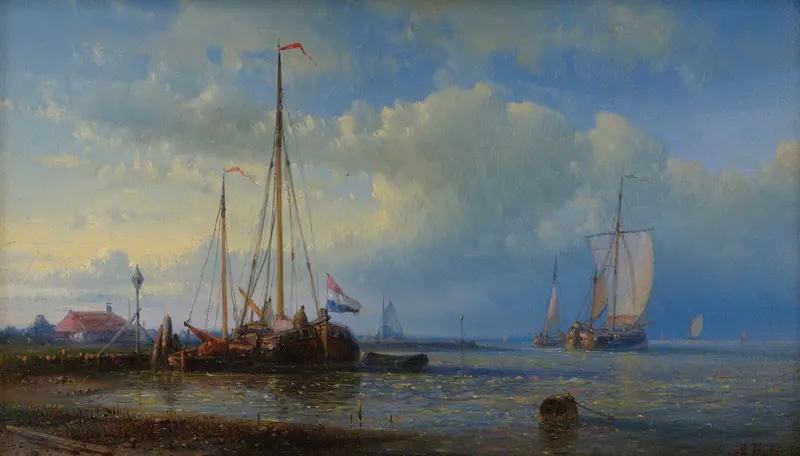
Seascape
Abraham Hulk
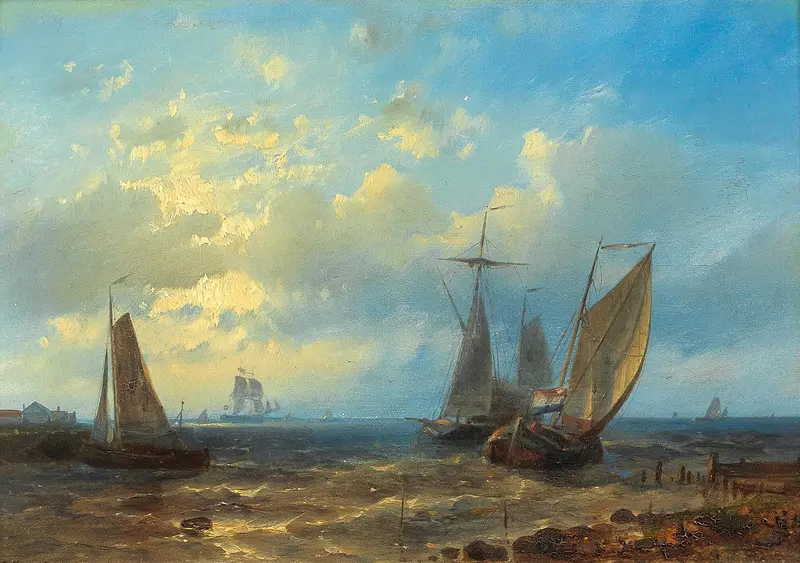
Fishing Boats By The Coast
Abraham Hulk





