
Old Drury Lane Theatre on fire — History & Facts
What first seizes the eye in Old Drury Lane Theatre on fire is the sheer force of the blaze, a molten core at the heart of a darkened city. The painter draws us across the river, pulling our gaze along the shimmering path of reflected firelight, past the hush of trees and rooftops, to the inferno that devours the distant theatre. That single column of smoke, rising like a signal to the heavens, dwarfs the city’s spires and sets the sky ablaze with a feverish orange glow.
The quiet foreground, with its solitary boatman and silent buildings, only sharpens the sense of distance and helplessness—here is a disaster witnessed, not confronted, the city’s fate sealed on the far shore. Such scenes of urban catastrophe were a fascination of the late eighteenth and early nineteenth centuries, when fire was both a constant threat and a spectacle that drew crowds and chroniclers alike. Painters like Abraham Pether—known for his moonlit landscapes and dramatic nocturnes—often turned to these moments of crisis, using the contrast of darkness and flame to explore the fragility of civilization and the power of nature or fate. This particular work, now documented in an online collection as of 2014, stands as a vivid example of that tradition.
History has kept few traces of this specific painting’s journey, but its subject and mood place it firmly in the era when artists and audiences alike were transfixed by the drama of fire lighting up the night. The painting invites us to linger, to trace the glow along the water, and to imagine the stories unfolding in the shadows beyond the flames.
More Artworks by Abraham Pether

Sunset over a rural landscape
Abraham Pether
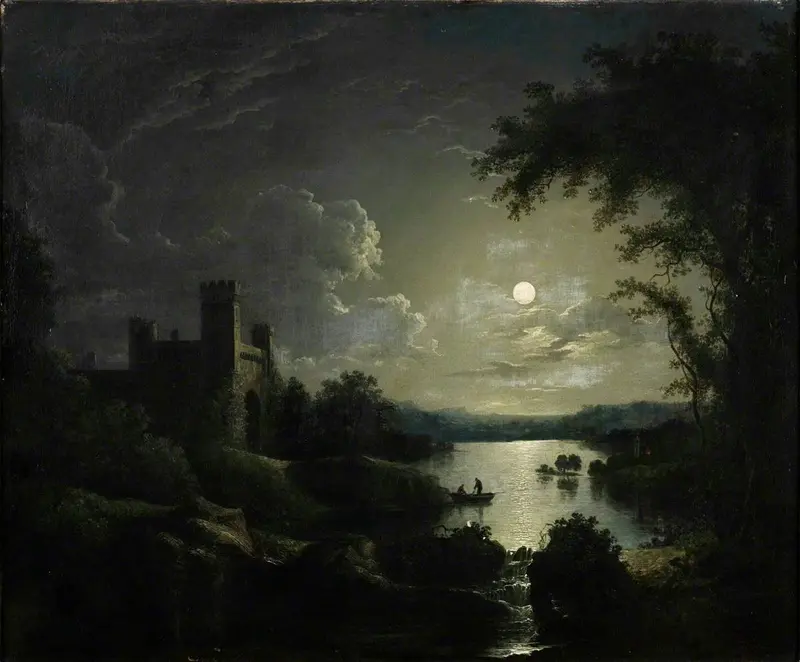
A Castle and Lake by Moonlight
Abraham Pether
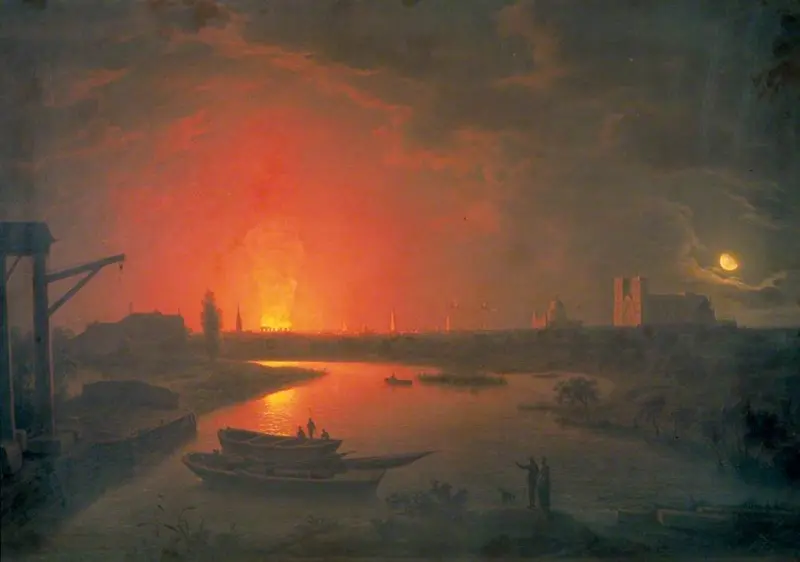
Old Drury Lane Theatre on Fire, London, 24 February
Abraham Pether
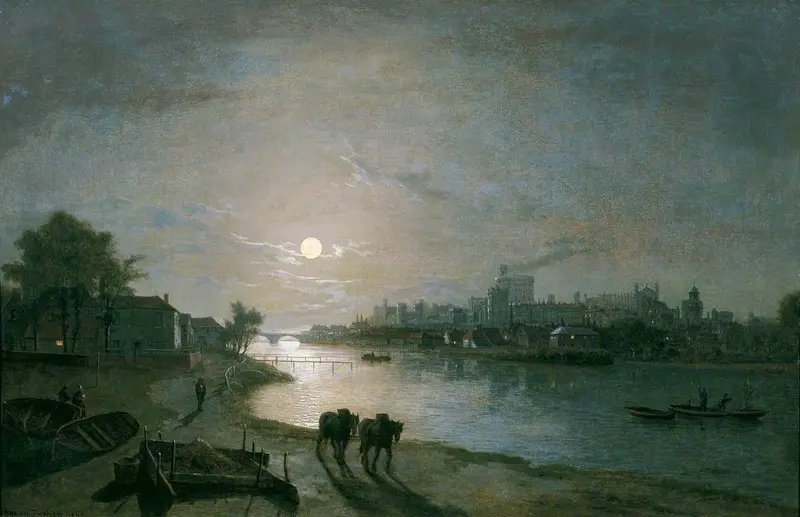
Windsor Castle by Moonlight
Abraham Pether
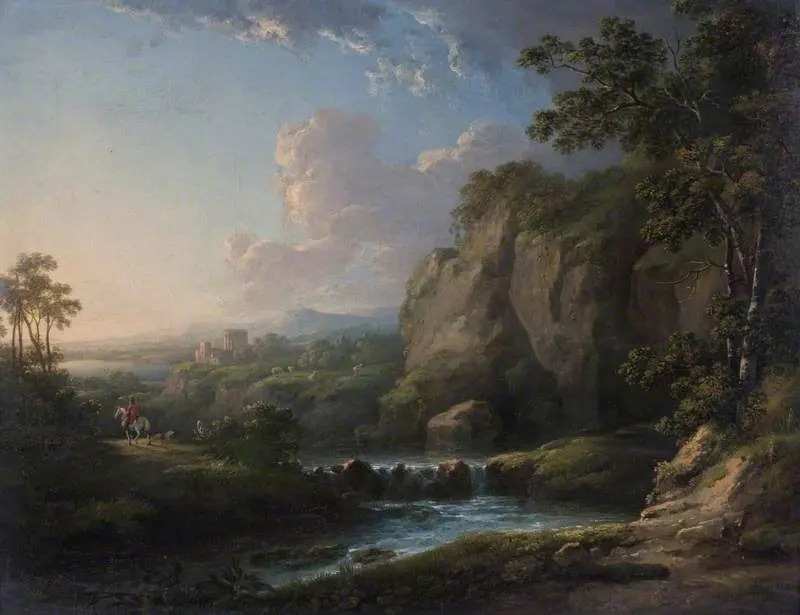
Wooded Landscape
Abraham Pether
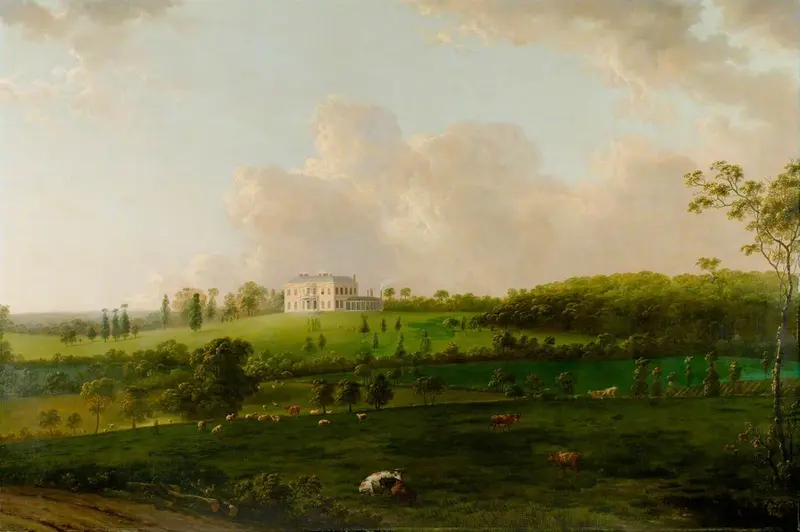
Claybury Hall, Essex
Abraham Pether
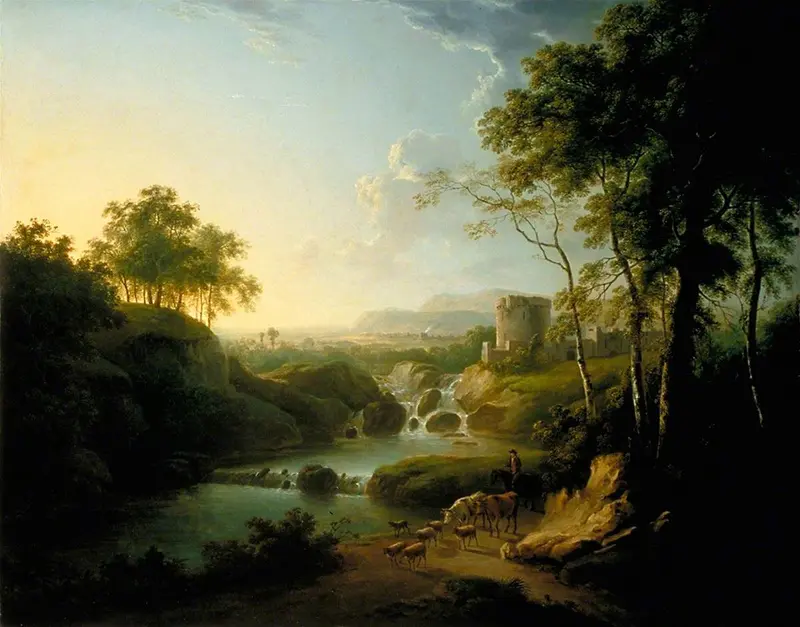
Landscape
Abraham Pether
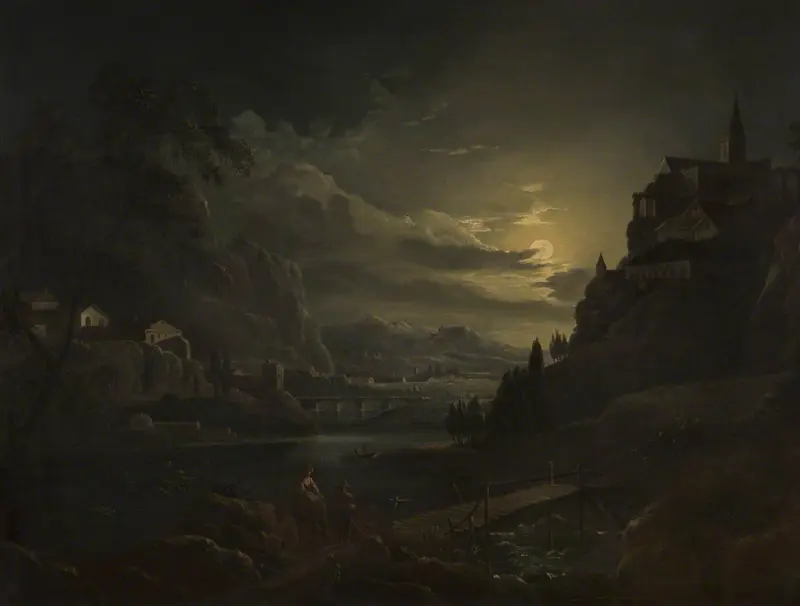
Classical Landscape by Moonlight
Abraham Pether
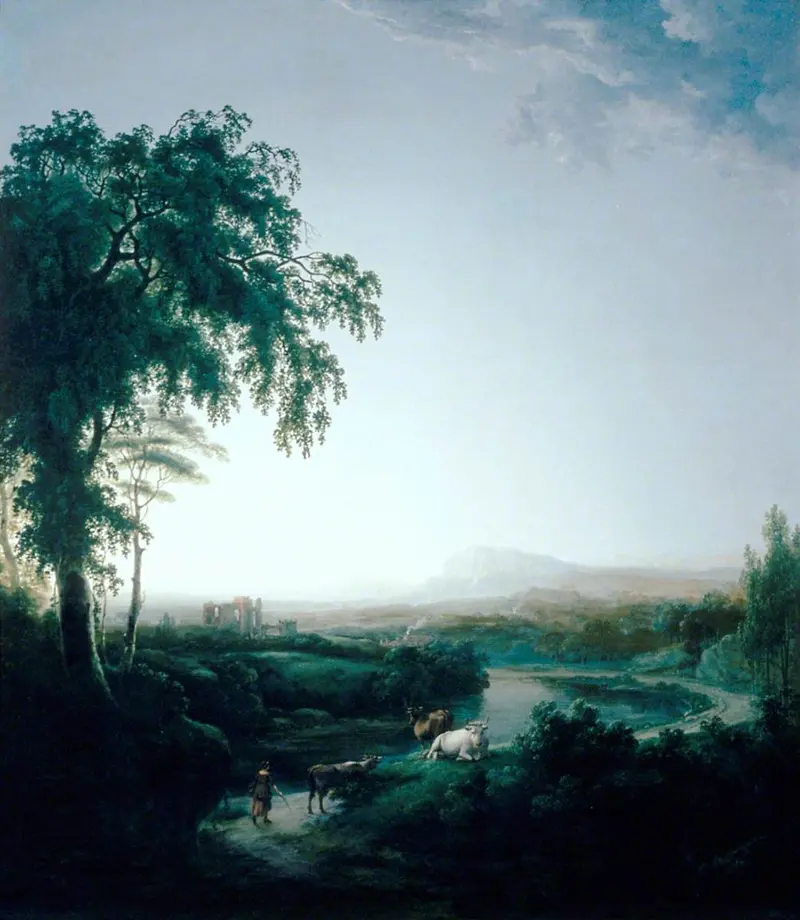
Landscape with River and Cows at Dusk
Abraham Pether
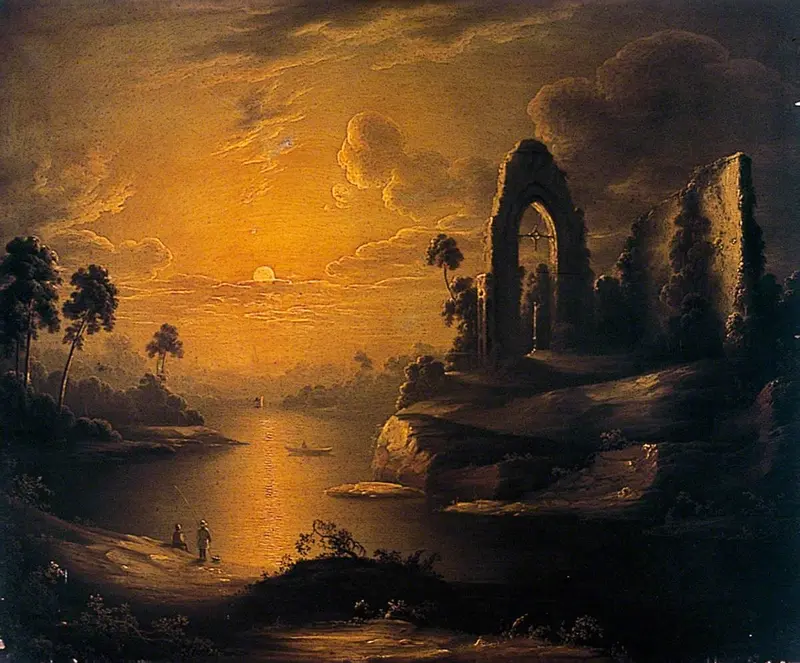
Moonlit Landscape with Lake and Ruined Abbey
Abraham Pether
More Landscape Art

The Starry Night
Vincent van Gogh

View of Delft
Johannes Vermeer

Water Lilies
Claude Monet

The Grand Canal, Venice, looking north-west from the Ca' Corner to the Ca' Contarini degli Scrigni, with the campanile of Santa Maria della Carità
Canaletto

Windsor Castle
Canaletto

The Grand Canal looking North-East from the Palazzo Dolfin-Manin to the Rialto Bridge
Canaletto