Old Nuremberg, a View of the Synagogue from the Pegnitz River — History & Facts
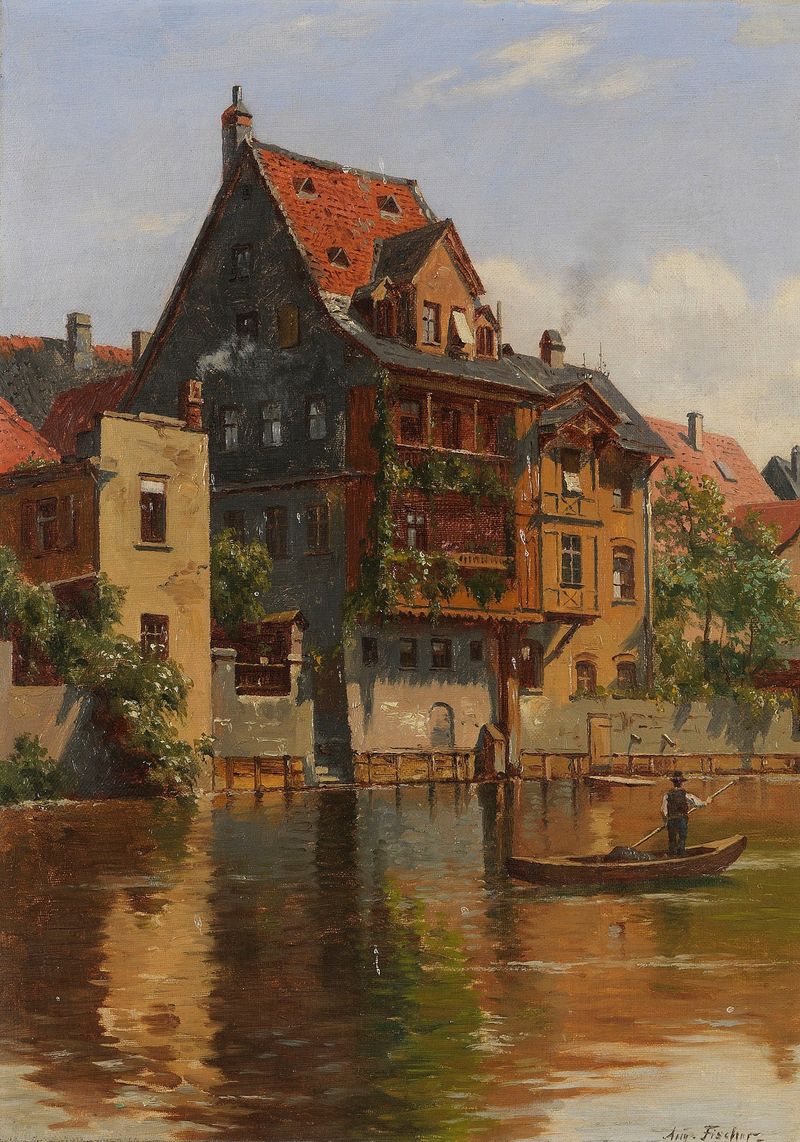
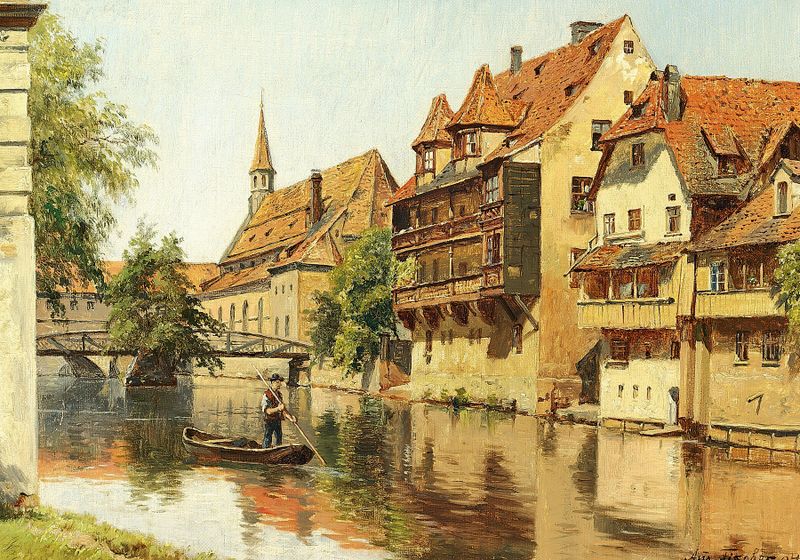
What if beauty was never meant to be finished? In the ethereal interplay of light and shadow, Old Nuremberg encapsulates the essence of a moment suspended in time, inviting us to ponder our destinies. Look closely at the gentle curves of the Pegnitz River meandering through the scene. Notice how the soft ripples reflect the delicate architecture of the synagogue, drawing your gaze toward the harmony of nature and human craftsmanship. The warm hues of ochre and earthy greens breathe life into the canvas, while the cool blues of the water create a balanced contrast that evokes serenity. Within this tranquil landscape lies an emotional tension between permanence and transience.
The synagogue stands resilient against the flowing river, symbolizing the enduring strength of faith amidst the relentless passage of time. The juxtaposition of nature’s fluidity and the solidity of stone architecture hints at the dualities of existence—what is built by human hands and what is shaped by fate. Each brushstroke whispers of history, inviting viewers to reflect on their own narratives intertwined with that of a community. August Fischer created this painting during a time when Germany was grappling with its cultural identity, yet specific details about its date remain elusive.
The late 19th century was a period of exploration in the art world, marked by a revival of traditional subjects. Fischer’s focus on architectural beauty amid historical context reveals his intent to capture a moment that transcends mere representation, inviting viewers to contemplate the destinies shaped within the walls of this sacred space.