View of Nuremberg — History & Facts
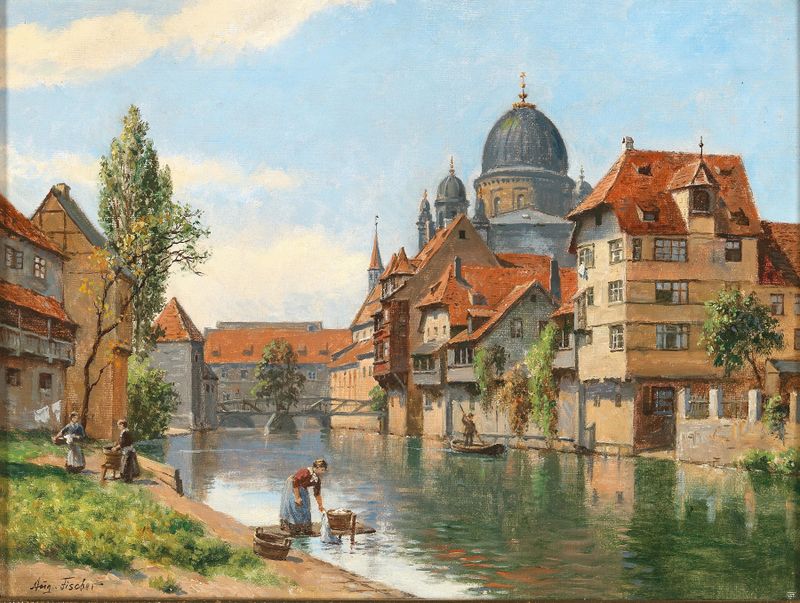
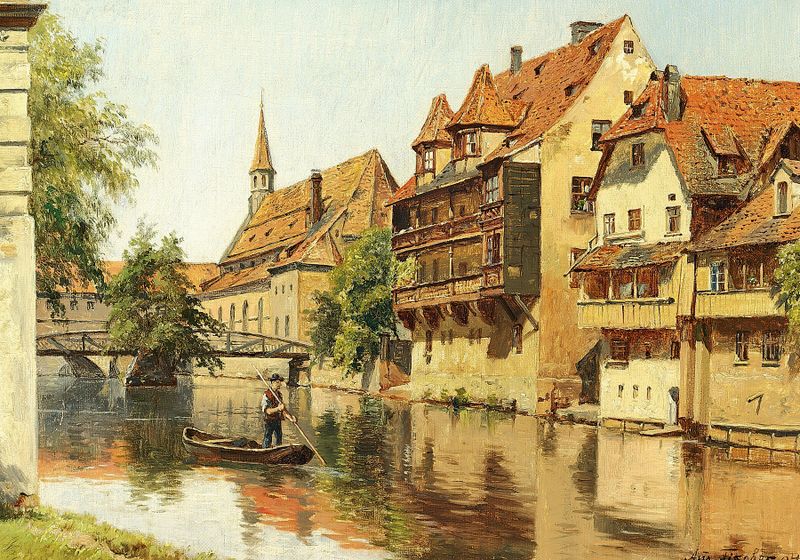
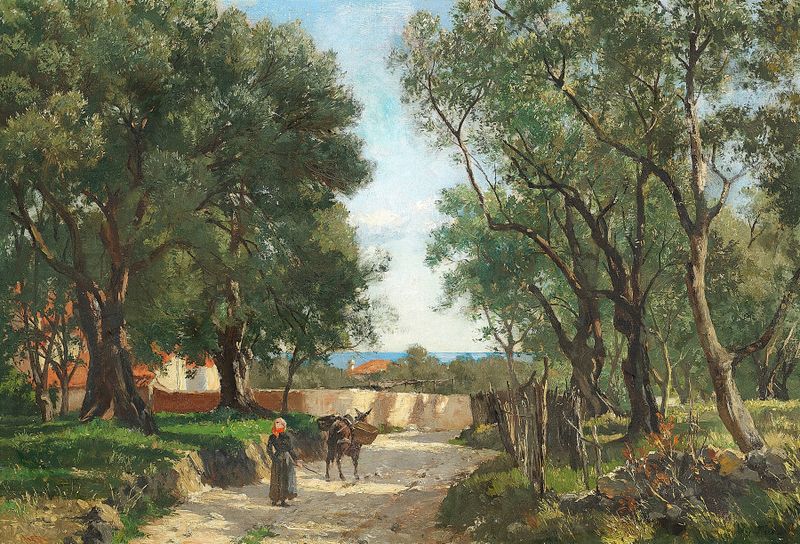
Did the painter know this moment would outlive them? The air hangs heavy with the weight of fleeting time, yet the luminous glow of the setting sun captures a scene that defies decay. Look to the left at the vibrant, sunlit rooftops of Nuremberg, their colors radiant against the backdrop of a fading sky. The artist employs a masterful blend of warm yellows and deep oranges, infused with delicate strokes that evoke the soft touch of twilight. Notice how the light delicately dances on the cobblestones, casting shadows that stretch and sway with the day’s end.
The composition draws your gaze toward the monumental towers, inviting contemplation of the city’s enduring spirit. Within this serene landscape lies an emotional tension between the ephemeral and the eternal. The radiance of the sunset serves as a reminder of both the beauty and transience of life. The juxtaposition of the bustling city below and the stillness of the sky encourages reflection on the passage of time—an interplay of human activity and the natural world's relentless rhythm.
Each brushstroke is a meditation on the light that reveals and conceals, simultaneously celebrating life and acknowledging its impermanence. In 1891, the artist painted this piece while living in Germany, in a period marked by significant artistic movements and societal changes. The vibrant Impressionist influence was reshaping perceptions of light and color, steering the course of modern art. Fischer’s work emerges during a time of transition, both for Nuremberg, rooted in history, and for the broader European art scene, navigating the boundaries between realism and abstraction.