En mand i en båd i en tysk by — History & Facts
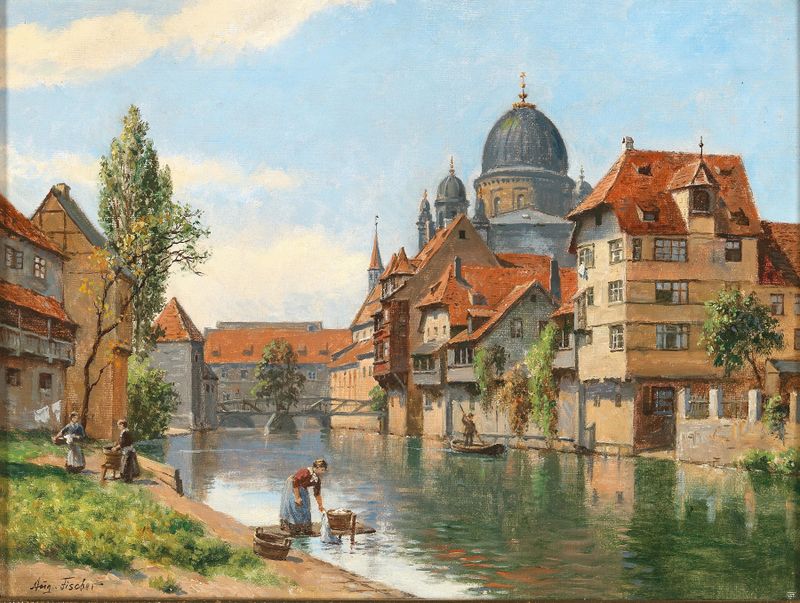
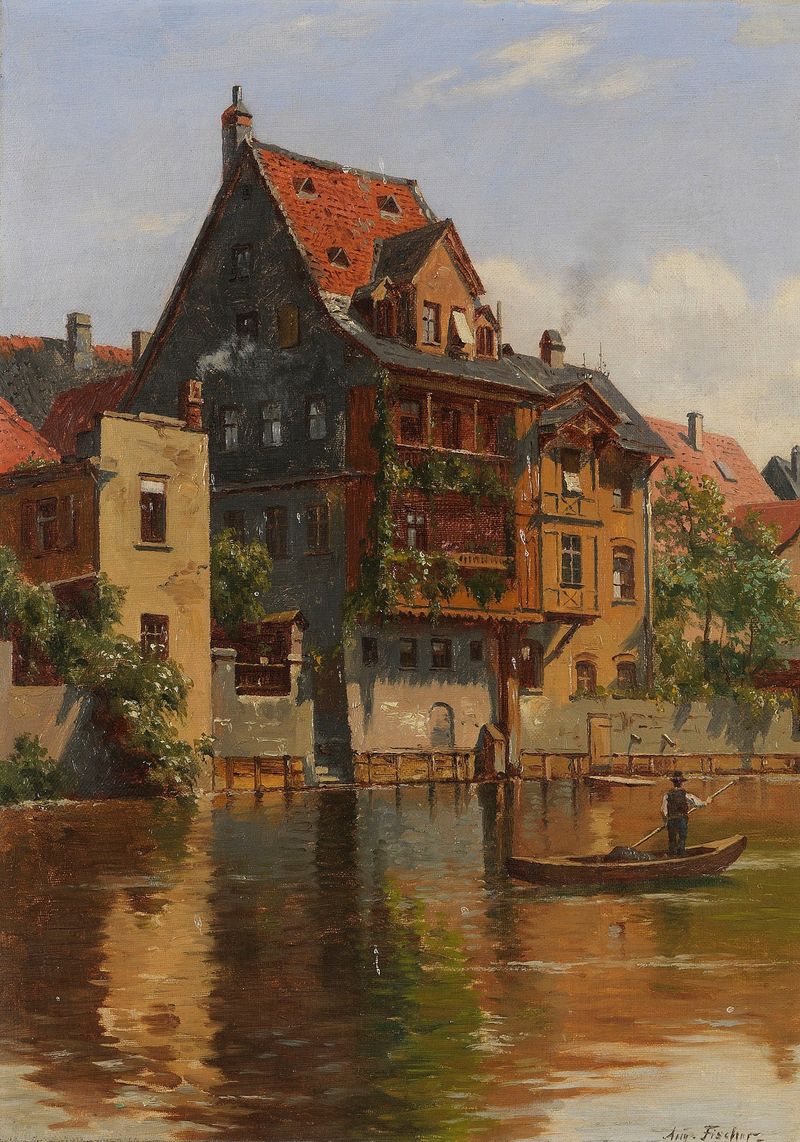
The stillness of a solitary figure adrift in a desolate expanse speaks volumes about the human condition. In the vastness of the canvas, emptiness is not merely a void; it is a space filled with the echoes of absence and solitude. Look to the center of the painting, where a lone man sits in a small boat, the gentle ripples around him contrasting sharply with the weight of stillness that permeates the scene. Notice the muted palette of blues and grays, suggesting a chill that encircles him, while soft light casts gentle shadows, highlighting the contours of the boat and the figure's hunched posture.
The careful brushwork creates a texture that captures the water's surface, inviting the viewer to almost hear the soft lapping against the hull. Delve deeper into the subtleties: the man's downturned gaze speaks of introspection and perhaps resignation, while the sparse surroundings amplify feelings of isolation. The boat, a vessel of transportation, ironically becomes a symbol of stasis, trapped in a quiet harbor. Together, these elements evoke a tension between desire and existential inertia, reflecting the broader emotional landscape of the early 20th century, where the search for meaning often collided with a sense of futility. In 1904, August Fischer was navigating both personal and societal shifts, painting in a Germany grappling with rapid industrialization and the aftermath of a shifting cultural identity.
This backdrop of transformation informed his expression, as he sought to capture moments of profound stillness amid the surrounding chaos. It was a time when art was beginning to reflect inner lives, and this work encapsulates that poignant search for connection in an increasingly fragmented world.