
Old Passenger Depot, Cleveland — History & Facts
In the quiet embrace of memory, we find the transient beauty of places once loved and lost. The essence of longing is captured in stillness that speaks volumes, inviting the viewer to ponder what was and what could have been. Look to the left at the stately façade of the depot, its brickwork rendered with meticulous detail that evokes a sense of nostalgia. Notice how the warm hues of ochre blend seamlessly with cool grays, suggesting the passage of time as shadows dance across the surface.
The composition leads your gaze toward the open archways, inviting exploration while hinting at the stories that linger just beyond their threshold. As you delve deeper, consider the subtle contrasts in light and dark that create a dynamic tension. The soft illumination spilling through the windows juxtaposes the deep shadows cast by the surrounding architecture, evoking the dichotomy between hope and abandonment. Each element, from the solitary figure at the entrance to the looming structure itself, embodies a poignant narrative of departure, emphasizing the emotional weight of time’s relentless march. Otto Henry Bacher painted this scene between 1870 and 1909, a period marked by a burgeoning appreciation for American realism.
Living primarily in New York at the time, he was influenced by the rise of urbanization and the transformation of cities. This piece not only captures the era’s architectural pride but also resonates with Bacher’s personal experiences of movement and nostalgia, reflecting a world in flux.
More Artworks by Otto Henry Bacher
Browse all →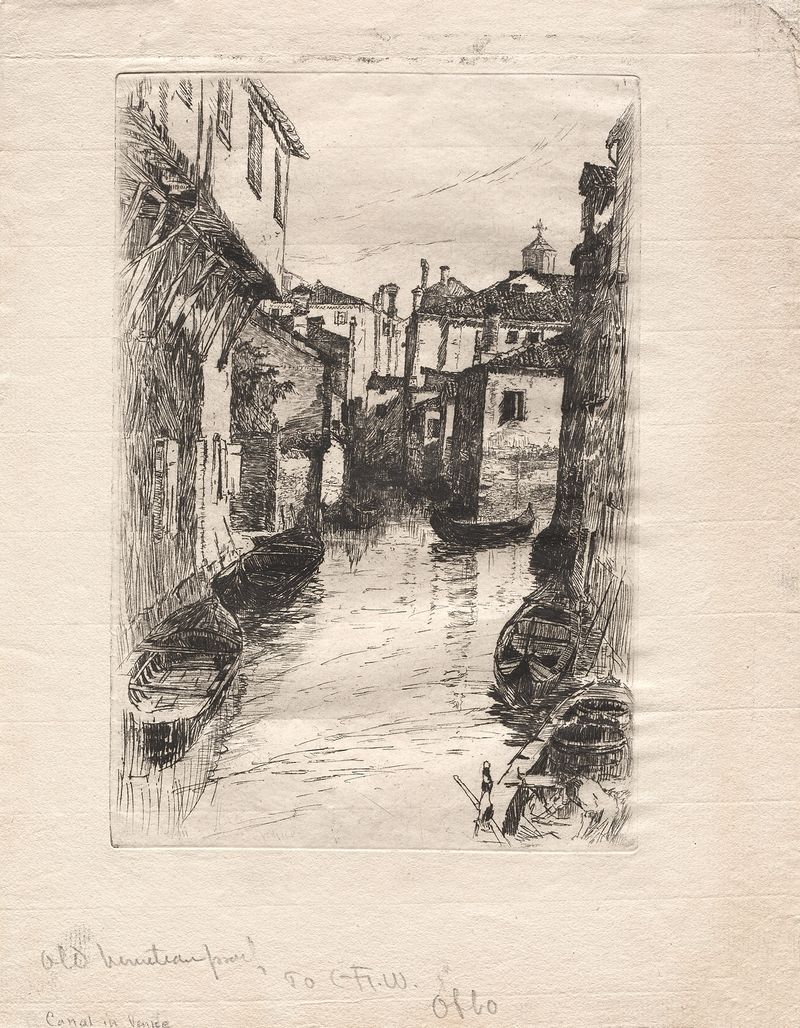
Canal in Venice
Otto Henry Bacher
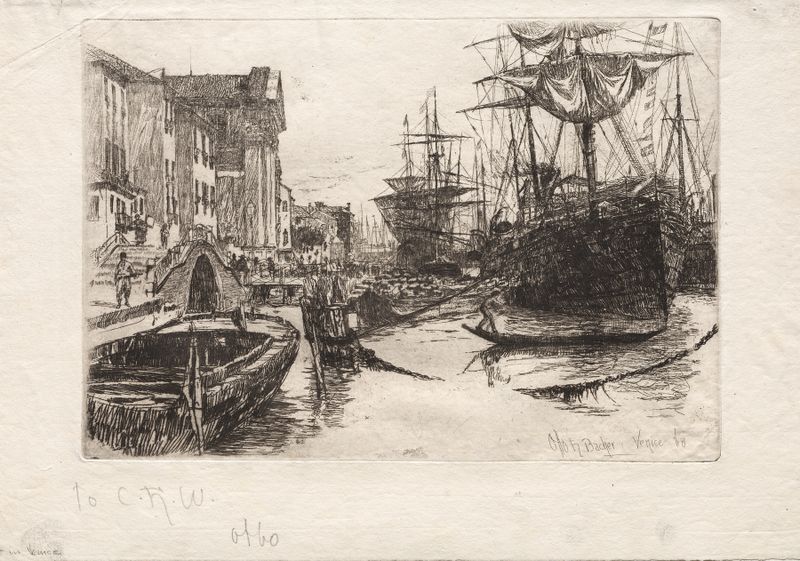
View in Venice
Otto Henry Bacher
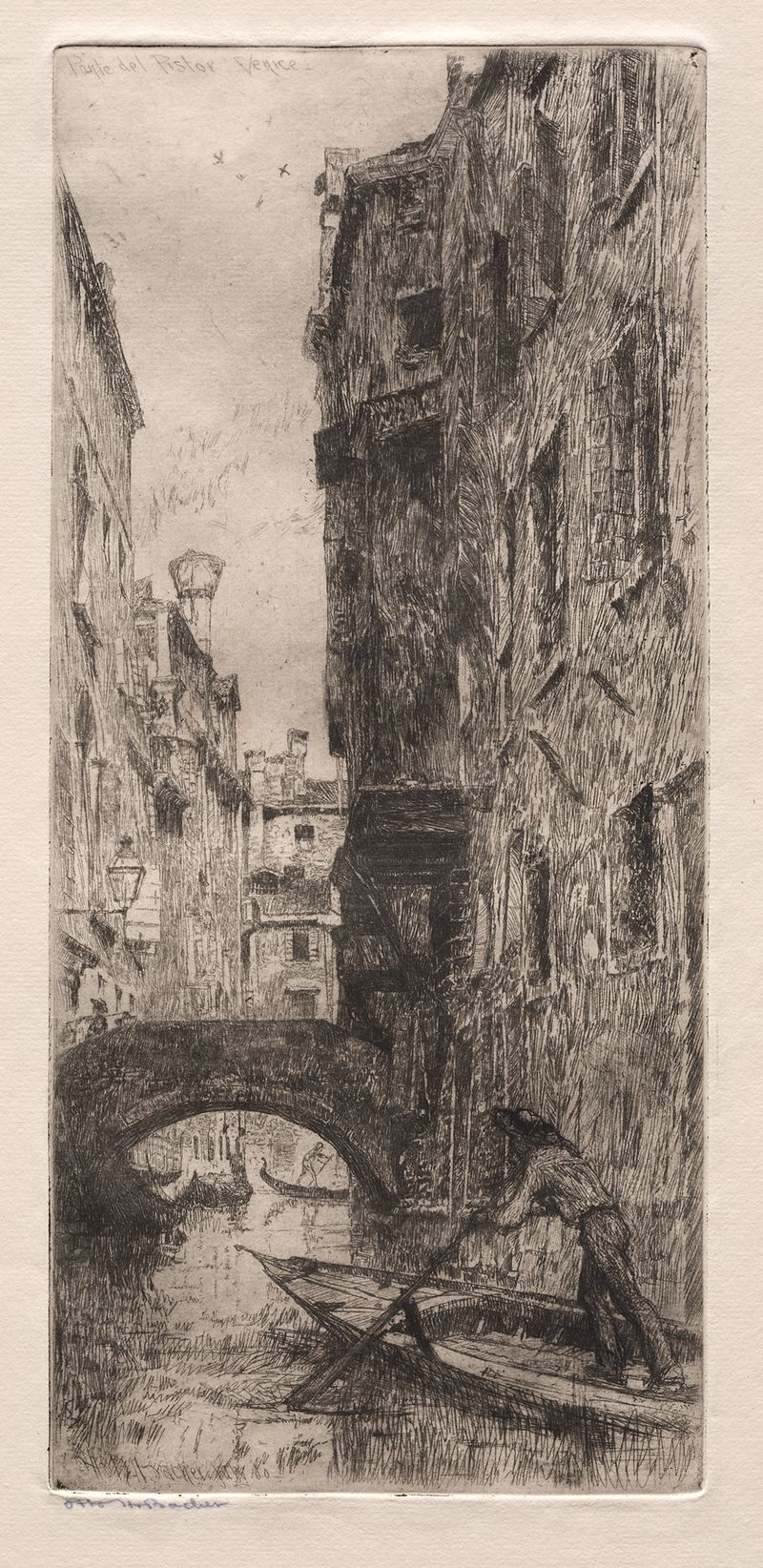
Ponte del Pistor, Venice
Otto Henry Bacher
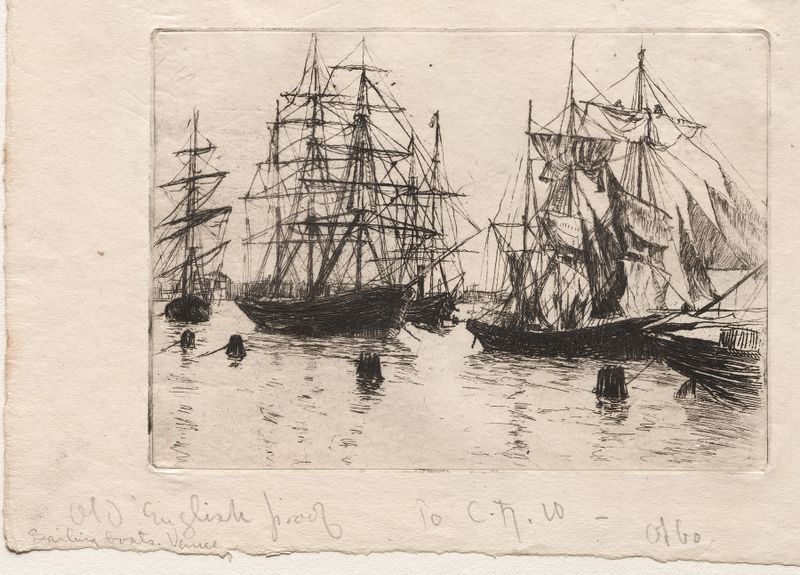
Sailing Boats, Venice
Otto Henry Bacher
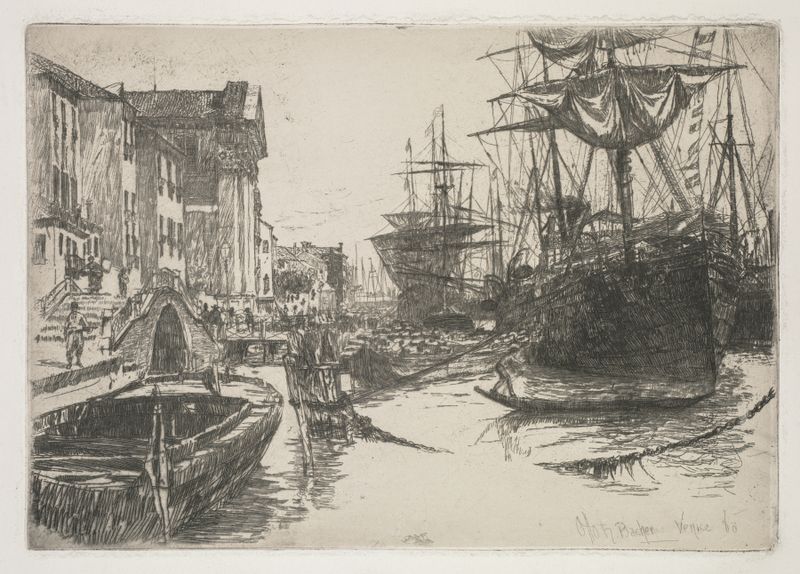
Fondamenta della Zattere
Otto Henry Bacher
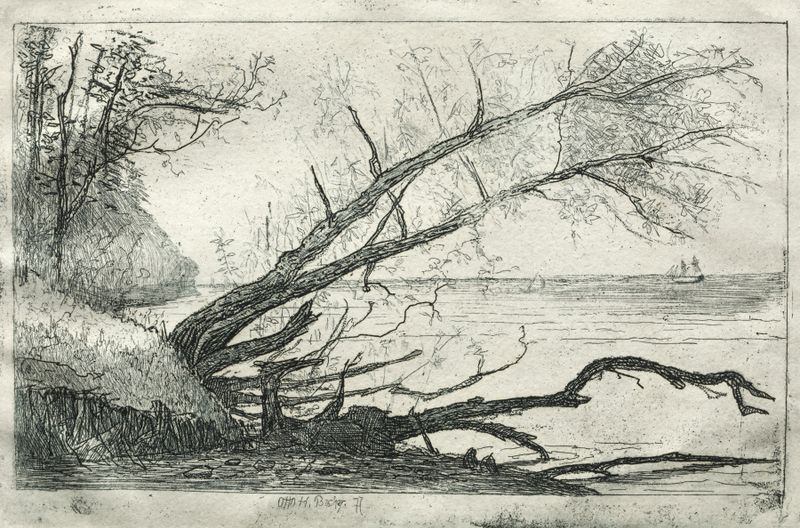
Old Sycamore
Otto Henry Bacher
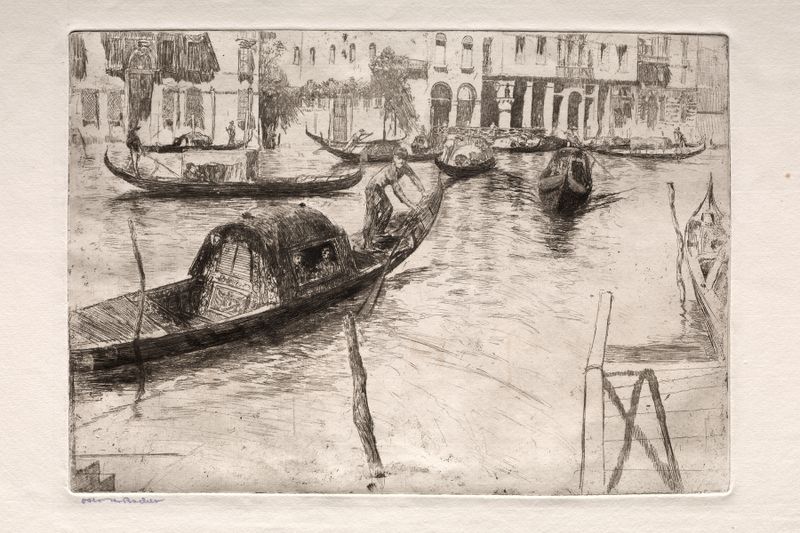
Traghetto San Felice
Otto Henry Bacher
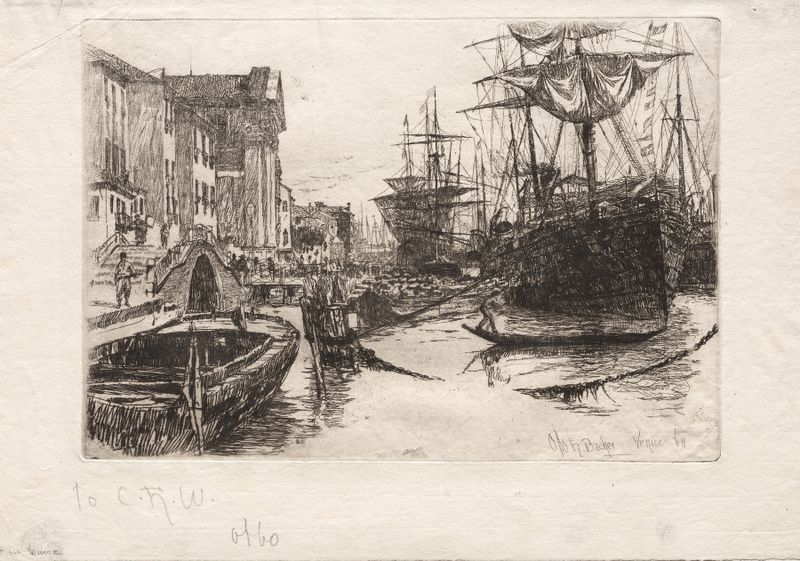
View in Venice
Otto Henry Bacher
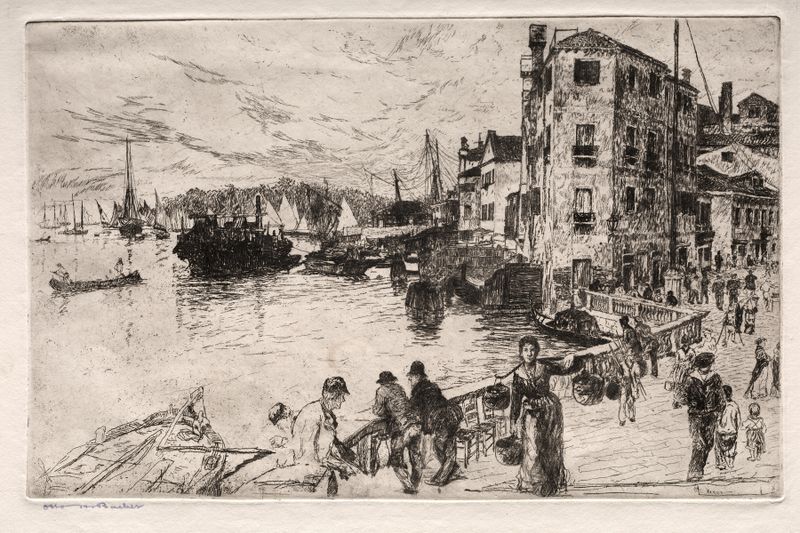
Castello Quarters, Riva
Otto Henry Bacher
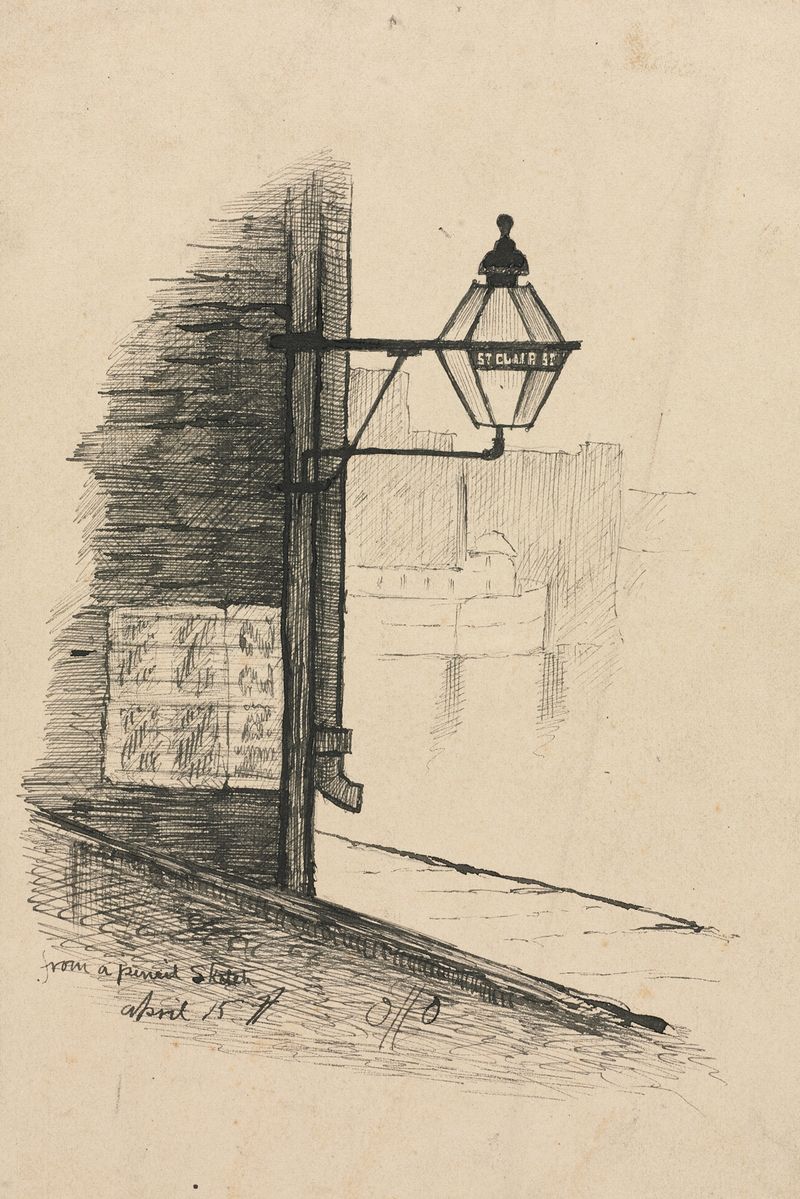
St. Clair Street, Cleveland
Otto Henry Bacher
More Architecture Art
Browse all →
The statue of Liberty
Frédéric Auguste Bartholdi

View of Houses in Delft, Known as ‘The Little Street’
Johannes Vermeer

View of Houses in Delft, Known as ‘The Little Street’
Johannes Vermeer

The Cathedral in Rouen. The portal, Grey Weather
Claude Monet

The yellow house
Vincent van Gogh

The Church in Auvers-sur-Oise, View from the Chevet
Vincent van Gogh