
Olivenhain bei Genua — History & Facts
In moments of stillness, it offers a sanctuary for contemplation and serenity, inviting us to pause and breathe. Look to the foreground where olive trees stretch their gnarled branches, reaching out like ancient sentinels. The warm hues of greens and golds intermingle under a soft, golden light that bathes the landscape. Notice how the gentle strokes of paint create a dappled effect, making the leaves shimmer as if touched by a whispering breeze.
The winding path invites the viewer's gaze deeper into the composition, hinting at the mysteries that lie beyond the horizon. As you delve further, consider the contrast between the tranquil olive grove and the distant mountains, which loom in a cool, shadowy blue. This interplay of warmth and coolness evokes a sense of balance, embodying the peace that permeates the scene. The absence of human figures invites reflection on solitude and connection to nature, suggesting that even in isolation, beauty exists.
Each brushstroke conveys the essence of serenity, echoing the inner calm that arises when we immerse ourselves in the natural world. In 1871, Schönleber painted this work during a transformative period for him, seeking solace in the landscapes of Italy. He was influenced by the Barbizon school and the emerging plein air movement, striving to capture the ephemeral beauty of light and color. This artwork emerged from a time when artists were increasingly moving outdoors, embracing the spontaneity of nature, which was pivotal to their increasingly modern approach.
More Artworks by Gustav Schönleber
Browse all →
Venezianisches Fischerboot
Gustav Schönleber
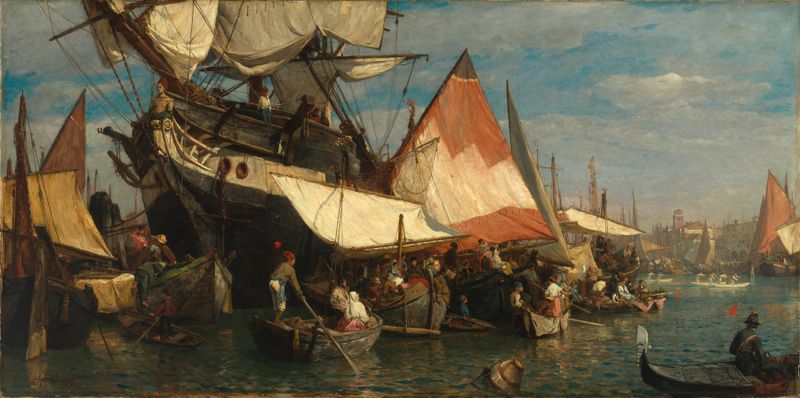
Regatta in Venedig
Gustav Schönleber
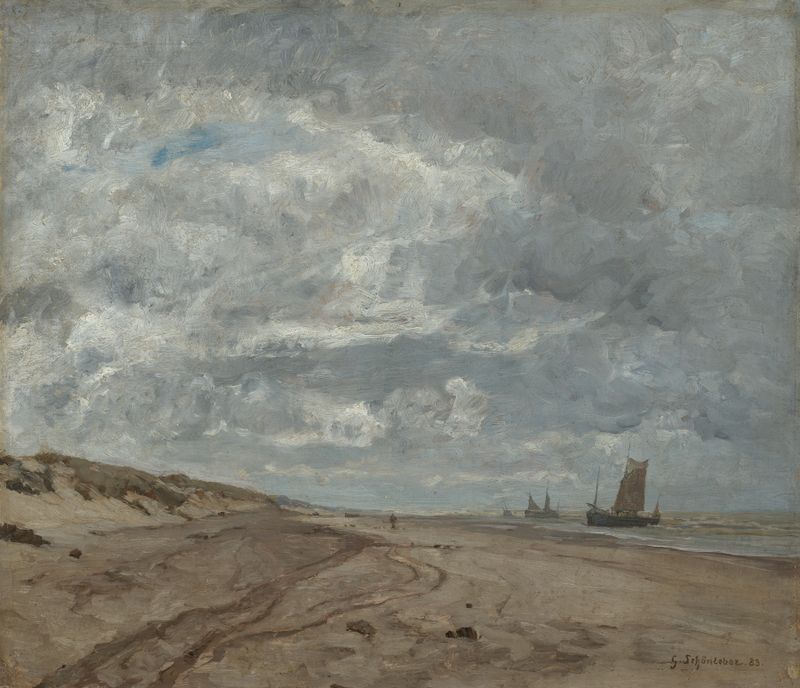
Strand von Scheveningen
Gustav Schönleber

Am Ufer der Waal
Gustav Schönleber

San Fruttuoso
Gustav Schönleber

Quinto al Mare (Genua)
Gustav Schönleber

Venezianische Häuser an einem Kanal
Gustav Schönleber
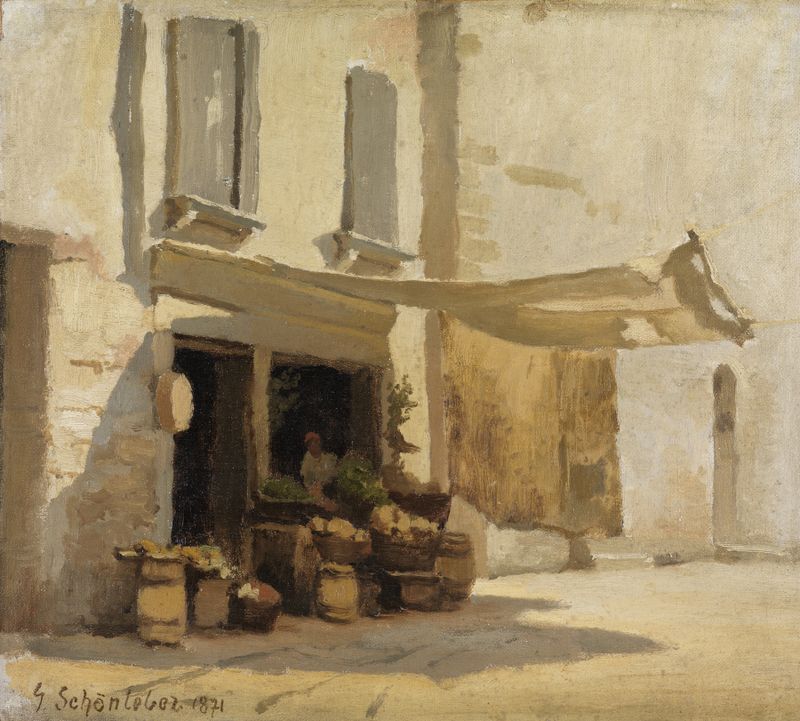
Obstbude in Venedig
Gustav Schönleber
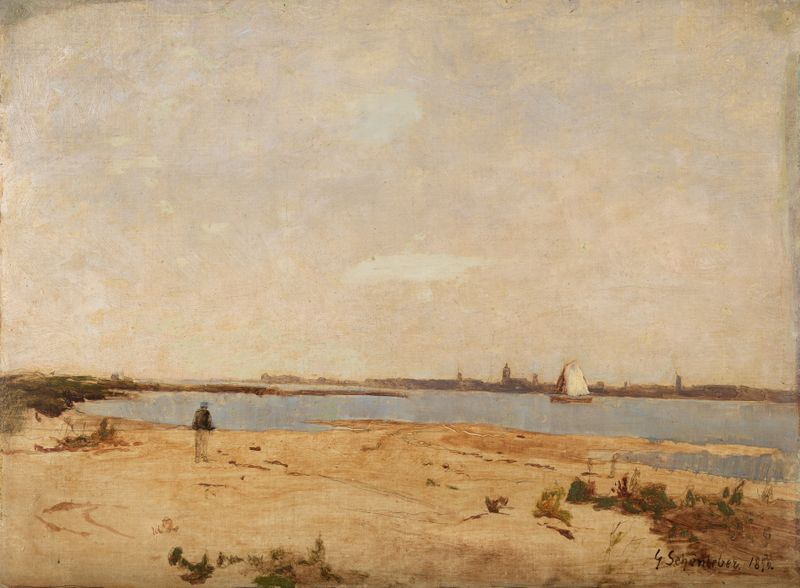
Blick auf Gorkum
Gustav Schönleber

Hafeneinfahrt von Vlissingen
Gustav Schönleber





