On the coast of California — History & Facts
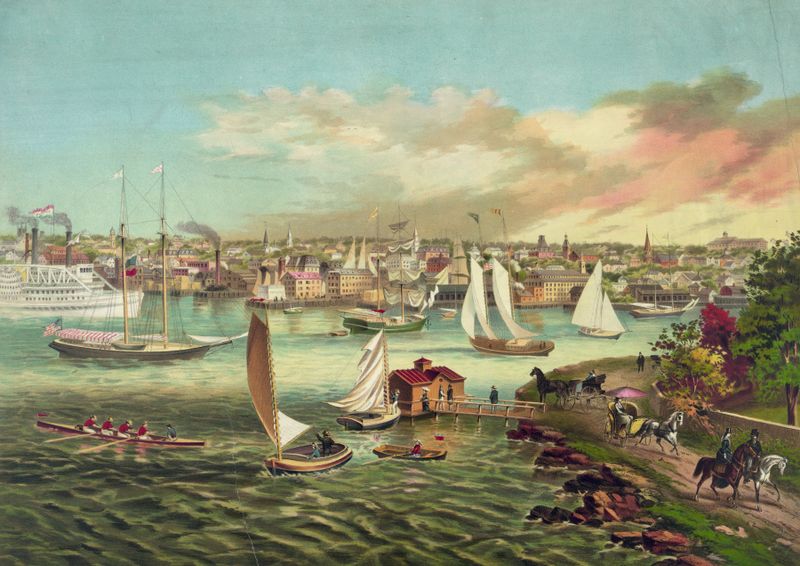
What if beauty was never meant to be finished? In On the coast of California, F. Gleason encapsulates the fleeting nature of existence and the inevitability of decay, inviting viewers to ponder the impermanence of beauty. Look to the left where the rugged, weathered cliffs rise against the ocean's expanse — their rough textures juxtaposed with the soft, shimmering waves below. Notice how the light dances on the water, creating a mesmerizing play of blues and greens that draws the eye towards the horizon.
The palette of earthy tones in the cliffs speaks of time and erosion, while the vibrant sky hints at a fleeting moment of tranquility, suggesting that even in decay, there is a certain beauty that resonates deeply. Amidst the tranquility, there lies an inherent tension. The contrast between the formidable cliffs and the gentle waves evokes a sense of conflict between nature's resilience and fragility. The distant horizon, where sky meets sea, signifies infinite possibilities while simultaneously reminding us of the limits of our own lives.
Each stroke reveals a narrative of fading glory, capturing the essence of landscapes in perpetual transformation. Painted in 1875, during a time when America was experiencing rapid industrialization and expansion, this piece reflects Gleason's love for the natural world, a counterpoint to the encroaching man-made landscape. As he immersed himself in the Californian coast, he sought not only to depict its beauty but also to conserve and celebrate the fleeting moments of nature in the face of an ever-changing world.