Osmington- A View to the Village — History & Facts
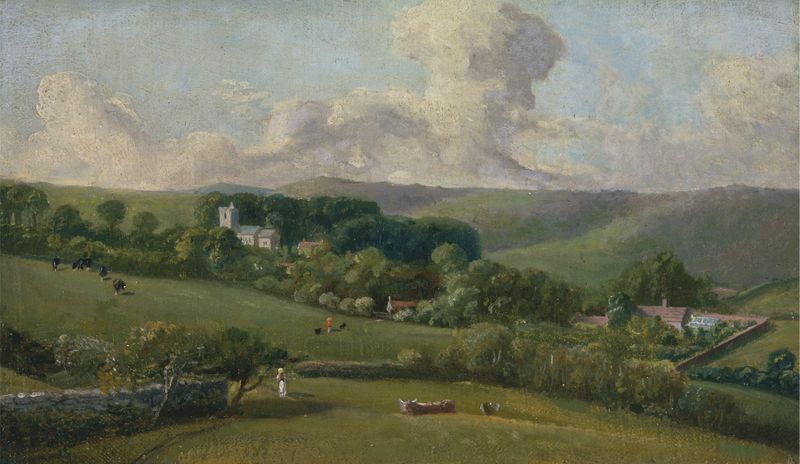
Art reveals the soul when the world turns away. In a quiet landscape, we find ourselves yearning for connection with a distant village, enveloped in the warm embrace of twilight. Look to the left, where the gentle rolling hills cradle a quaint cluster of cottages. Notice the soft hues of orange and pink draping the sky, contrasting against the muted greens and browns of the earth below.
The brushstrokes create a sense of movement, guiding the eye through the scene as if inviting us to wander down the path leading to the village. Light spills delicately across the rooftops, illuminating the scene with a serene, almost reverent glow. Amidst this tranquil setting, an undercurrent of longing emerges. The distant village represents not just a place, but a sense of belonging—a yearning for community and connection that transcends the physical distance.
The juxtaposition of warmth in the sky and the cool shadows of the landscape suggests a tension between hope and isolation, drawing the viewer into a narrative of solitude amidst beauty. Each detail, from the fading sunlight to the winding path, echoes the deep human desire to reach out and touch the lives of those we cannot see. Created during a time when the art world was beginning to embrace Romantic ideals, the work reflects the period’s fascination with nature and the emotional landscapes it inspires. While specifics of the date remain unclear, John Fisher, Bishop of Salisbury, painted Osmington- A View to the Village during a time when artists sought to express their inner feelings through natural subjects, mirroring the complexities of the human experience in an increasingly industrialized world.