Osmington: A View to the Village — History & Facts
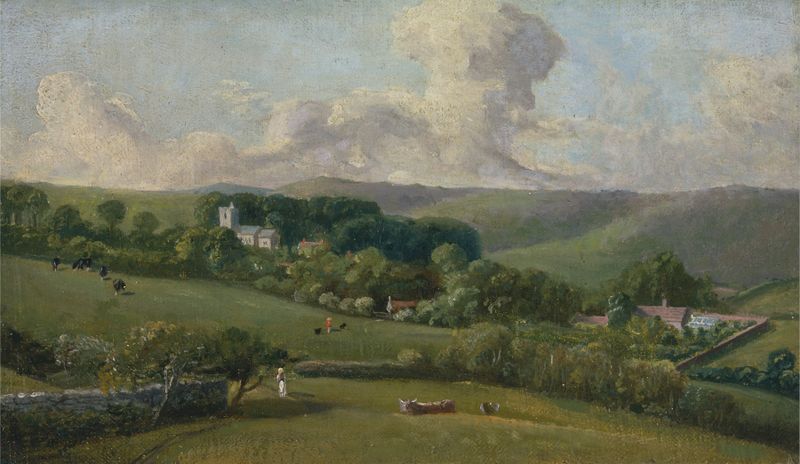
In the quiet embrace of grief, the landscapes we cherish become reflections of our inner turmoil, guiding us through the labyrinth of loss. Focus on the horizon in Osmington: A View to the Village, where rolling hills cradle the village below. The soft greens and browns blend seamlessly into a serene blue sky, creating an inviting yet somber atmosphere. Look closely at the delicate brushstrokes that form the village’s rooftops, hinting at life beneath the tranquil surface.
Notice how the light dances across the fields, illuminating the path to the distant church steeple, a silent sentinel overseeing both joy and sorrow. In this serene vista, two contrasts emerge: the stillness of the landscape juxtaposed against the fleeting nature of life. The paths winding through the fields suggest movement, yet the scene feels frozen in time. Each stroke evokes the weight of memory, capturing moments that once thrived in vibrancy but are now tinged with the melancholy of remembrance.
The muted colors serve as a gentle reminder of beauty found even in heartache, echoing the artist’s own reflections on the impermanence of existence. John Fisher painted this work between 1816 and 1832, a period marked by personal loss and the evolving Romantic movement in art. As Bishop of Salisbury, he was deeply influenced by the changing landscapes of English society, where reverence for nature intersected with profound emotional experiences. This piece encapsulates his struggle to convey the complexity of human feelings amidst an ever-shifting world, revealing a profound connection to both the land and the heart.