
Paardenweide in Algerië — History & Facts
A swath of North African pastureland emerges through the scars of time, where the delicate silhouettes of grazing horses are nearly swallowed by the battered surface. The eye is drawn first to the vast, pale sky, which dominates the composition and sets a quiet, almost wistful mood. Below, in the shelter of distant palms and gentle hills, a scattered herd bends to the grass, their forms painted with a lightness that suggests both distance and the haze of memory.
The painting’s battered state—its tears, abrasions, and missing patches—becomes part of the story, as if the landscape itself is struggling to be remembered, half-lost beneath the weathered skin of the canvas. Here, the artist’s hand lingers not on drama, but on the slow, persistent life of the land. Created in 1880 by Alberto Pasini, Paardenweide in Algerië belongs to a moment when European artists were captivated by the landscapes and cultures of North Africa. Such works were often commissioned or collected by those eager for visions of distant colonies, their promise of exoticism and open horizons.
The painting now resides in the Rijksmuseum, a testament to both the era’s curiosity and its appetite for scenes beyond Europe’s borders. History has kept few traces of this particular canvas’s journey, but its survival—damaged yet legible—invites us to look closer, to piece together the world it once so vividly conjured.
More Artworks by Alberto Pasini

Mercato in Oriente
Alberto Pasini
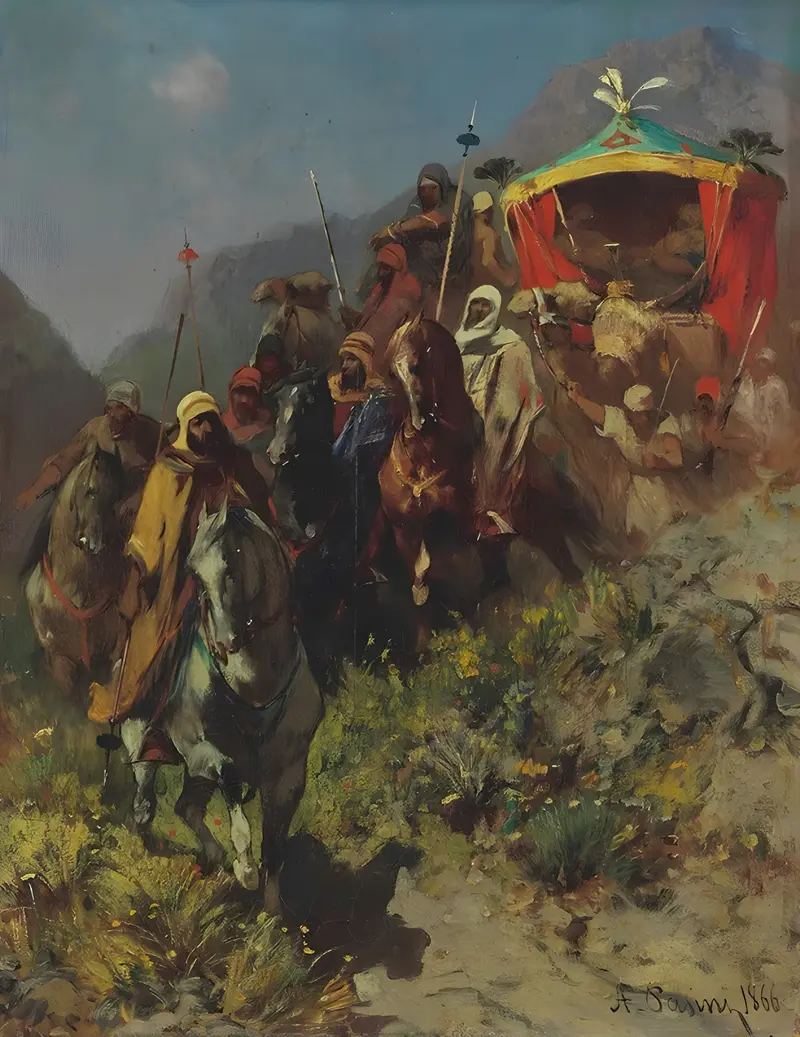
A Caravan on a Mountain Pass
Alberto Pasini

The blacksmith’s shop
Alberto Pasini
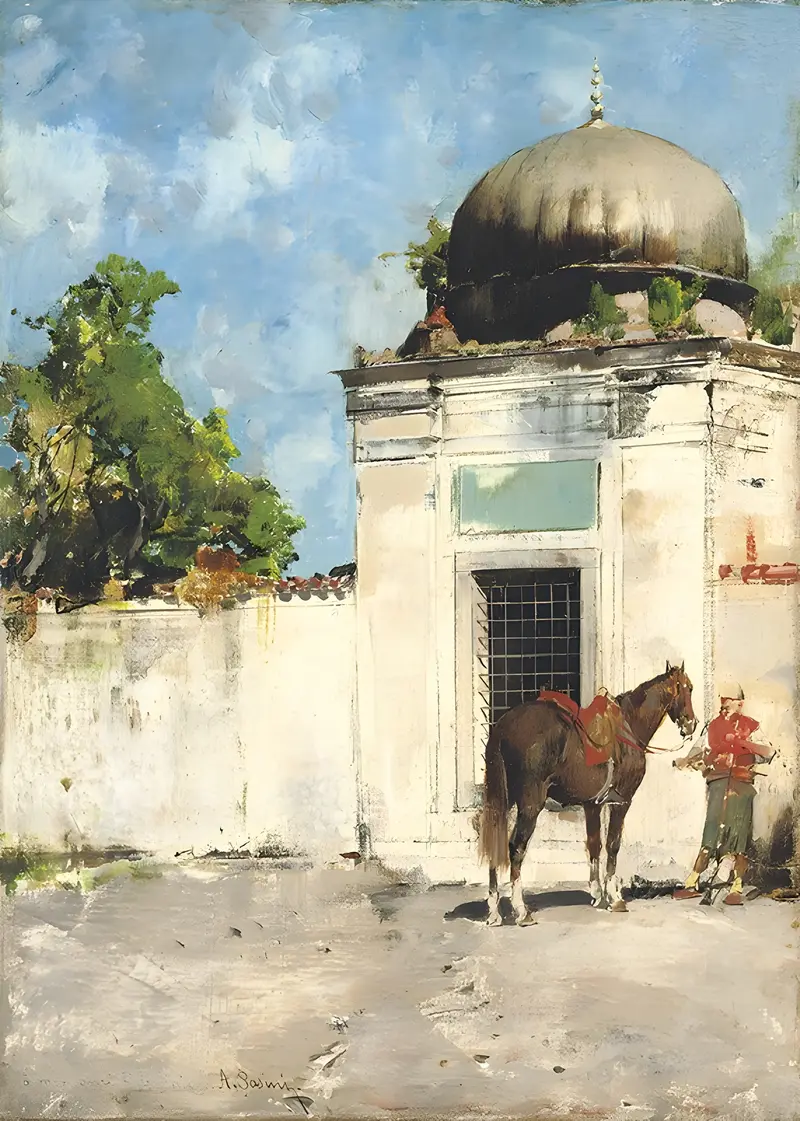
The Sentinel
Alberto Pasini
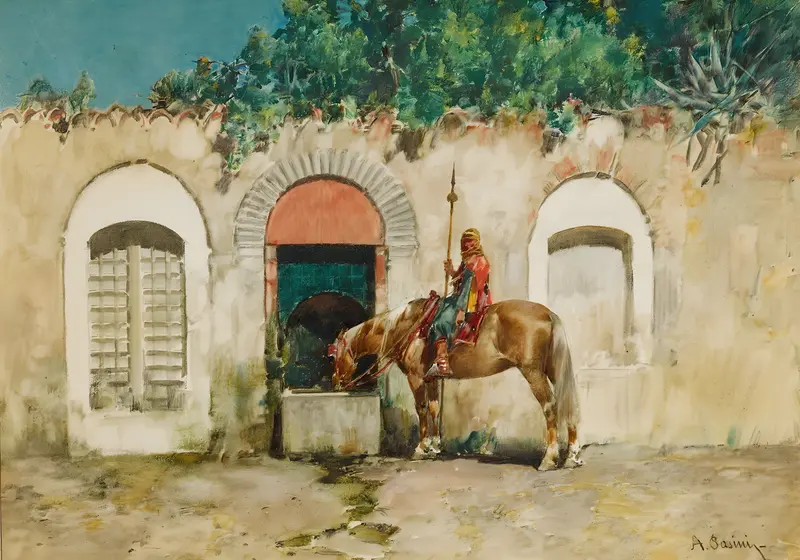
Horseman At A Fountain
Alberto Pasini
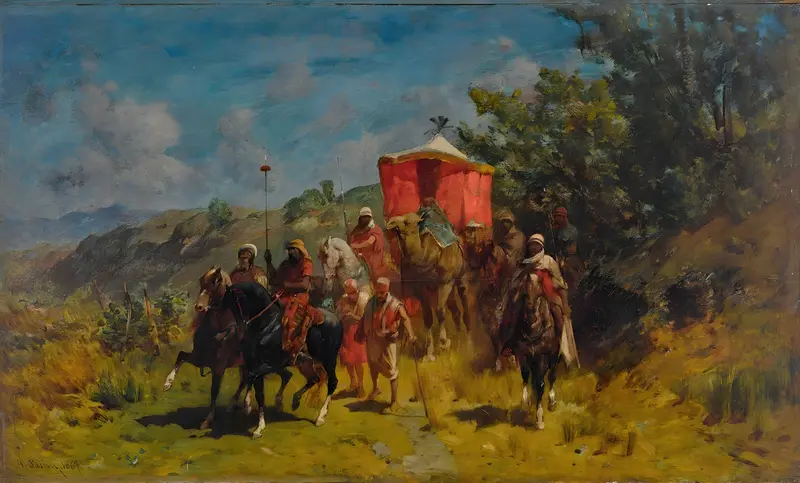
An Arab Caravan
Alberto Pasini
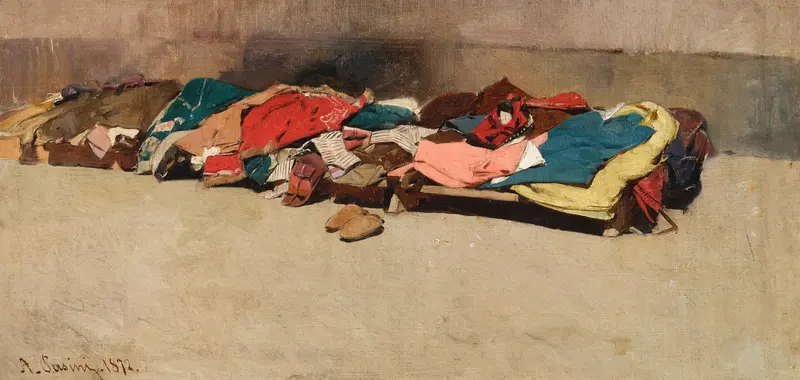
Mercato
Alberto Pasini
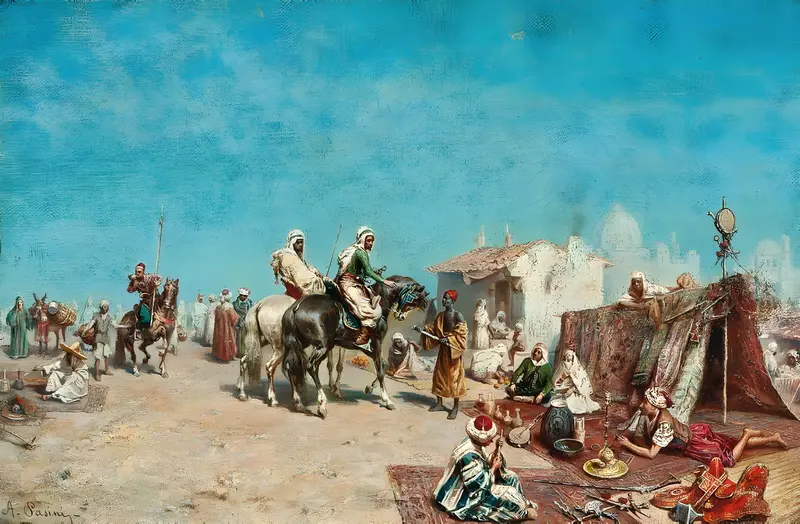
Arab merchants at a market by the city walls
Alberto Pasini
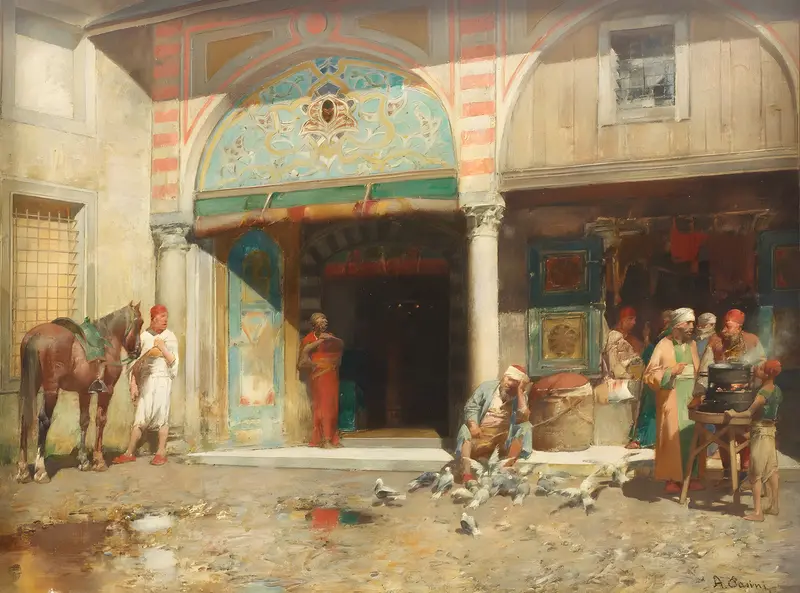
Outside the mosque
Alberto Pasini
Outside the Mosque
Alberto Pasini
More Landscape Art

The Starry Night
Vincent van Gogh

View of Delft
Johannes Vermeer

Water Lilies
Claude Monet

The Grand Canal, Venice, looking north-west from the Ca' Corner to the Ca' Contarini degli Scrigni, with the campanile of Santa Maria della Carità
Canaletto

Windsor Castle
Canaletto

The Grand Canal looking North-East from the Palazzo Dolfin-Manin to the Rialto Bridge
Canaletto