Paesaggio — History & Facts
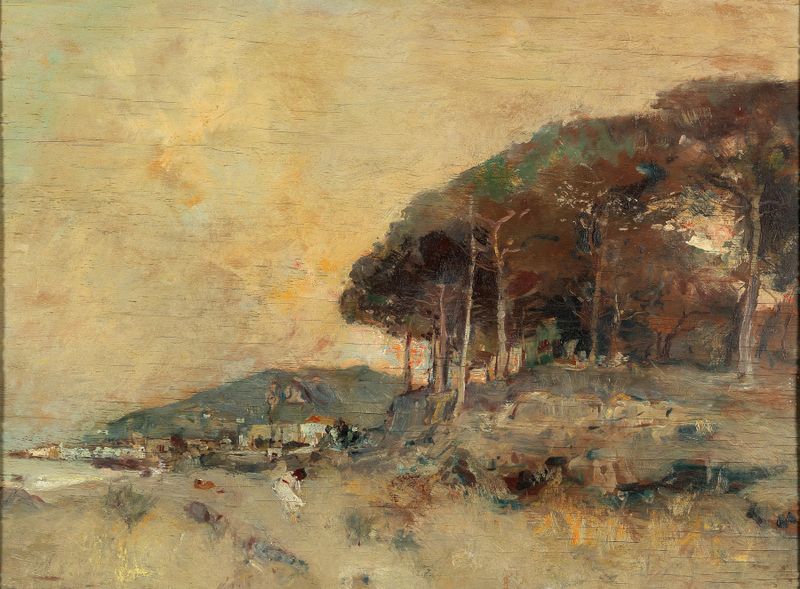
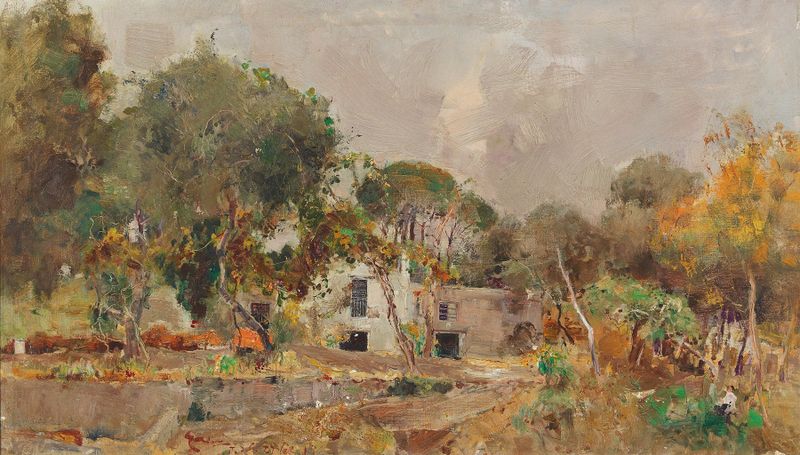
In the stillness of nature, chaos simmering beneath the surface reveals the tumult of existence. How do we reconcile the serenity of a landscape with the turbulence it conceals? Look to the foreground where gentle hills rise, their earthy tones a calming contrast to the stormy blues and greys of the sky above. Notice how the brushstrokes dance across the canvas, each stroke alive with energy, yet harmoniously arranged to evoke a sense of tranquility.
The play of light on the grass seems to beckon the viewer, drawing them deeper into the scene, while the distant horizon hints at unseen forces beyond the idyllic facade. Beneath the surface, subtle tensions arise. The juxtaposition of calmness in the fields against the threatening clouds suggests an inevitable change on the horizon, a moment suspended before the chaos erupts. The vibrant greens of the vegetation betray a vibrancy that feels almost anxious, as if nature itself is bracing for the storm.
Such contrasts awaken a complex emotional resonance, inviting the viewer to confront their own feelings of harmony and discord. In 1924, Giuseppe Casciaro created Paesaggio amid a rapidly changing Italy, where the turbulent aftermath of World War I sculpted new realities. This era was marked by the rise of modernism in art, and Casciaro's work reflects a transition between traditional landscape painting and the emerging avant-garde movements of his time, capturing both the beauty and the underlying chaos of nature.