Mediterranean Coast at Dusk — History & Facts
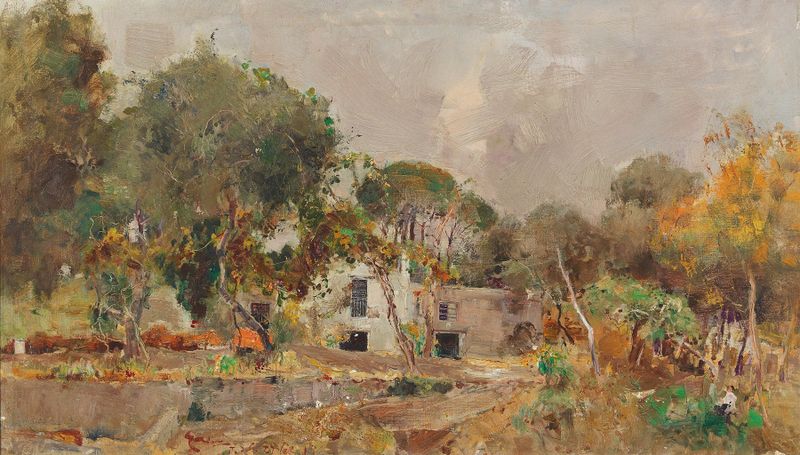
In the quiet moments of dusk, where the horizon blurs between day and night, the whispers of rebirth linger in the air. The colors of the sky and sea dance together, beckoning us to explore the depths of creation and the passage of time. Look to the left at the soft gradients of orange and purple where the sun dips below the horizon. The delicate brushstrokes capture the ethereal transition, while the gentle waves reflect the celestial palette, inviting your gaze to linger.
Notice how the shadows play on the rocky outcroppings, creating a contrast that adds depth to the tranquil scene, guiding us from the foreground towards the horizon, suggesting a pathway toward renewal. Hidden within this serene landscape lies a tension between the calmness of dusk and the anticipation of night. The interplay of light and dark speaks of cycles—of endings and beginnings. The faint glimmer of stars beginning to emerge hints at possibilities yet to be realized.
Each stroke of the brush seems to capture a fleeting moment in time, one that embodies both the stillness of the scene and the ever-present pulse of life returning anew. Giuseppe Casciaro painted this work during the early 20th century, a time marked by personal and artistic transformation. He was deeply immersed in the Italian artistic community, exploring the interplay of light and landscape that defined the era. Though the exact date remains unknown, the painting reflects the broader movement towards Impressionism, emphasizing a deep connection with nature and a longing for rebirth amidst a changing world.