Casale in Torre del Greco — History & Facts
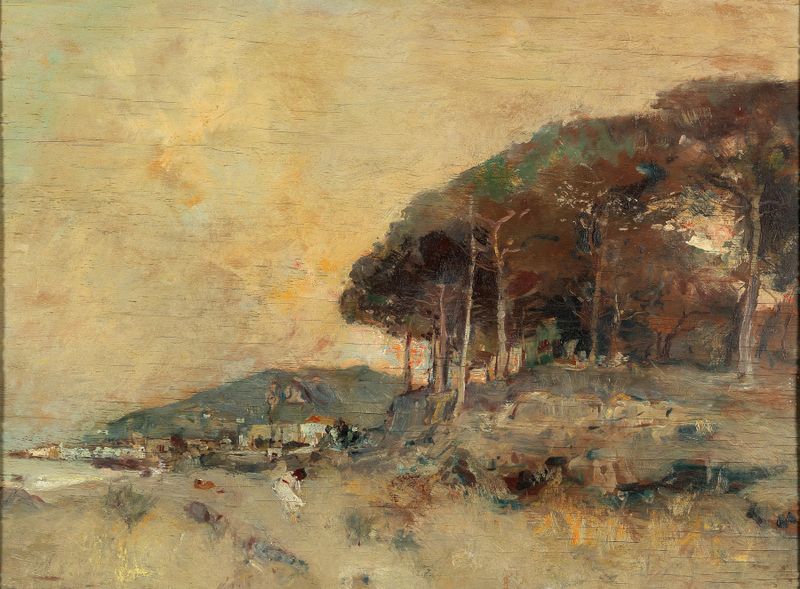
Could beauty survive in a century of chaos? The question lingers, echoing through the landscape captured in this poignant work. A serene vista reveals a quaint town embraced by the mountains, yet beneath the surface lies the weight of history and loss. Look to the foreground, where vibrant patches of wildflowers burst forth, harmonizing with the gentle hues of terracotta roofs that signify homes filled with stories. The play of light dances across the scene, highlighting the delicate brushstrokes that capture both the warmth of the sun and the cool shadows cast by distant hills.
The composition draws the eye toward the horizon, where the sky’s soft blues and whites mirror an indeterminate promise, inviting contemplation. Within this picturesque setting, tension unfolds through the contrast of permanence and transience. The idyllic imagery masks the fragility of life; the houses stand resilient against time, yet the fleeting beauty of nature suggests inevitable decay. Each detail, from the crumbling stone walls to the luxuriant greenery, conveys a sense of nostalgia—an aching reminder of what has been lost and what remains as a testament to resilience. Created in 1910, this work emerged during a period of significant upheaval in Italy and the art world, where traditional values clashed with modernist movements.
Giuseppe Casciaro was deeply influenced by the landscapes of his homeland, capturing their essence while facing the socio-political changes surrounding him. His mastery in portraying the delicate interplay of light and nature speaks to a desire to preserve beauty amidst an ever-changing reality.