
Paris Plage — History & Facts
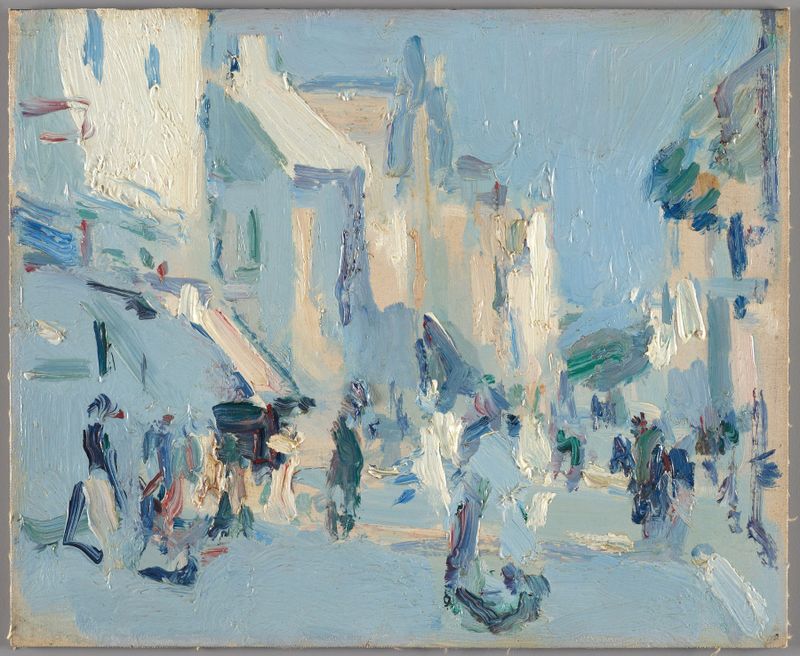
In the vibrant chaos of life, the heart often dances on the edge of madness. Focus on the striking play of colors in this captivating piece; let your gaze linger on the vivid blues and deep greens that evoke the shifting tides of the sea. Notice how the artist’s bold brushstrokes create a sense of movement, capturing the essence of joyful revelry on the beach. The sun-drenched figures seem to pulsate with energy, each hue a reflection of their spirited existence against a backdrop of soothing sand and water. Delve deeper into the emotional currents of the painting.
The contrasting shades suggest a duality—exuberance intertwined with a subtle hint of melancholy, as if even in joy, there resides a hint of madness. The spirited figures, caught in their moments of glee, may symbolize a fleeting escape from the chaos of urban life, while the shadowed areas remind us of the quiet solitude that often accompanies human connection. Here, Peploe encapsulates not just a scene, but an intricate dance of emotions, inviting viewers to explore their own depths of feeling. In 1907, while residing in France, Peploe painted this work amidst the burgeoning modernist movement.
Influenced by Post-Impressionists, he sought to push the boundaries of color and form, reflecting a world that felt both exhilarating and disorienting. His exploration of light and color during this period resonates with the broader artistic shifts of the era, making Paris Plage a compelling reflection of the time.
More Artworks by Samuel John Peploe
Browse all →
The Harbour, Cassis
Samuel John Peploe
Iona
Samuel John Peploe

Kirkcudbright
Samuel John Peploe

Church at Cassis
Samuel John Peploe
Paris-Plage
Samuel John Peploe
Boats in Port
Samuel John Peploe

Luxembourg Gardens – Paris
Samuel John Peploe

Figures on the Shore
Samuel John Peploe

Cottage At Corstorphine
Samuel John Peploe

Trees, Douglas Hall
Samuel John Peploe





