
Passage of the Mondego at Pena Cova by the 3rd Division of allied Army, 1810 — History & Facts
Can paint confess what words never could? In Passage of the Mondego at Pena Cova by the 3rd Division of Allied Army, 1810, the canvas brims with unspoken truths and the undercurrents of turmoil amid a landscape steeped in history. Look to the left where the rushing waters of the Mondego cascade, their turbulent surface mirroring the chaos of the moment. The figures of soldiers, cloaked in the dark hues of war, march resolutely across the bridge, their expressions a mix of determination and dread. Notice how Turner employs a dramatic contrast between the muted greys and the fiery oranges of the setting sun, illuminating not just the landscape but also the emotional weight resting upon each soldier’s shoulder. The painting transcends mere depiction of battle, whispering the violence that lurks beneath surface bravado.
The juxtaposition of nature's beauty—the calm hills and serene skies—against the grim duty of the soldiers reflects the duality of existence: peace shattered by the inevitability of conflict. Each brushstroke carries the tension between the serene and the violent, an echo of the struggles that define humanity. Charles Turner painted this work in 1810, during a time when Europe was embroiled in the Napoleonic Wars, which profoundly impacted the lives of many, including artists. Turner sought to capture the spirit of resilience amidst chaos and displayed a burgeoning interest in portraying historical moments with dramatic intensity, making him a key figure in the Romantic movement.
More Artworks by Charles Turner
Browse all →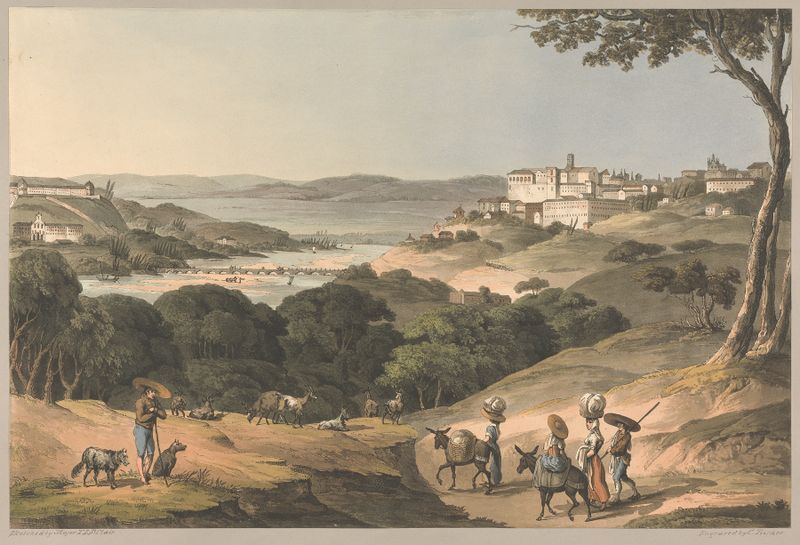
City of Coimbra on the Mondego in 1810
Charles Turner
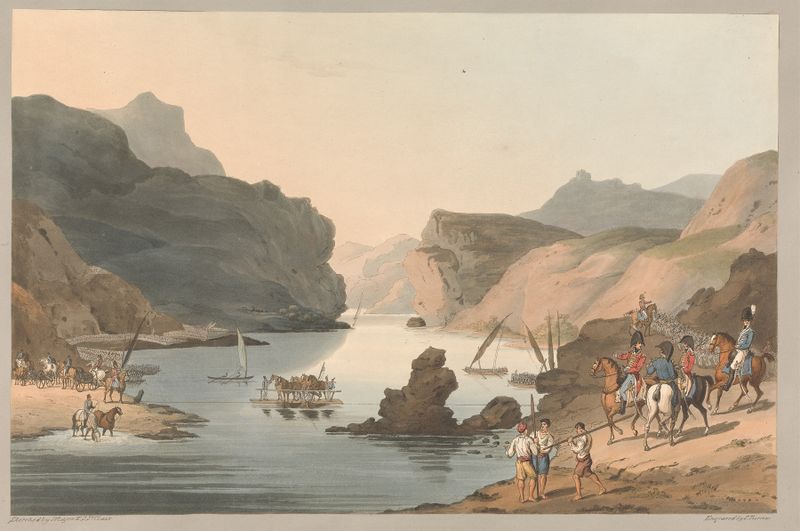
The Passage of the Tagus by the 3rd Division at Villa Velha, 20 May 1811
Charles Turner
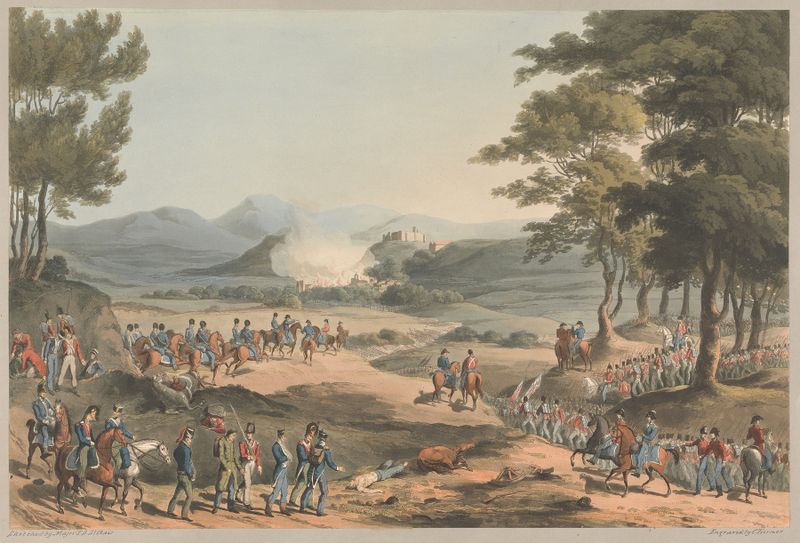
Town of Poinbal. Evacuated by the French on the Morning of 11 March 1811
Charles Turner

The Frontier of Pina Macor. Portugese Troops on the March to Costello Branco, 18th May 1811
Charles Turner

Battle of Fuontes d’Ouoro, 5th July 1811
Charles Turner
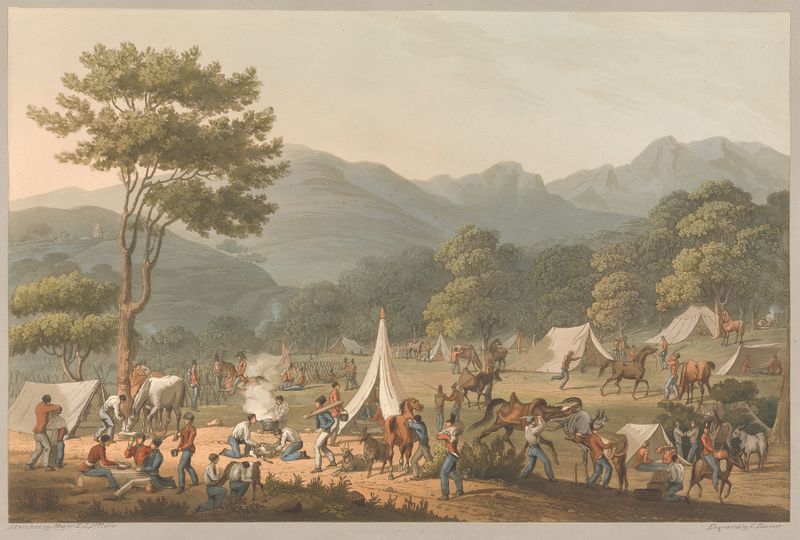
Troop bivoacked below the village of the villa Velha, 19th May 1811
Charles Turner

Sabugal on the River Coa French pickets in the foreground the Allies preparing to cross the River.
Charles Turner
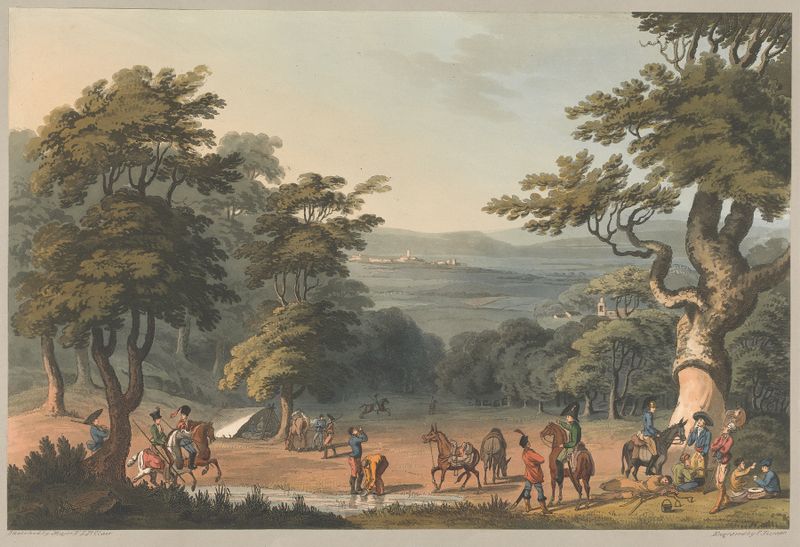
Distant View of Cuidad Rodrigo from Oak Wood near the Village Espeja March 1811
Charles Turner

Battle of Sierra de Basaco above St. Antonio de Cantaro
Charles Turner

Badajos during the Siege of June 1811
Charles Turner
More Historical Art
Browse all →
The Night Watch Militia Company of District II under the Command of Captain Frans Banninck Cocq
Rembrandt van Rijn

Lincoln Memorial
Henry Bacon

The Third of May 1808
Francisco de Goya

Isaac and Rebecca, Known as ‘The Jewish Bride’
Rembrandt van Rijn

The Charge of the Mamelukes (1814)
Francisco de Goya

De vier ruiters van de apocalyps
Albrecht Dürer