
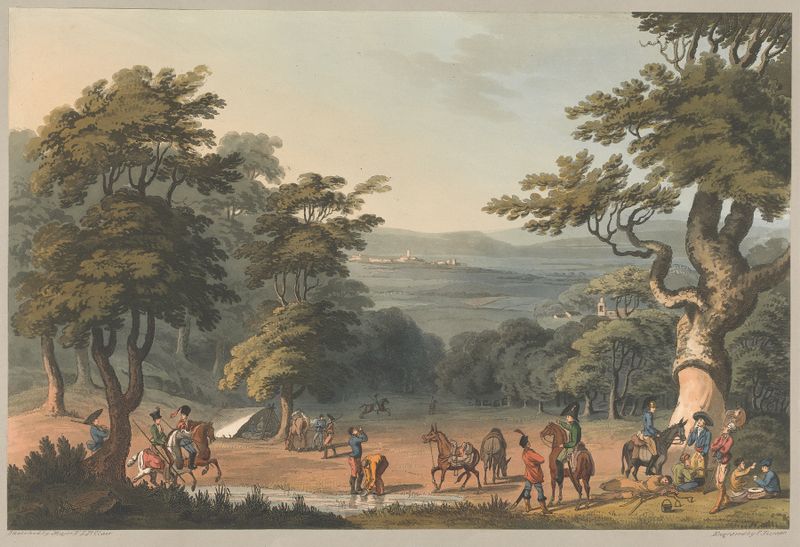
Troop bivoacked below the village of the villa Velha, 19th May 1811 — History & Facts
In that fragile space where detail meets emotion, a narrative unfolds—one that reverberates through history and the human experience. Look to the foreground, where a group of soldiers is depicted, their figures rendered with a delicate balance of shadows and light that speaks to the transient nature of their moment in the world. The brushwork evokes a sense of fleeting time as if capturing a single heartbeat amidst the chaos of 1811. Notice how the muted earth tones blend seamlessly with the distant village, suggesting both companionship and isolation—a tension of belonging and separation. As you explore the canvas, consider the small details: the weary expressions on the soldiers’ faces, the fluttering flags, and the subtle suggestion of motion in the wind.
Each element signifies more than mere depiction; it embodies the fragility of life and the weight of duty. The contrast between the vibrant village and the somber soldiers hints at the dichotomy of hope and despair, a reflection of the historic struggles faced during the Peninsular War. In 1811, Charles Turner was navigating the complex waters of British art, firmly situated in a period of social and political upheaval. Creating this piece during the Napoleonic Wars, he captured a moment that resonated deeply with his contemporaries.
The painting reflects not only the military spirit of the time but also Turner’s growing mastery of watercolor and a burgeoning interest in the interplay of light and shadow—elements that would define his legacy.
More Artworks by Charles Turner
Browse all →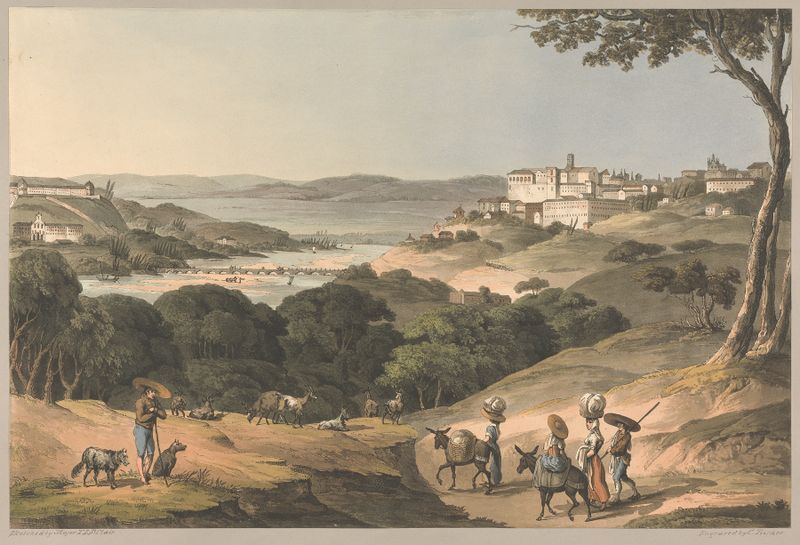
City of Coimbra on the Mondego in 1810
Charles Turner
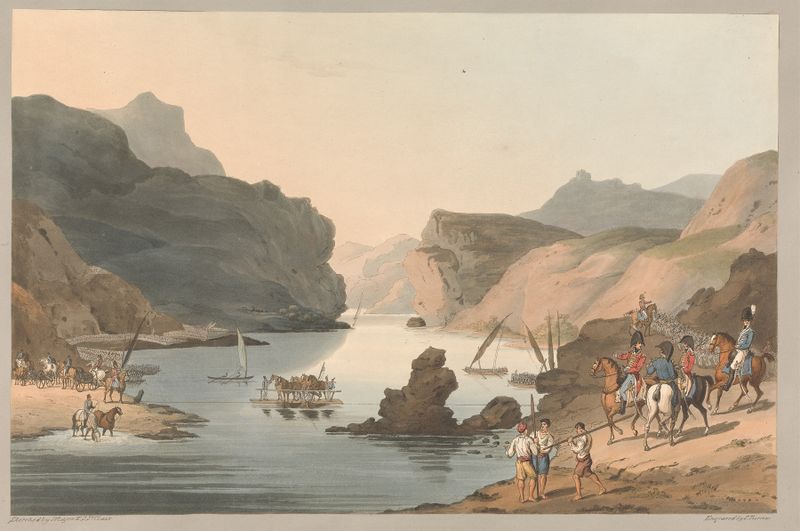
The Passage of the Tagus by the 3rd Division at Villa Velha, 20 May 1811
Charles Turner
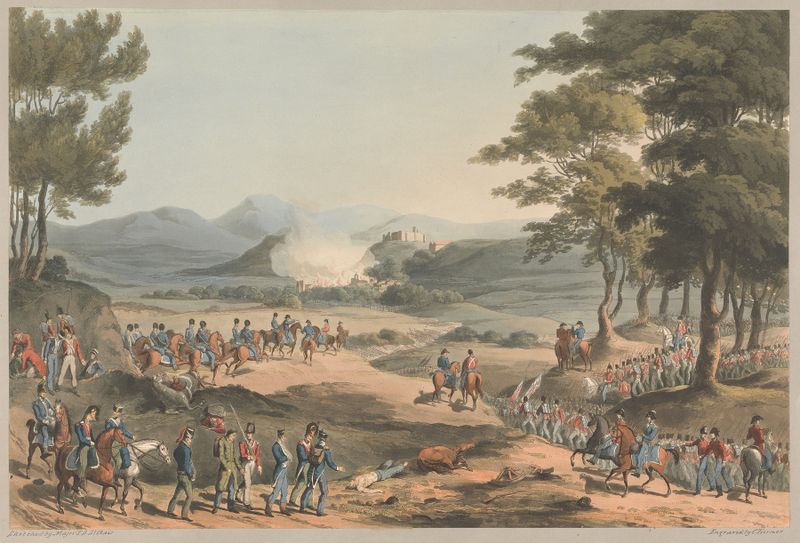
Town of Poinbal. Evacuated by the French on the Morning of 11 March 1811
Charles Turner

The Frontier of Pina Macor. Portugese Troops on the March to Costello Branco, 18th May 1811
Charles Turner

Battle of Fuontes d’Ouoro, 5th July 1811
Charles Turner
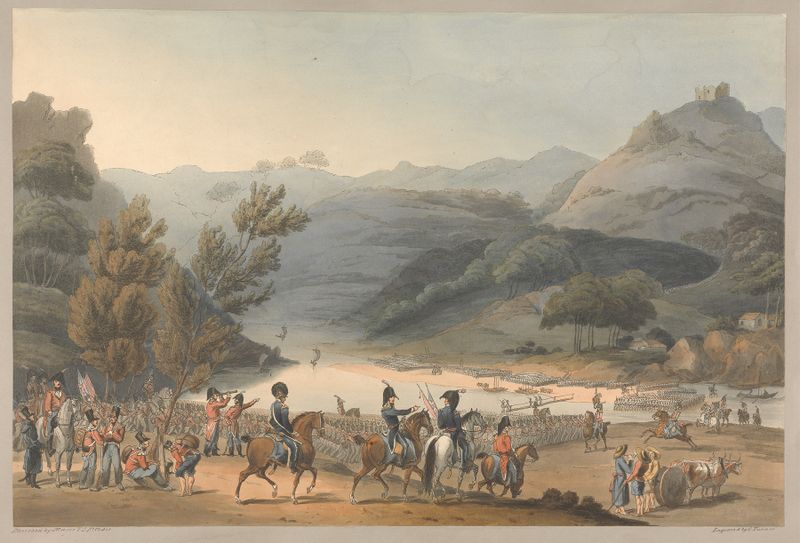
Passage of the Mondego at Pena Cova by the 3rd Division of allied Army, 1810
Charles Turner

Sabugal on the River Coa French pickets in the foreground the Allies preparing to cross the River.
Charles Turner
Distant View of Cuidad Rodrigo from Oak Wood near the Village Espeja March 1811
Charles Turner

Battle of Sierra de Basaco above St. Antonio de Cantaro
Charles Turner

Badajos during the Siege of June 1811
Charles Turner
More Historical Art
Browse all →
The Night Watch Militia Company of District II under the Command of Captain Frans Banninck Cocq
Rembrandt van Rijn

Lincoln Memorial
Henry Bacon

The Third of May 1808
Francisco de Goya

Isaac and Rebecca, Known as ‘The Jewish Bride’
Rembrandt van Rijn

The Charge of the Mamelukes (1814)
Francisco de Goya

De vier ruiters van de apocalyps
Albrecht Dürer