Pastoral Scene with a Shepherdess Milking a Goat — History & Facts
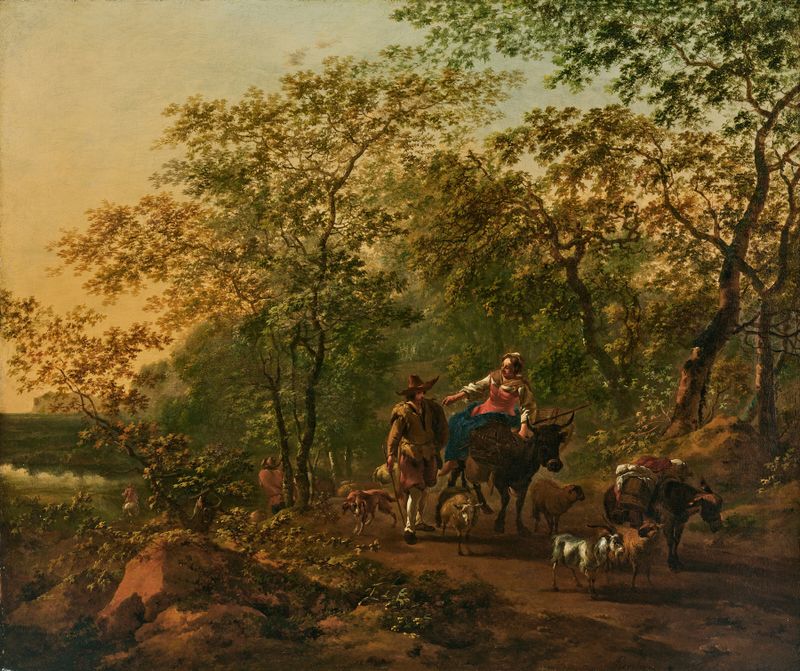
What if silence could speak through light? In the serene embrace of nature, tranquility reigns, inviting the viewer to pause and breathe. Look to the left at the soft glow illuminating the shepherdess, her gentle hands cradling the goat as she milks it with care. The lush greens of the pastoral landscape contrast beautifully with the warm earth tones of her attire, while dappled sunlight filters through the trees, casting delicate shadows that dance across the scene. This harmonious composition, with its balanced arrangement of figures and landscape, draws the eye into a world untouched by chaos. Yet, beneath this calm exterior lies a subtle tension.
The goat, with its inquisitive gaze, prompts reflections on dependency and nurture, while the shepherdess’s focused demeanor suggests a deeper connection to her task and the land. The background, painted with hints of distant mountains and softly rolling hills, evokes a sense of timelessness, inviting viewers to contemplate the simplicity and labor of rural life as a sanctuary from the tumult of the outside world. Nicolaes Berchem created this piece around 1665 to 1670 during a period marked by the Dutch Golden Age, when pastoral themes flourished in art. Living in a time of great artistic innovation, Berchem was immersed in a culture that celebrated the beauty of nature and the intimate relationship between people and their environment.
This work reflects the era’s appreciation for stillness and a connection to rural life, showcasing the artist's mastery of light and atmosphere.