
Paysage — History & Facts
In the vastness of a solitary landscape, loneliness whispers in hues of twilight, urging us to seek solace in its quiet splendor. Look to the foreground where delicate brushstrokes create a subtle play between the warm earth tones and cool shadows. The soft, undulating hills invite the eye to wander, while the muted sky looms overhead, a canvas of melancholy blues and gentle oranges. Notice the intricate details in the foliage, which emerges almost like a sigh against the backdrop of an expansive horizon.
Each element feels deliberate, beckoning the viewer to pause and reflect. Within the painting lies an intricate dance of contrasts—light and dark, isolation and beauty. The golden glow of the setting sun contrasts starkly with the heavy, encroaching clouds, embodying the tension between hope and despair. The absence of human figures enhances the sense of solitude, suggesting that beauty can exist in isolation, capturing the essence of longing and contemplation that permeates the landscape. During the mid-19th century, Ravier painted this work against a backdrop of shifting artistic paradigms, where Romanticism began to intertwine with emerging Impressionistic influences.
Living in France, he sought to capture the sublime beauty of nature, reflecting both his internal struggles and the evolving appreciation for atmospheric effects in landscape painting. The world was in flux, and Ravier’s art stands as a poignant testament to the solitude often found in beauty.
More Artworks by François-Auguste Ravier
Browse all →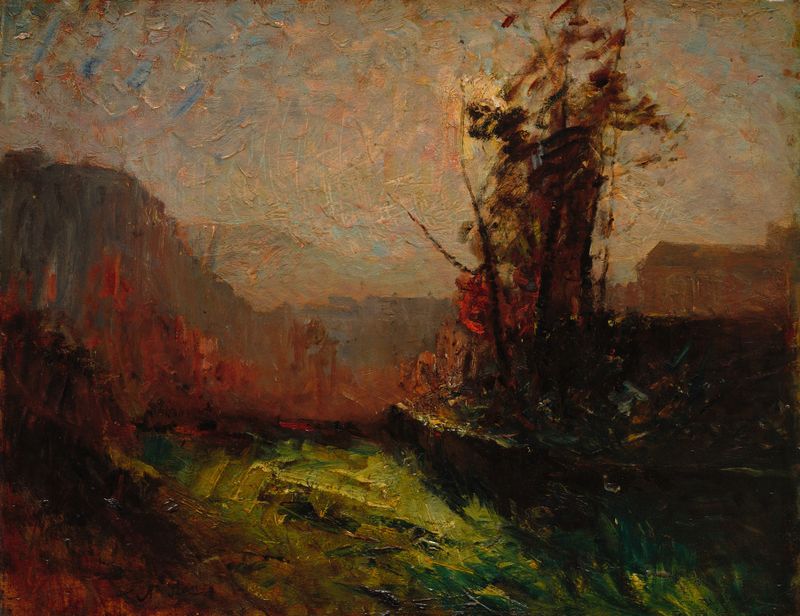
Crémieu, Seen from Chaillonnette
François-Auguste Ravier
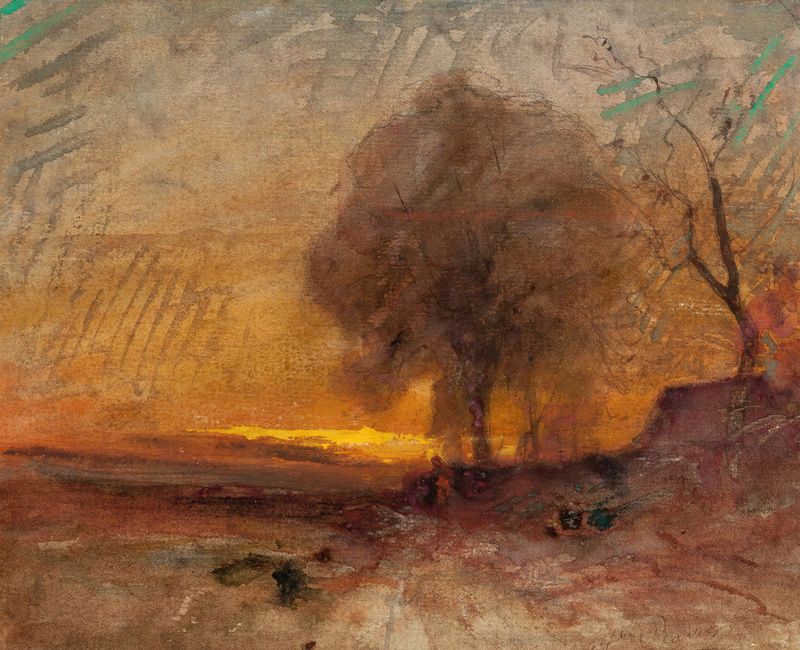
Landscape at Dusk
François-Auguste Ravier

Étude de paysage
François-Auguste Ravier
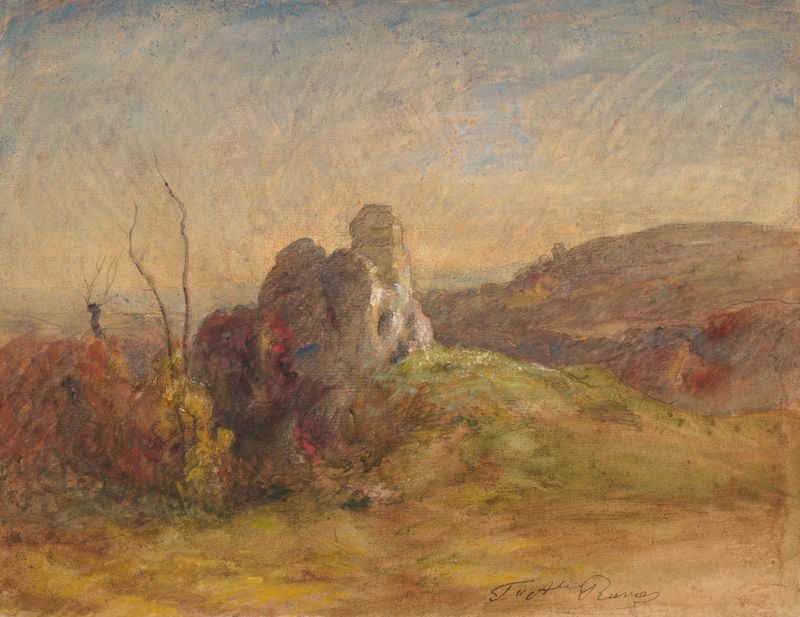
Landscape
François-Auguste Ravier
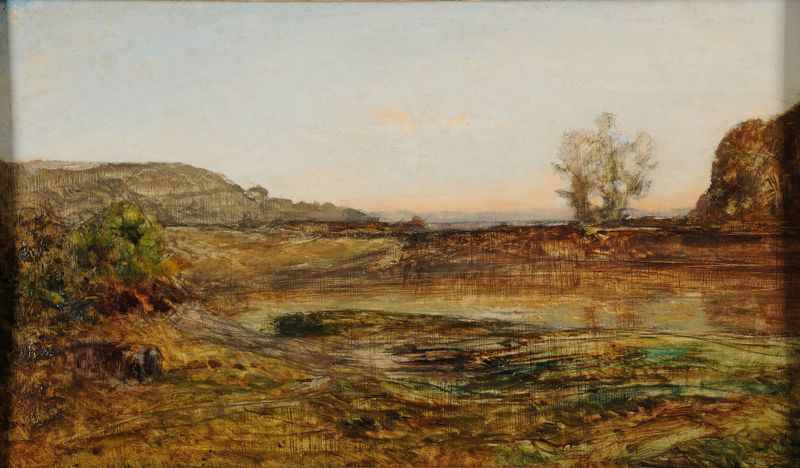
L’Étang d’Optevoz
François-Auguste Ravier
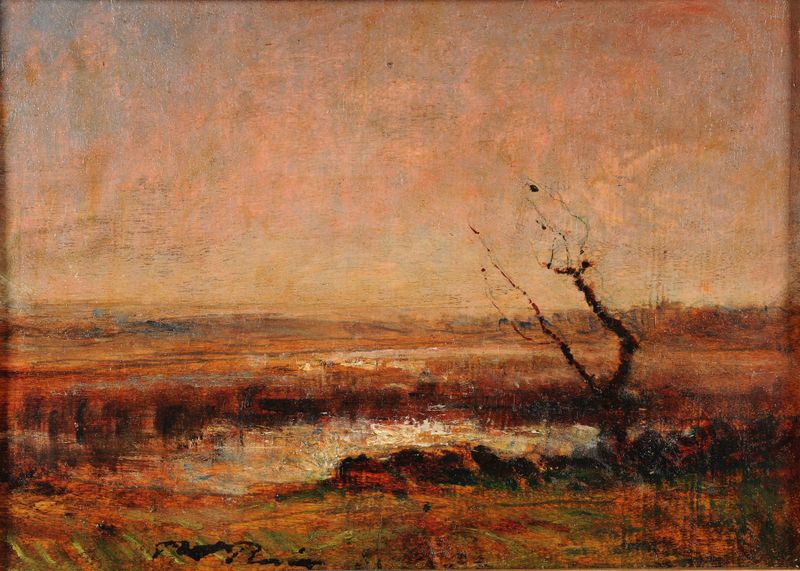
Étude de paysage
François-Auguste Ravier

Approaching Morestal
François-Auguste Ravier

Allée des Tilleuls à Crémieu
François-Auguste Ravier
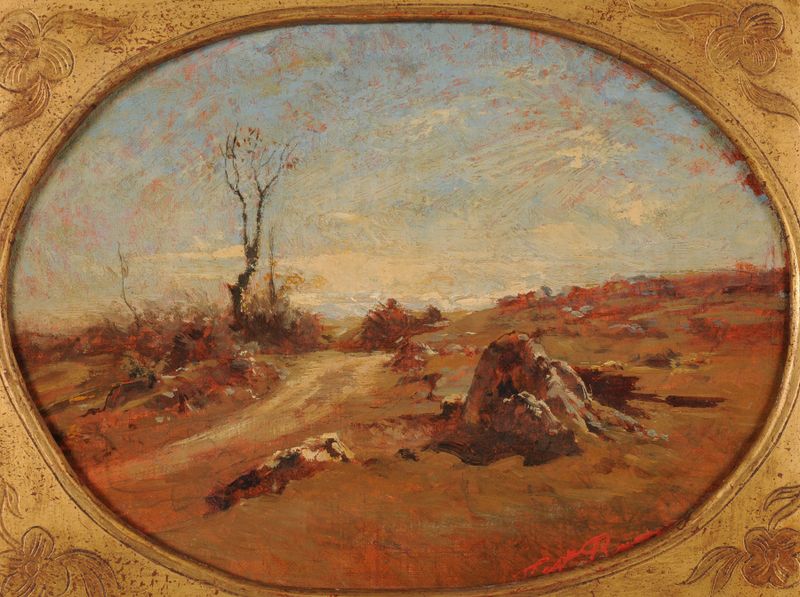
Automne. L’arbre
François-Auguste Ravier

Sunset over a Pond
François-Auguste Ravier





