
Paysage de campagne — History & Facts
When did color learn to lie? In the serene embrace of Paysage de campagne, vivid hues whisper secrets of movement, inviting us into a world where the very landscape seems to breathe. Look to the left, where the fields burst into a riot of golden yellow and deep green, capturing the essence of a sun-drenched day. Notice how the dappled light dances across the canvas, creating a shimmering effect that draws your gaze toward the horizon. The gentle strokes of the brush not only depict the terrain but also evoke the sensation of wind rustling through the grass, giving life to Martin's vision of the countryside. Within this idyllic setting lies a contrast between stillness and vitality.
The trees stand firm and resolute, yet their foliage suggests a quiet rustle, hinting at unseen movements of nature. This duality invites contemplation—are we witnesses to a moment frozen in time, or is the landscape alive with unseen rhythms? The interplay of vibrant colors and gentle swirls offers an emotional resonance, hinting at the passage of time and the cycles of life. In 1920, Henri Martin painted this masterpiece during a period of personal reflection and artistic exploration in France. He was deeply influenced by the Post-Impressionist movement, which emphasized color and light.
Amidst the backdrop of societal change following World War I, Martin sought solace in the beauty of landscapes, distilling his impressions into works that resonate with the serene and the vibrant, capturing the essence of a world reborn.
More Artworks by Henri Martin
Browse all →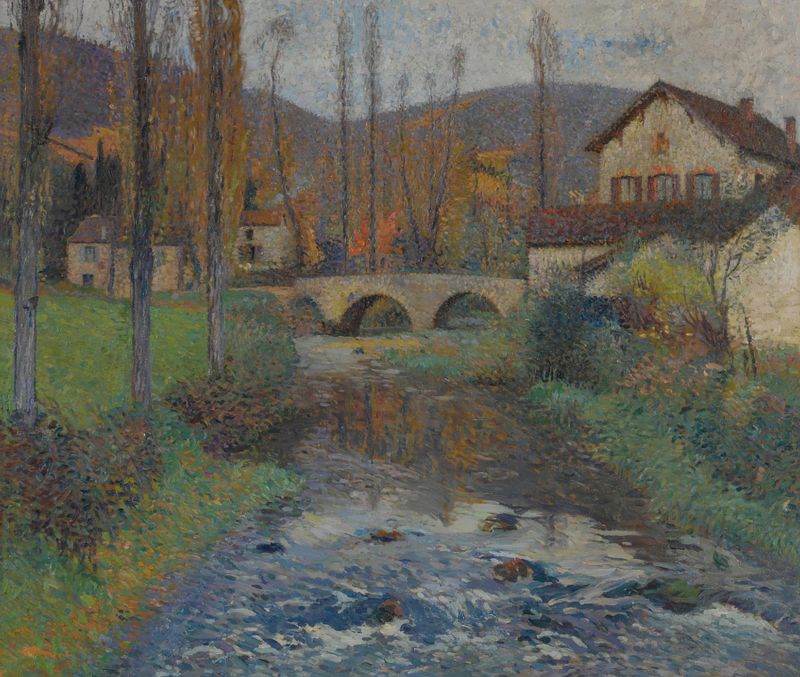
Le Pont du Labastide-du-Vert
Henri Martin

Le Pont de Labastide du Vert
Henri Martin

La Vallée Du Lot, Près De Saint-Cirq Lapopie
Henri Martin

Derniers Rayons, Une Ferme Dans Le Lot
Henri Martin

Vue de Labastide-du-Vert
Henri Martin
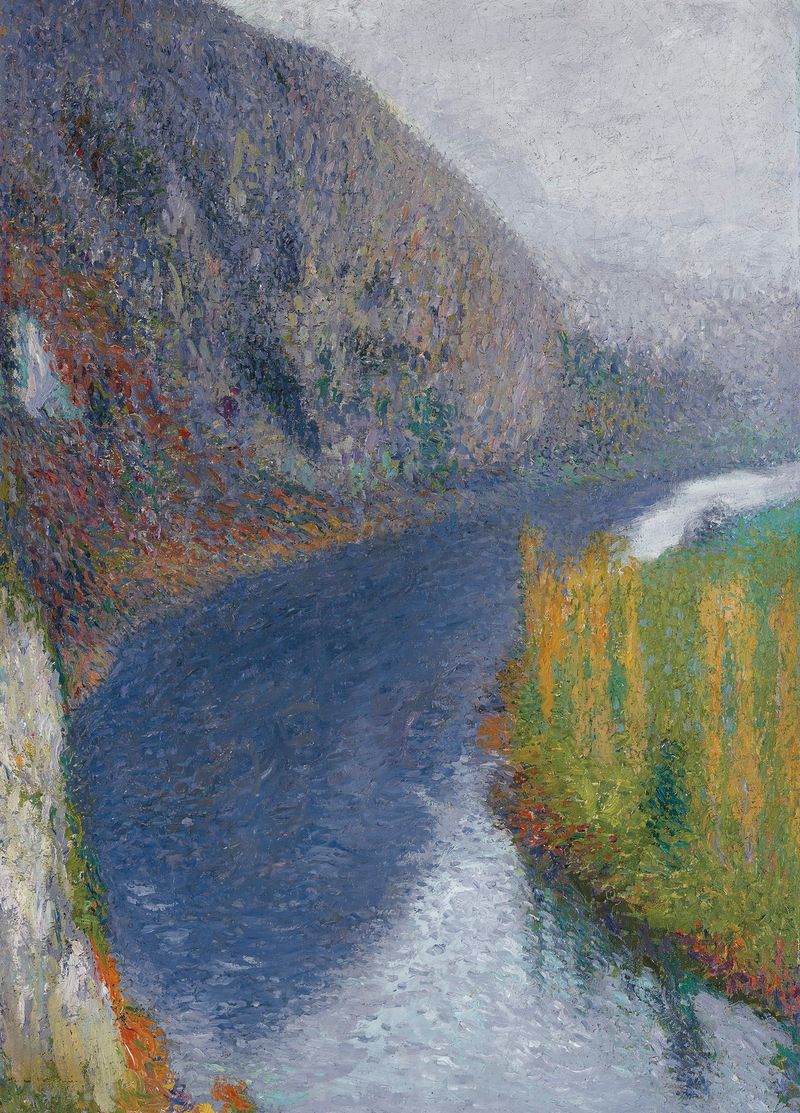
Le Lot au pied des falaises de St-Cirq-Lapopie
Henri Martin

Le lot aux pieds des falaises de Saint-Cirq-Lapopie
Henri Martin

L’église de Labastide-du-Vert avec le pont et la rivère, un soir d’automne
Henri Martin

Berger et ses moutons dans les causses
Henri Martin
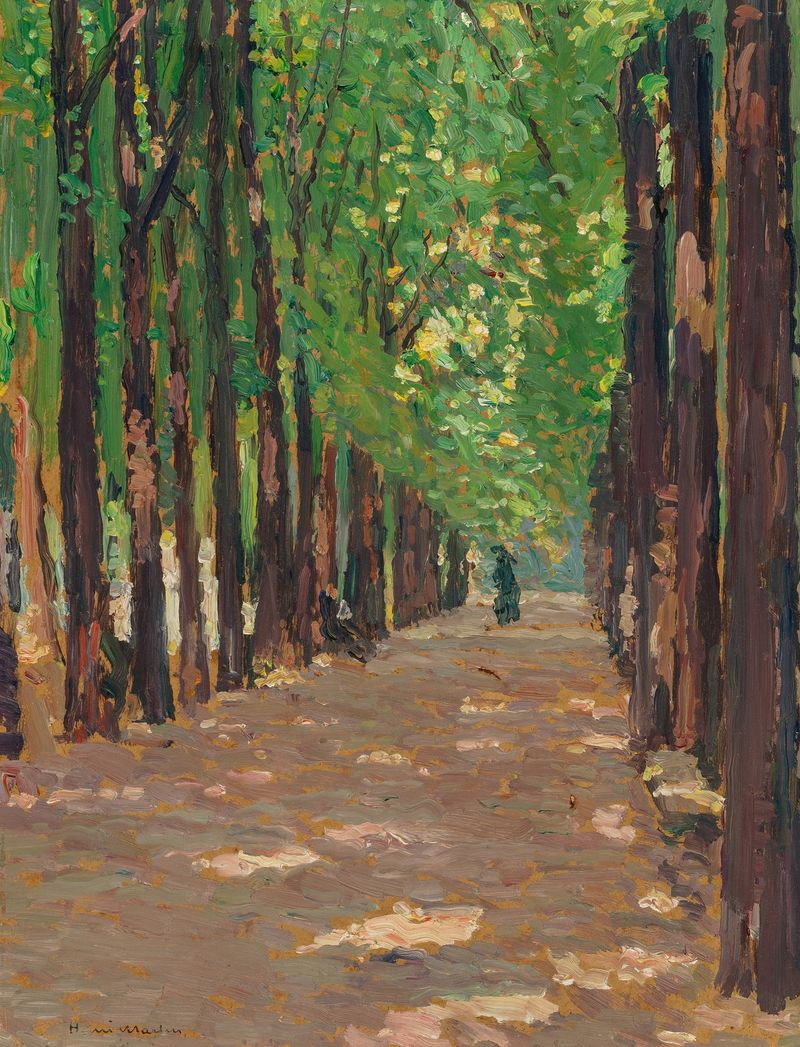
Une allée dans le Parc du Château de Versailles
Henri Martin





