
Paysage à Pontoise (pommiers) — History & Facts
Could a single brushstroke hold eternity? In Camille Pissarro's Paysage à Pontoise (pommiers), the delicate interplay of light and color evokes a sense of fragile beauty that flutters at the edge of permanence. Look to the left at the dense cluster of apple trees, their branches adorned with bursts of blossom, white and blush against the canvas's lush green backdrop. Notice how the painter’s brush dances across the surface, layering gentle strokes that capture both the vibrancy of spring and the quietude of rural life. The dappled light filters through the leaves, illuminating the scene with a soft glow, inviting contemplation of the moment’s transitory nature. In this work, contrasts emerge: the sturdy solidity of the trees juxtaposed with the ephemeral flowers, hinting at the cycles of life and the inevitability of change.
The soft colors suggest a fleeting serenity, while the intricate brushwork conveys a deep connection to the natural world. Each stroke becomes a meditation on fragility, symbolizing the beauty of existence that can vanish with the passage of time. Created in 1873 while Pissarro was in Pontoise, this painting reflects the artist’s commitment to capturing the essence of everyday life through Impressionism. At this time, he was exploring the rural landscape and the interplay of light, influenced by the shifting art movements in Europe.
His focus on the natural world, along with his friendships with contemporaries like Monet, marked a significant moment in the evolution of modern art.
More Artworks by Camille Pissarro
Browse all →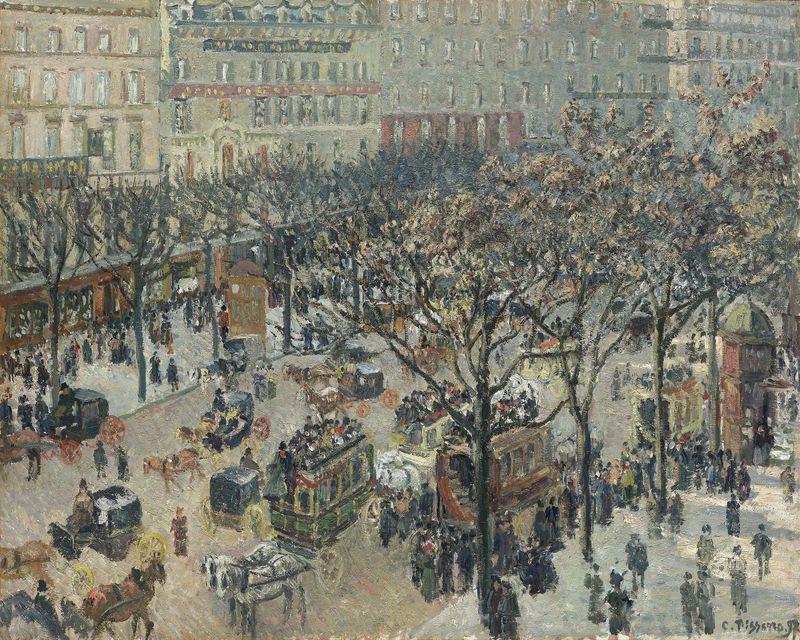
Boulevard des Italiens,Morning_Sunlight
Camille Pissarro
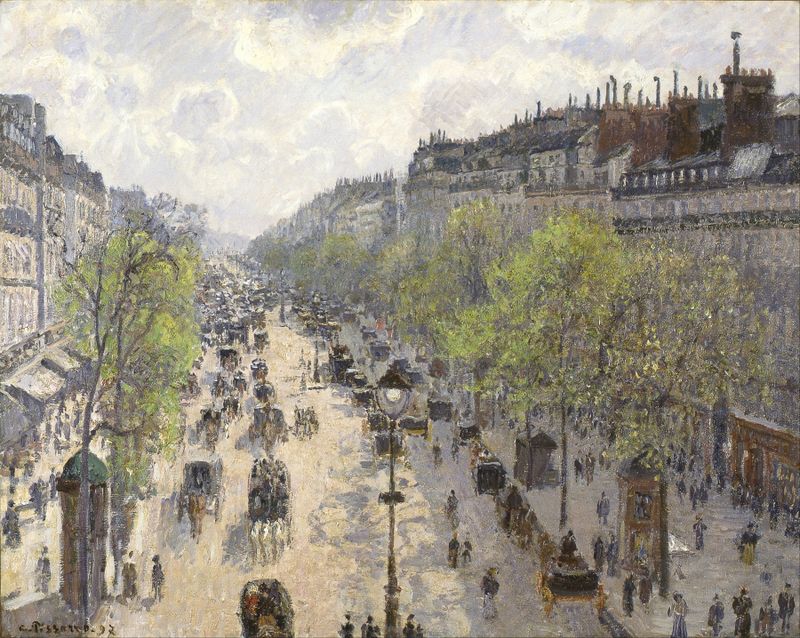
Boulevard Montmartre, Spring
Camille Pissarro
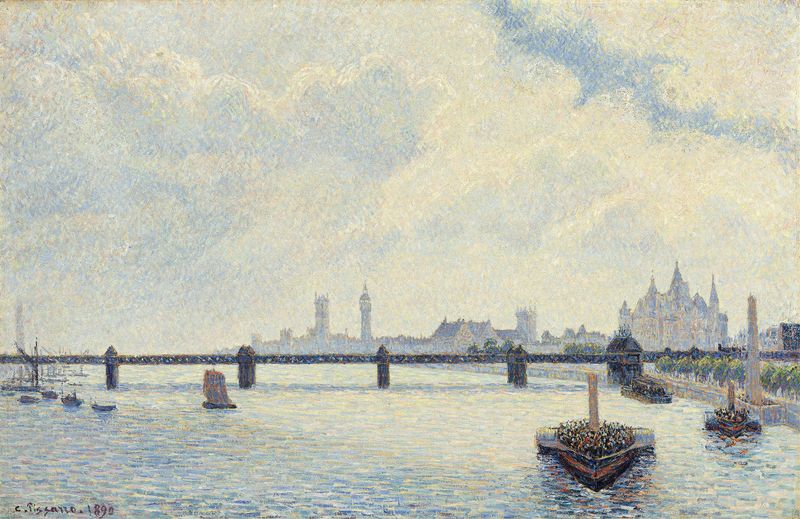
Charing Cross Bridge,London
Camille Pissarro
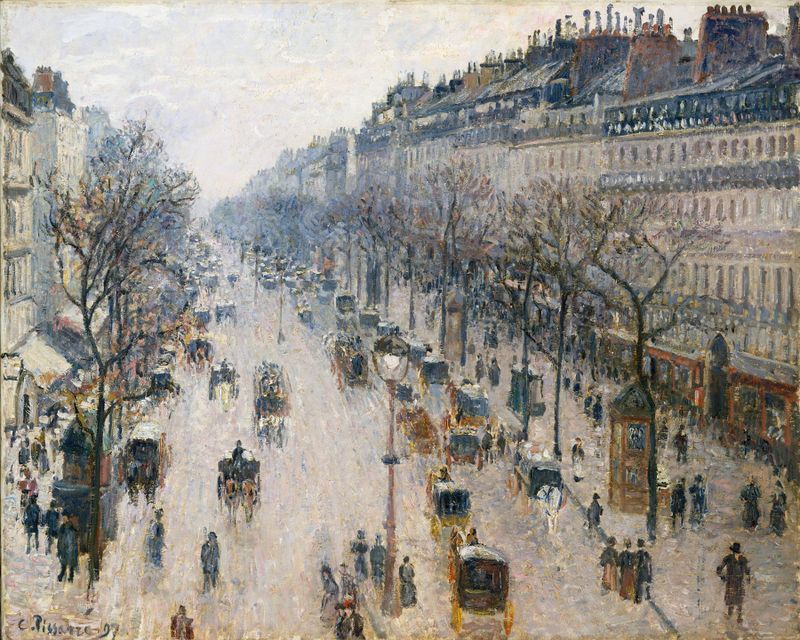
The Boulevard Montmartre on a Winter Morning
Camille Pissarro
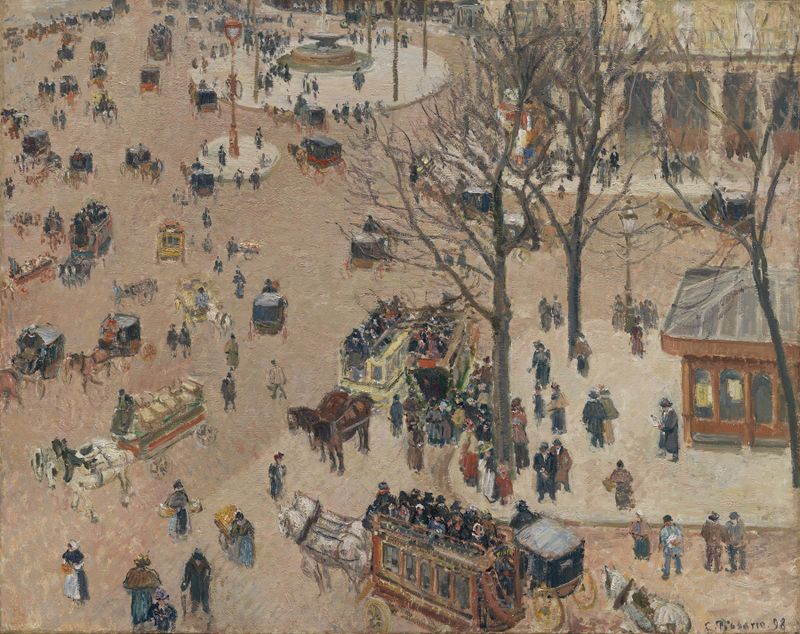
La Place du Théâtre Français
Camille Pissarro

Rue Saint-Lazare, Paris
Camille Pissarro
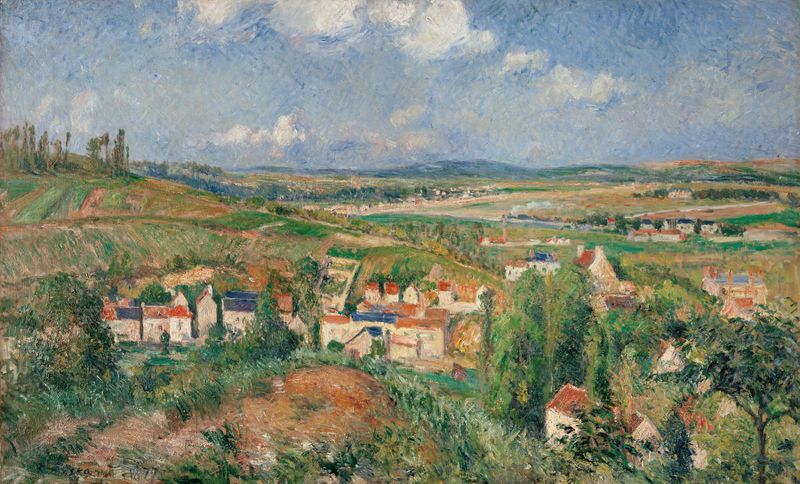
L’hermitage En Été, Pontoise
Camille Pissarro

Place du Theatre Francais,Fog Effect
Camille Pissarro
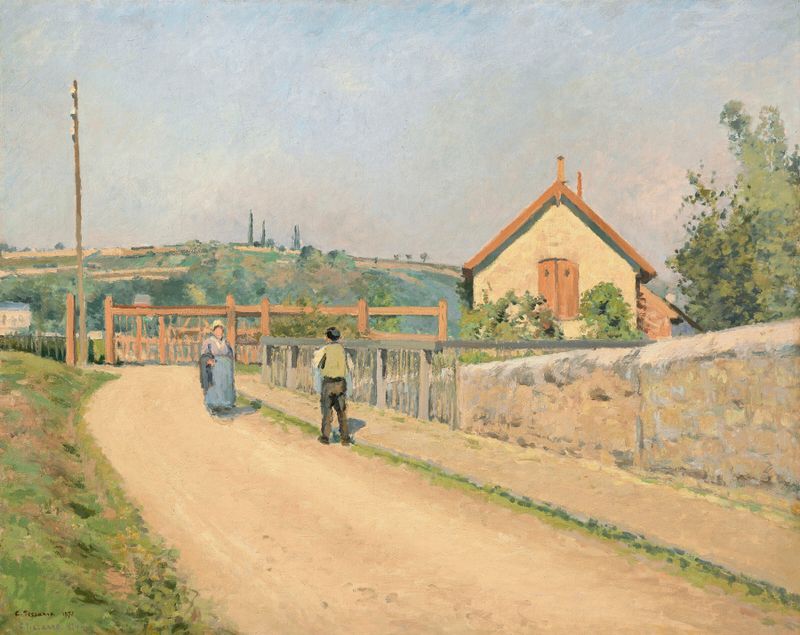
La barrière du chemin de fer, aux Pâtis près Pontoise
Camille Pissarro
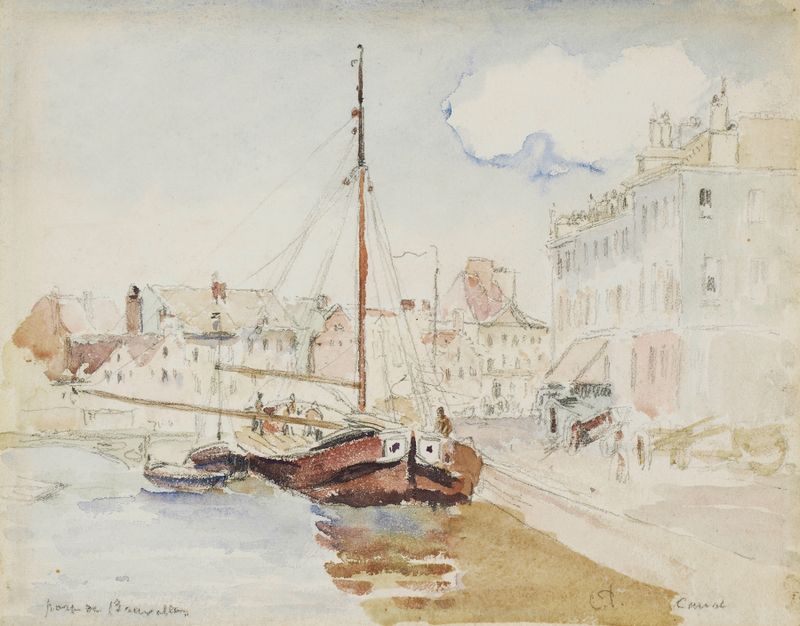
Port de Bruxelles
Camille Pissarro





