
Peasant with his hands behind his back — History & Facts
Could beauty survive in a century of chaos? The question looms over Peasant with his hands behind his back, a striking work that confronts the viewer with raw honesty. This portrait captures the essence of a moment that transcends time, revealing the unvarnished reality of life in the early 17th century. Look to the figure’s robust form at the center, rendered in rich earth tones, drawing your gaze immediately. Notice how the soft light caresses his weathered skin, emphasizing the lines etched by labor and life.
The subtle play of shadow across his face reveals both strength and vulnerability, while the simplicity of his attire speaks volumes about his station. Rembrandt’s masterful technique highlights the textures of fabric and skin, inviting a tactile connection to the subject. Delve deeper into the emotional tensions present in this work. The peasant’s stance—hands clasped behind his back—evokes a sense of resignation, yet his steady gaze betrays a flicker of defiance.
This juxtaposition reflects the struggle between societal constraints and the innate human spirit. The muted palette, devoid of ostentation, reinforces the authenticity of his existence, suggesting that truth emerges most powerfully through simplicity. In 1629, Rembrandt was establishing his reputation in Amsterdam, navigating a rapidly evolving art market. The social landscape of the Netherlands was ripe with change, marked by economic growth yet tainted by political strife.
Within this context, the artist sought to elevate the humble and overlooked, crafting a narrative that transcends the turmoil of his time, urging viewers to find beauty in the ordinary amidst chaos.
More Artworks by Rembrandt van Rijn
Browse all →
The Night Watch Militia Company of District II under the Command of Captain Frans Banninck Cocq
Rembrandt van Rijn

The Return of the Prodigal Son
Rembrandt van Rijn

The Hundred Guilder Print: the figures leaning on the wall in the centre left
Rembrandt van Rijn

The Hundred Guilder Print: the central piece with Christ preaching, the plate arched
Rembrandt van Rijn

Isaac and Rebecca, Known as ‘The Jewish Bride’
Rembrandt van Rijn
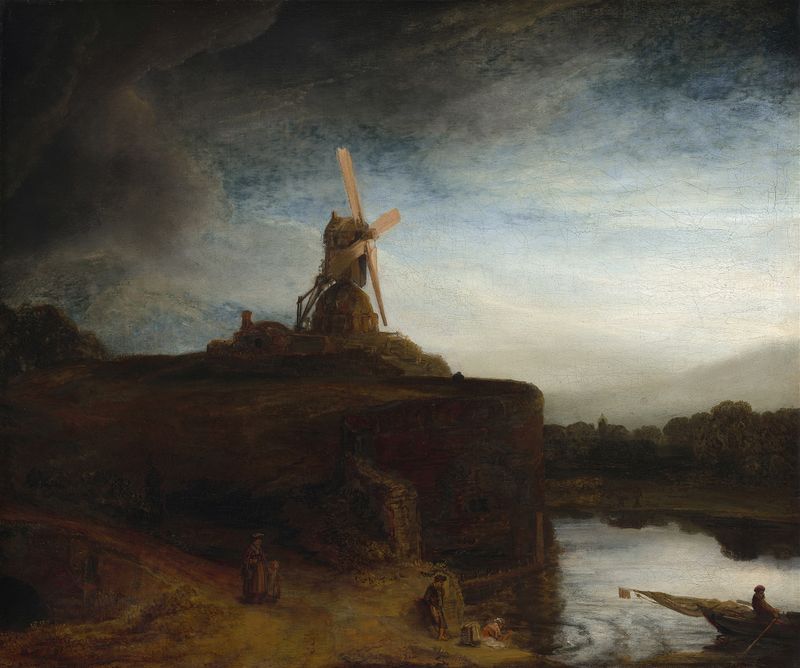
The Mill
Rembrandt van Rijn

The Sampling Officials of the Amsterdam Drapers’ Guild, Known as ‘The Syndics’
Rembrandt van Rijn

The return of the prodigal son
Rembrandt van Rijn
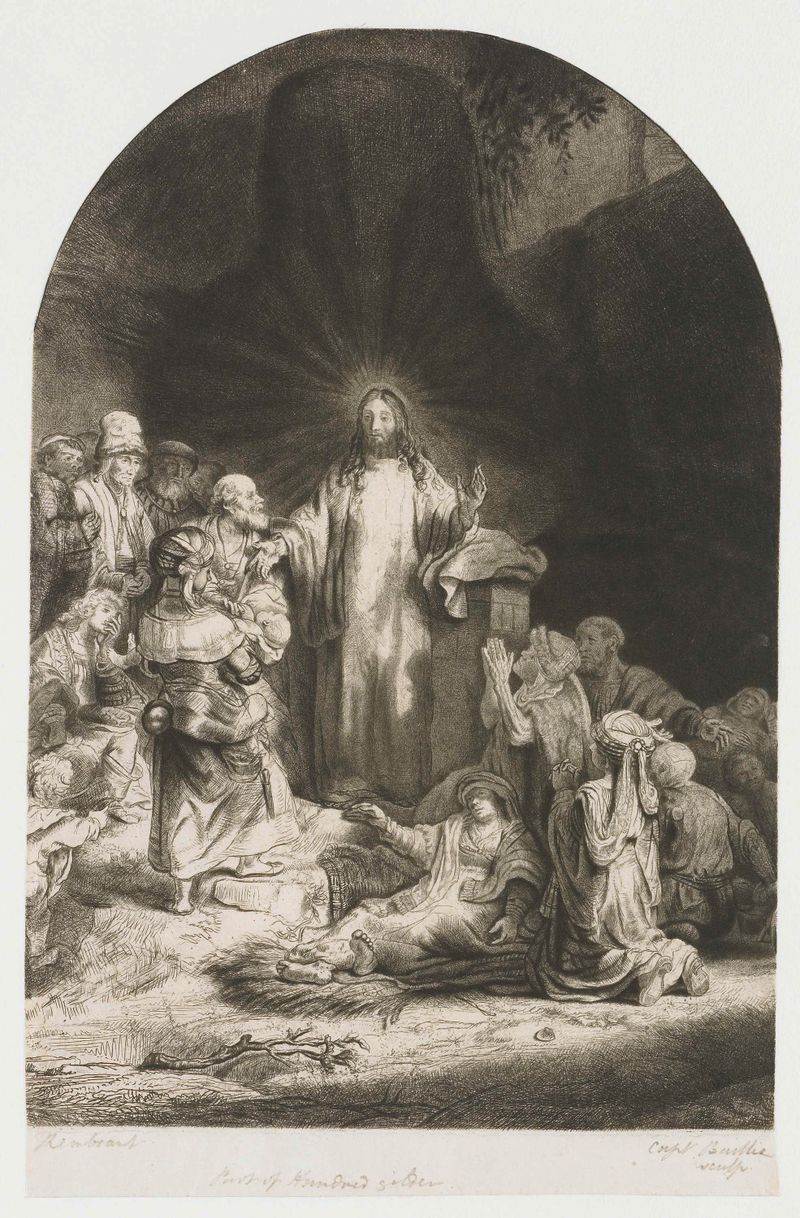
The Hundred Guilder Print: the central piece with Christ preaching, the plate arched
Rembrandt van Rijn

The Hundred Guilder Print: the man seen on the back in the lower left corner
Rembrandt van Rijn
More Portrait Art
Browse all →
Las meninas
Diego Velázquez

Self-portrait with a Bandaged Ear and Pipe
Unidentified artist

Girl with a Pearl Earring
Johannes Vermeer
The Sampling Officials of the Amsterdam Drapers’ Guild, Known as ‘The Syndics’
Rembrandt van Rijn
The Hundred Guilder Print: the man seen on the back in the lower left corner
Rembrandt van Rijn

Portrait of Dr Gachet
Vincent van Gogh