Peintre Au Bord D’une Rivière — History & Facts
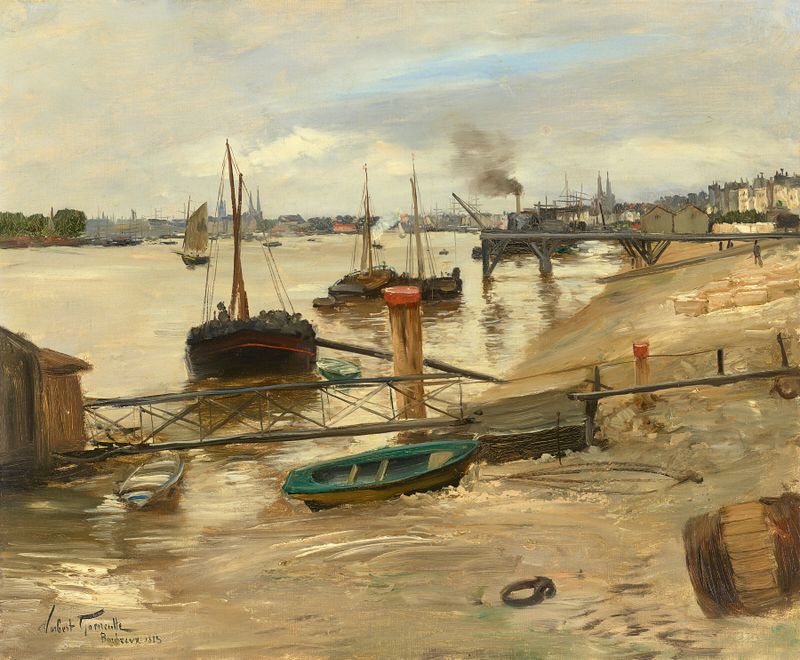
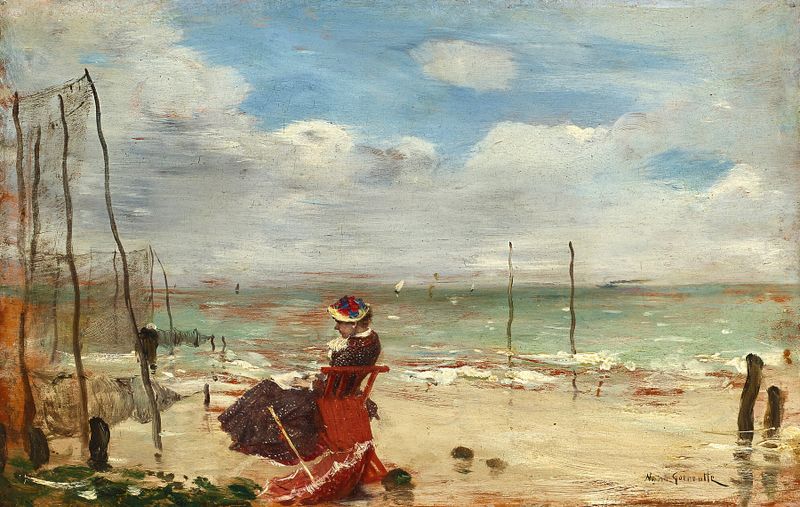
In the gentle stillness of a riverbank, where nature breathes life anew, a painter stands poised between creation and desolation. This moment, suspended in time, captures the delicate balance of rebirth and the haunting echoes of past struggles. Look closely at the painter’s canvas, set against the shimmering water, where vibrant strokes of green and blue dance harmoniously. The composition draws the eye to the interplay of light reflecting off the river’s surface, contrasting with the somber shadows of the surrounding foliage.
Notice how the artist captures the luminosity of the scene, inviting the viewer to experience the tension between the artist’s solitude and the beckoning beauty of nature. Deeper insights emerge when considering the fine details: the painter's palette, positioned among the wildflowers, symbolizes the merging of art and life. The softness of the landscape contrasts with the firm grip of the artist on his tools, suggesting both a longing for connection and an acknowledgment of isolation. Here, rebirth is not merely a thematic element; it resonates through the very act of creation itself, reflecting an internal struggle as the artist seeks solace amid nature’s bounty. Norbert Goeneutte created this piece in 1893, during a time when Impressionism was flourishing in France.
Having moved to the countryside, he found inspiration in the natural world, seeking to capture the fleeting moments of beauty that surrounded him. This painting reflects his commitment to portraying emotional depth through vibrant landscapes, as well as his personal search for renewal in both his art and his life amidst the evolving art scene.