
Pheasants and Other Birds in an Exotic Landscape — History & Facts
A riot of feathers and foliage greets the viewer, where the drama is not in motion but in the sheer spectacle of variety. The eye is drawn first to the improbable elegance of a white pheasant perched on a rocky ledge, its tail streaming down like a silken banner. Around it, birds of every hue and temperament cluster and scatter, some hidden in the undergrowth, others caught mid-flight against a sky tinged with lavender and gold.
The palm tree, improbably lush, thrusts upward, its fronds splaying out to frame the scene like a stage set. Light pools around the birds, picking out the iridescence of a golden pheasant’s plumage, and then slips away into shadow, suggesting a world just beyond the reach of human hands. Painted between 1748 and 1775, Pheasants and Other Birds in an Exotic Landscape by Aert Schouman belongs to an age when the boundaries of the known world were expanding—and so too were the ambitions of artists. In the Netherlands, collectors and naturalists clamored for images of rare creatures brought back from distant lands, and painters responded with works that were part theater, part scientific record.
This painting, now in the Dordrechts Museum, is a testament to that fascination: a fantasy of abundance, where the exotic is made familiar and the familiar is rendered strange. The birds, posed with the formality of court portraits, invite us to linger over every detail, to marvel at the painter’s hand—and to wonder what other marvels might be hidden in the foliage.
More Artworks by Aert Schouman

Gezicht op Dordrecht met de Rietdijkspoort en windmolens
Aert Schouman
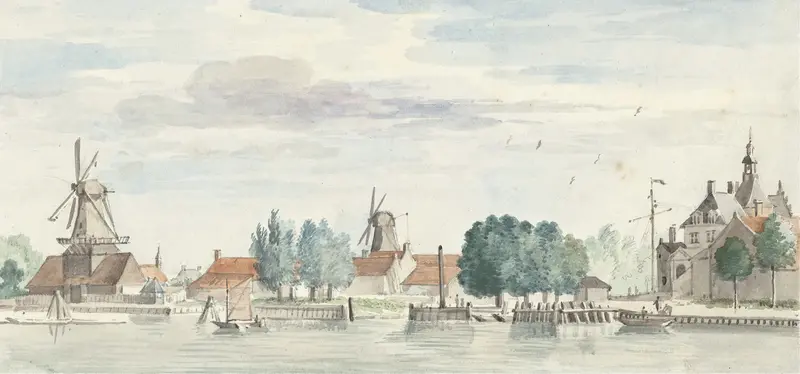
Gezicht op Dordrecht met de Rietdijkspoort en windmolens
Aert Schouman
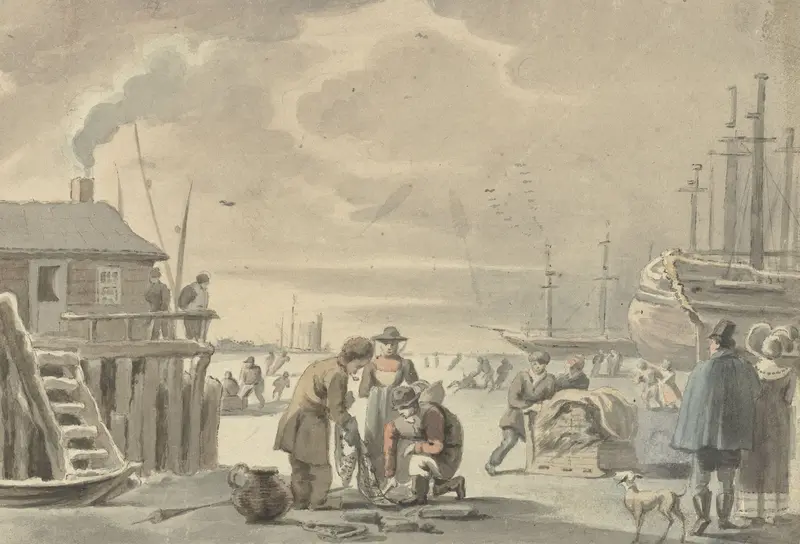
Gezicht op de bevroren Merwede bij Moerdijk
Aert Schouman
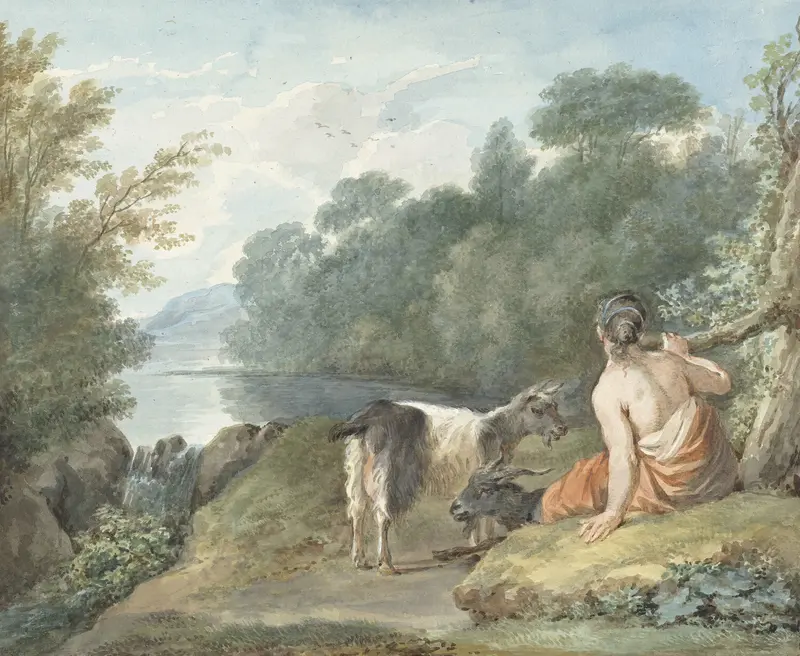
Herderin met geiten in een landschap met een meer
Aert Schouman
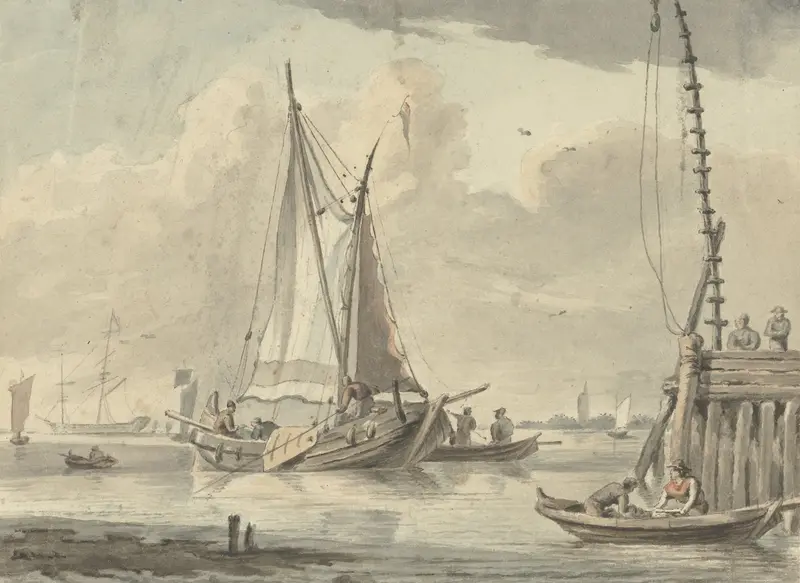
Zeilschepen op de rivier bij Dordrecht
Aert Schouman

Zeilend schip op de Beneden Merwede bij de Papendrechtse dijk
Aert Schouman
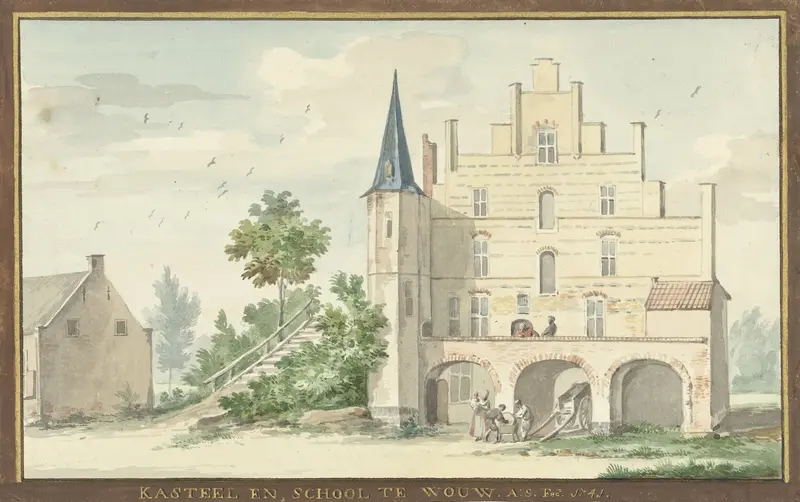
Het kasteel en school te Wouw
Aert Schouman
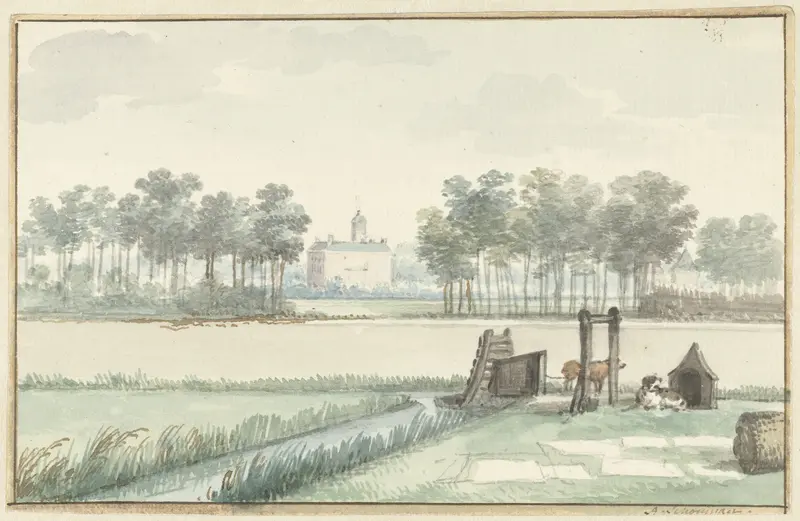
Het kasteel Ter Hooge op Walcheren
Aert Schouman
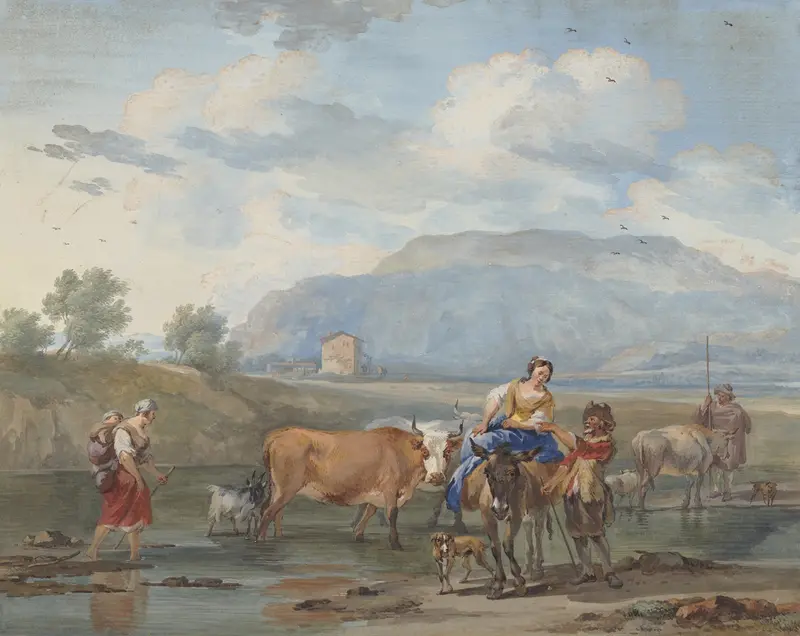
Hirten treiben Kühe durch ein Wasser, links trägt eine Frau ihr Kind auf dem Rücken, rechs reitet eine andere auf einem Esel
Aert Schouman
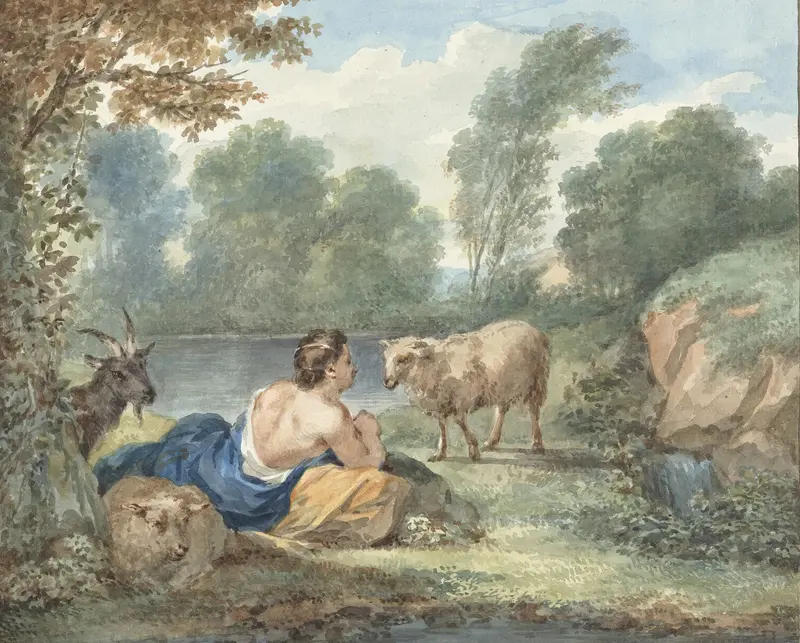
Herderin met schapen in een landschap met een meertje
Aert Schouman





