Piger på en vej — History & Facts
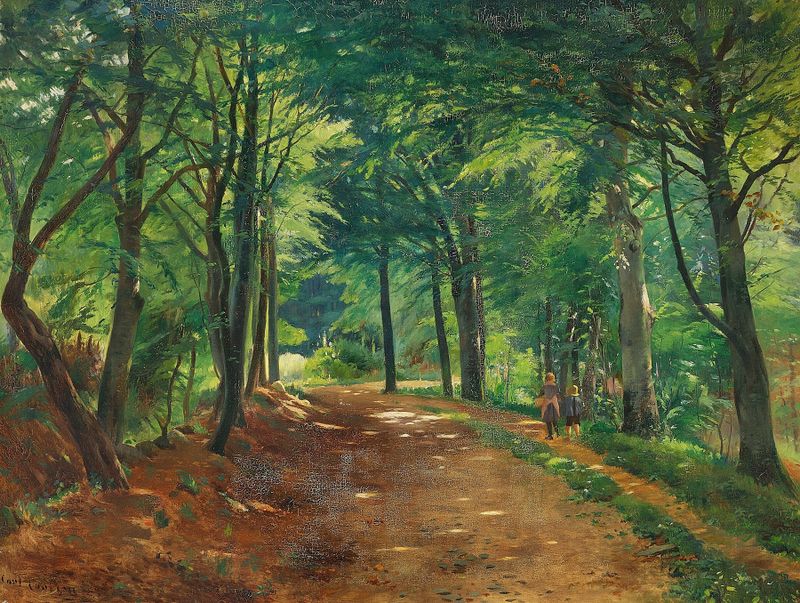
This sentiment resonates deeply within the layers of the canvas, where each color and line tells a story of creation and connection. In Piger på en vej, the viewer is invited to step into a moment that symbolizes the interplay between nature and human emotion, capturing the essence of life in transition. Look to the left at the girls who stroll along the winding road, their figures gracefully framed by the lush greenery that surrounds them. The soft palette of greens and earth tones is punctuated by the delicate pinks and whites of their dresses, creating a harmonious balance that draws the eye.
Notice how the sunlight dapples through the leaves, illuminating their features and casting gentle shadows, suggesting a serene afternoon that is almost tangible. As you observe, consider the contrast between the carefree innocence of the girls and the imposing presence of the road that stretches forward, symbolizing the journey of life. The pathway serves as a bridge between childhood and the unknown future, inviting reflection on the passage of time. The subtle expressions on their faces, caught between laughter and thoughtfulness, evoke feelings of nostalgia and longing, hinting at unspoken dreams and the weight of expectation. Carl Carlsen painted Piger på en vej in 1899, during a time of shifting artistic movements and societal change in Denmark.
He was influenced by the emerging Symbolist movement, which emphasized emotion and individual experience, contrasting with the more rigid styles of earlier periods. At this juncture in his career, Carlsen sought to capture the essence of fleeting moments, blending natural beauty with profound emotional depth.