Sommerdag i skoven med to børn på en sti — History & Facts
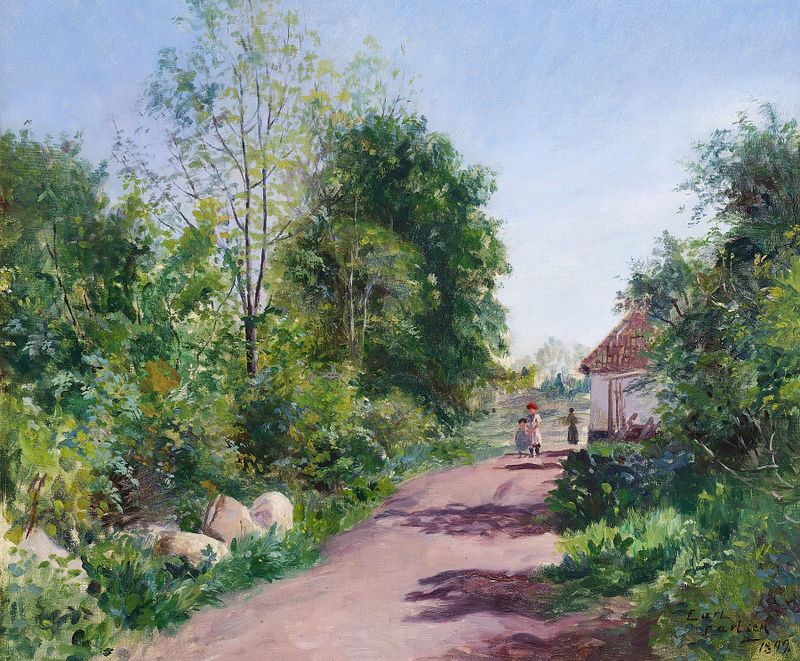
Could a single brushstroke hold eternity? In Sommerdag i skoven med to børn på en sti, the revelation of childhood innocence entwined with the forest’s embrace beckons us to ponder the fleeting moments of joy. Look to the center of the canvas, where two children tread a winding path through dappled sunlight filtering softly through the leaves. The vibrant greens of the foliage seem to pulse with life, while the warm hues of the children’s clothing pop against the cool, shadowy background. Notice how the brushwork captures the whisper of movement in their playful gestures, suggesting laughter and companionship that radiates warmth, yet is cradled by the serenity of nature. This tranquil scene reflects not only a moment of play but a deeper narrative of exploration and discovery.
The children, symbols of innocence, stand on the threshold of the known and unknown, hinting at the boundless possibilities of life ahead. The juxtaposition of their vibrant figures against the rich, dark trees creates a tension between childhood joy and the inevitable passage of time, invoking a sense of nostalgia and longing for simplicity. In 1889, while residing in Denmark, Carl Carlsen painted this work during a period of transition in his artistic career. The late 19th century was marked by a growing interest in naturalism and the intimate portrayal of everyday life.
Carlsen, influenced by these movements, sought to capture not just the image, but the essence of fleeting moments, reflecting an era that celebrated the beauty of the ordinary amidst the changing tides of society.