
Place de la Concorde no. V — History & Facts
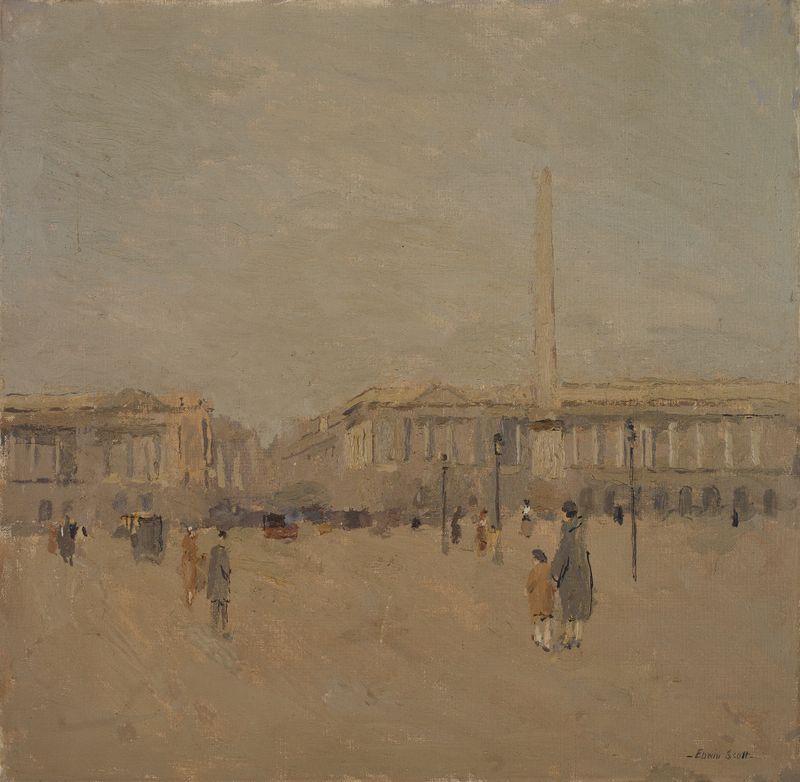
The weight of unspoken words hangs in the air, lingering like the scent of rain after a storm. In the hush of this moment, grief finds its voice, echoing through the canvas in a language all its own. Focus first on the striking interplay of light and shadow that dances across the foreground, illuminating the marble figures poised in a timeless lament. The muted palette speaks to an emotional depth, with soft blues and grays enveloping the scene, inviting the viewer to dwell on the delicate contours of the sculptures.
Notice how the artist deftly positions these figures within the urban landscape, capturing their stillness against the backdrop of life abuzz around them, creating a stark contrast that underscores the themes of loss and remembrance. Hidden beneath this serene facade lies a profound exploration of collective sorrow. The juxtaposition of the ethereal beauty of the sculptures against the bustling city hints at the often-overlooked grief that exists in public spaces, reminding us that even amidst the vibrancy of life, moments of introspection are woven into the everyday. The starkness of the empty benches adds a layer of poignancy, inviting reflection on the loved ones who once occupied those spaces, now absent yet ever-present in spirit. During the time this piece was created, the artist found himself immersed in a rapidly changing art world, influenced by movements toward modernism and abstraction.
The precise date remains unclear, yet it is evident that Place de la Concorde no. V captures a universal sentiment of loss, one that resonates deeply amidst the tumult of early 20th-century society. Here, Scott encapsulates an era defined by both artistic exploration and the poignant weight of human experience.
More Artworks by Frank Edwin Scott
Browse all →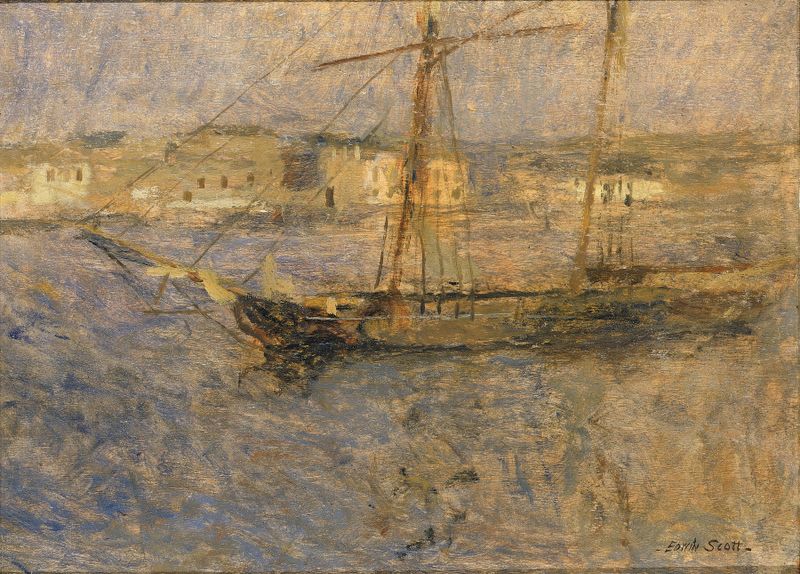
Ships at Anchor, Cherbourg no. I
Frank Edwin Scott
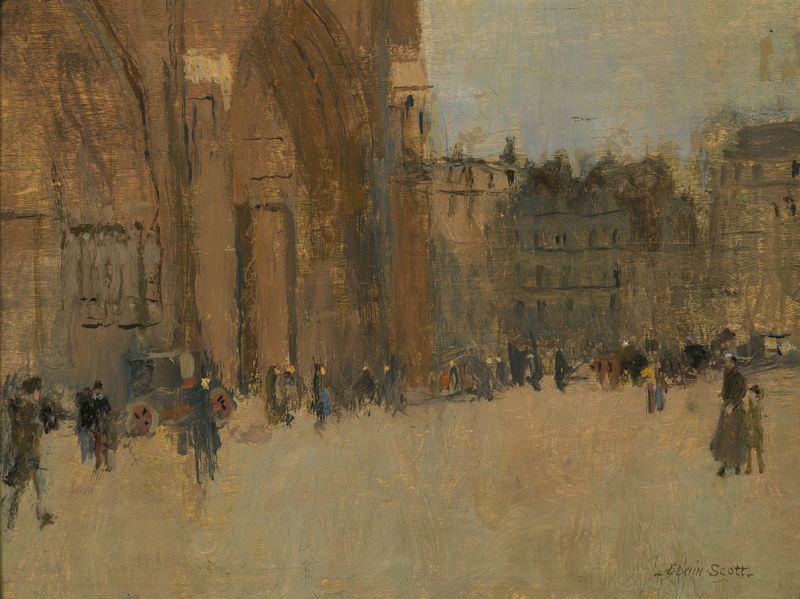
Notre Dame no. III
Frank Edwin Scott
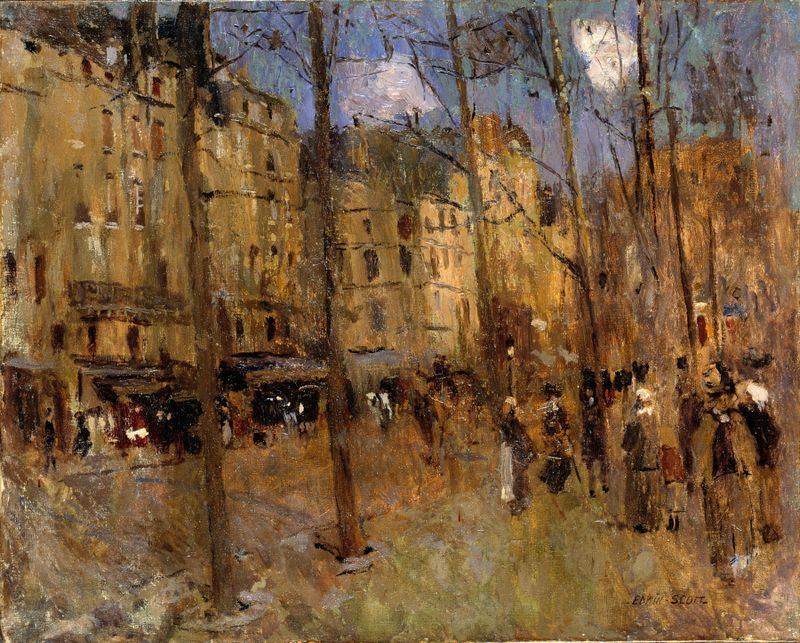
Boulevard St. Germain
Frank Edwin Scott
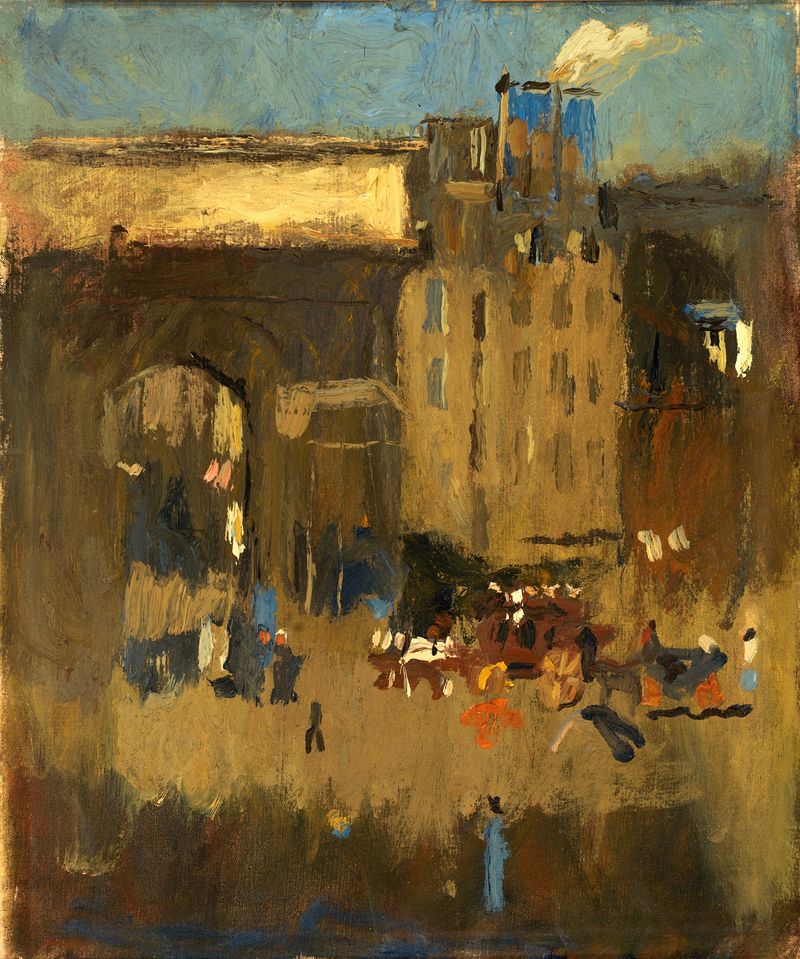
Porte St. Martin et Enterrement
Frank Edwin Scott
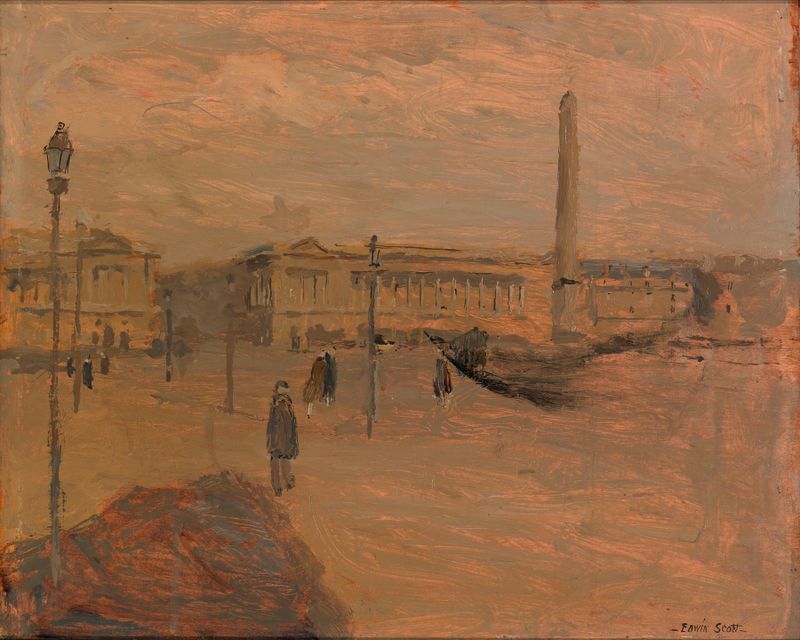
La Concorde
Frank Edwin Scott
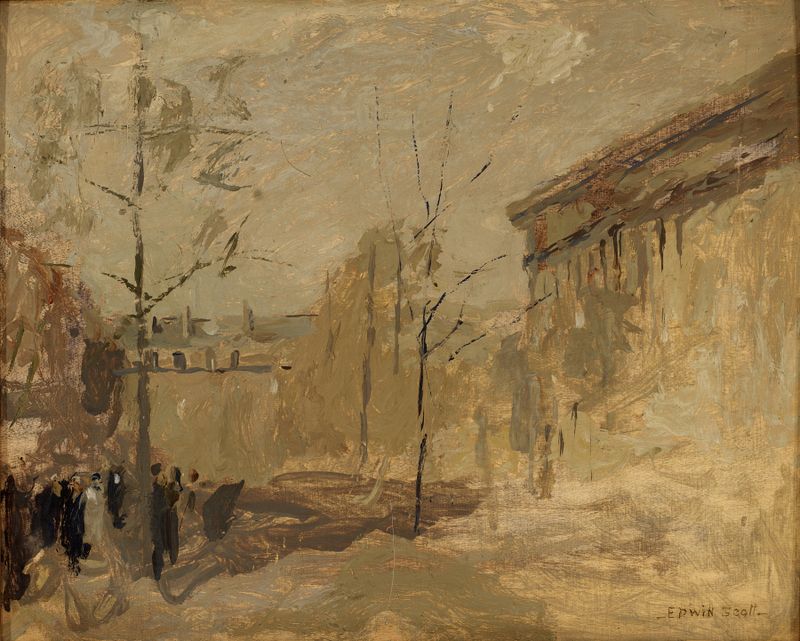
Place de la Madeleine no. II
Frank Edwin Scott
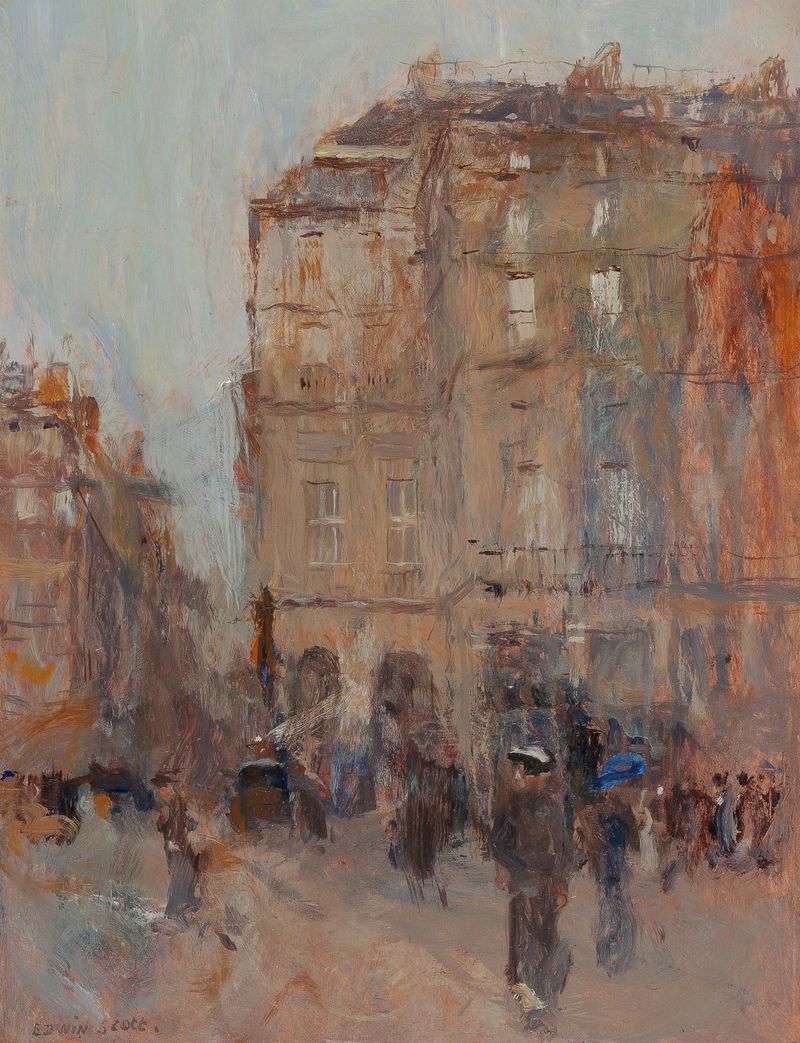
A Gray Day in Paris
Frank Edwin Scott
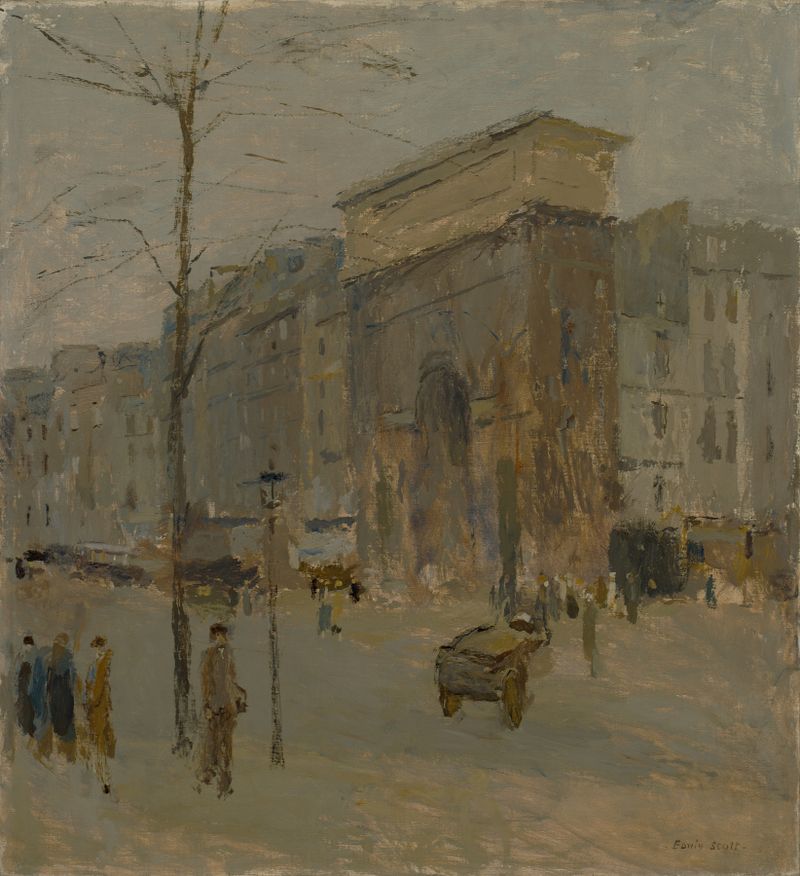
Porte St. Martin no. II
Frank Edwin Scott
Place de la Concorde no. II
Frank Edwin Scott
Eglise de Ville
Frank Edwin Scott





